
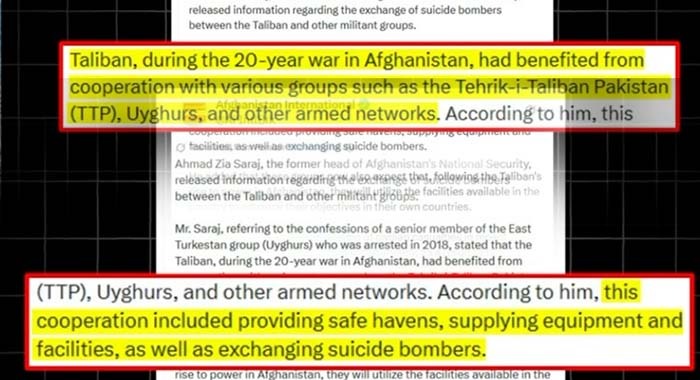
Former senior Afghan National Security Adviser Ahmad Zia Siraj has alleged that the Taliban authorities maintain close operational ties with multiple transnational terrorist organizations, a development he warns is posing a serious and growing security threat to Afghanistan and the wider region.
According to statements reported by Afghan media outlet Afghanistan International, Siraj claimed that evidence indicates sustained cooperation between the Taliban administration and various armed groups, including facilitation networks allegedly involving safe havens, logistical support, and weapons transfers.
He further alleged that such cooperation extends to the exchange and movement of individuals trained for suicide attacks, suggesting an organized framework of coordination between the ruling authorities and extremist networks operating within and beyond Afghanistan’s borders.
Siraj described the situation as a “grave regional security challenge,” arguing that Afghanistan’s territory is being utilized by multiple armed groups for operational planning and cross-border activity. He warned that these developments are contributing to instability not only within Afghanistan but also across neighboring countries and the broader region.
The former security adviser stated that Afghan civilians are bearing the highest cost of these alleged arrangements, citing continued insecurity, economic hardship, and persistent threats posed by armed violence. He emphasized that the evolving security environment is undermining prospects for long-term stability and reconstruction in the country.
The allegations come amid ongoing international concern regarding the presence and activity of militant organizations in Afghanistan following the Taliban’s return to power in 2021. Regional stakeholders have repeatedly called for stronger counterterrorism commitments and enhanced cooperation to prevent Afghan territory from being used as a base for transnational armed activity.
While the Taliban administration has previously denied similar allegations, asserting that Afghan soil is not being used against any other country, independent verification of such claims remains limited due to restricted access and ongoing security constraints in parts of the country.
Security analysts note that competing narratives surrounding militant presence in Afghanistan continue to complicate diplomatic engagement and regional security coordination. The issue remains a central point of concern for neighboring states, particularly those sharing sensitive border regions.
The latest claims are expected to intensify international scrutiny and renew calls for transparent monitoring mechanisms and multilateral engagement aimed at addressing security risks emanating from the region.



