
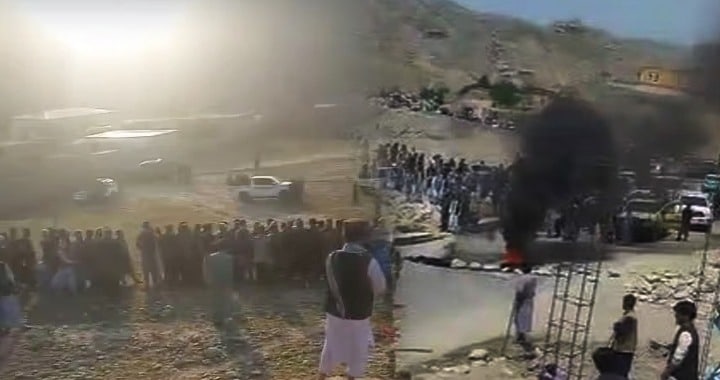
Clashes between Taliban and local residents in Afghanistan’s Badakhshan province have intensified across multiple districts, with reports of fatalities, armed resistance, and expanding unrest linked to ongoing anti-poppy operations, according to local and Afghan media sources.
In Argo district, at least two people have reportedly been killed and several others injured as confrontations continue over Taliban-led efforts to destroy poppy crops. One person was killed on Friday, while another died early Saturday, May 9, during renewed exchanges of fire. A locally circulated video shows residents staging protests against Taliban actions, while sources indicate that the situation remains volatile and casualty figures may rise.
As tensions escalated, communication networks in parts of Badakhshan were reportedly restricted. Taliban authorities have not issued an official statement regarding the latest developments.
The clashes reportedly began on May 8 when Taliban forces entered agricultural areas to carry out poppy eradication operations, leading to resistance from local communities. In previous phases of similar campaigns, residents have repeatedly opposed crop destruction due to the absence of alternative livelihoods, triggering cycles of confrontation.
In a parallel development in Jurm district, informed sources report a further escalation involving armed resistance in mountainous terrain. Taliban reinforcements were reportedly deployed from Faizabad, Baharak, and Ashkasham to contain what is being described as an emerging armed opposition presence.
Local accounts suggest that Taliban deputy governor for Badakhshan, Jamaluddin Haqjo, has moved into the Khostak village area in Dara Kalan valley to oversee containment operations. Reports indicate that armed groups have taken positions in elevated terrain, with additional individuals reportedly joining them in recent days.
Video material circulating from the area reportedly shows Taliban personnel moving through valley routes under the supervision of senior officials, as efforts continue to stabilize the situation.
These developments follow a broader pattern of unrest in Badakhshan over the past year. Earlier incidents in Khash, Argo, and Jurm districts saw violent confrontations during anti-poppy campaigns, including protests, arson attacks on government equipment, road blockages, and armed clashes.
In previous escalations, including mid-2025, multiple civilian casualties were reported in confrontations linked to poppy eradication drives, alongside arrests of local elders and protest organizers. Communication shutdowns were also imposed in certain affected areas during periods of heightened unrest.
Separately, insecurity concerns in Badakhshan have also been reinforced by targeted violence incidents. In Ishkashim district, a female entrepreneur identified locally as Lailma was shot dead in Ashkashim market while heading to work. She was reportedly engaged in small-scale economic activity and belonged to the Ismaili community.
Local accounts describe her as being targeted by unidentified assailants, with Taliban authorities confirming her death but providing no further details regarding motive or perpetrators. The incident has further deepened concerns over the safety of women engaged in public and economic life in the province.
Community sources have also pointed to a wider pattern of insecurity affecting minority groups, with reports of targeted killings, coercion, and pressure on communities in recent months.
Taken together, the latest clashes in Argo and Jurm, alongside continuing incidents of targeted violence, highlight the layered and persistent instability in Badakhshan, where anti-narcotics enforcement, armed resistance, and community grievances continue to intersect.
As of the latest developments, both Argo and Jurm remain tense, with ongoing deployments, armed positioning in difficult terrain, and no clear indication of de-escalation on the ground.



