
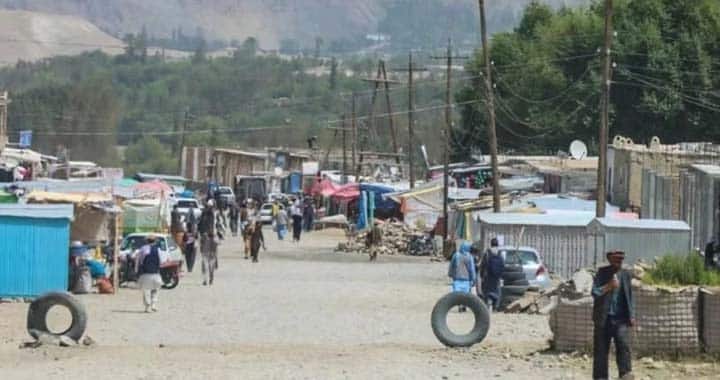
A female entrepreneur was shot dead by an unidentified gunman in Ashkashim market of Badakhshan’s Ishkashim district, according to local sources, in an incident that has further heightened concerns over the safety of women and minority communities under Taliban rule.
Sources said the victim, Lailma, an Ismaili woman, was the wife of local singer Salam Maftoun and ran a sewing workshop in the women’s market in Ishkashim. The workshop had reportedly been established with support linked to the Aga Khan’s institutional network.
Local residents said the incident occurred around 8:00 a.m. on Thursday, May 7, while she was on her way to work carrying her child. She was reportedly targeted with a hunting rifle by an unidentified assailant, sustaining critical injuries before being taken to a district hospital, where she later died.
A Taliban police spokesperson in Badakhshan confirmed her death but did not provide further details regarding the identity of the attacker or motive behind the killing.
Salam Maftoun, her husband, is a local singer who had previously been detained by Taliban authorities and later released following intervention by community elders, according to local accounts.
This killing comes amid a broader pattern of insecurity faced by Ismaili communities in Badakhshan. In January, local sources reported that at least three Ismaili followers were killed by unidentified gunmen within a single month.
Community members say pressure on Ismaili residents has intensified since the Taliban returned to power, including reports of coercion, social restrictions, and efforts aimed at forced religious conversion.
According to a United Nations Assistance Mission report, more than 50 Ismaili individuals were reportedly pressured into converting during the first quarter of 2025. The report further noted allegations of intimidation, physical violence, and threats against those who resisted such pressure.
The latest killing has added to growing concerns over targeted violence against women, particularly those engaged in economic activity or working in semi-public spaces such as local markets.
As with earlier incidents in Badakhshan, the absence of clarity over perpetrators and motive continues to deepen uncertainty, while local communities remain caught between rising insecurity and limited avenues for protection or accountability.



