
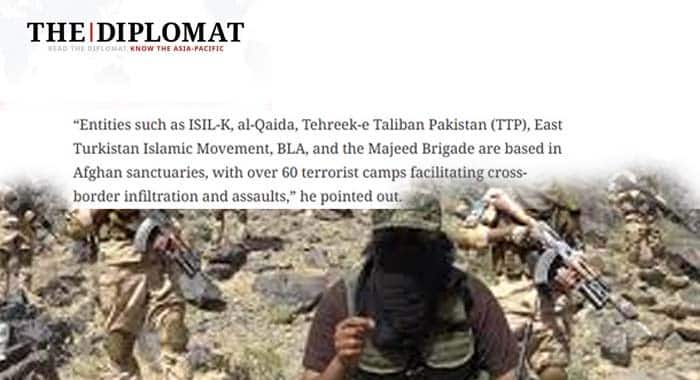
A recent special report published by The Diplomat has highlighted growing international discourse surrounding the Balochistan Liberation Army (BLA) and its affiliated group, the Majeed Brigade, emphasizing the need for a more coordinated global response to address their expanding operational capabilities and regional impact.
According to the report, Pakistan has called for the inclusion of the BLA in the United Nations sanctions list, a step aimed at further isolating the group financially, diplomatically, and operationally at the international level. China has also reportedly supported efforts to approach the United Nations in this regard, seeking enhanced global cooperation to curb the group’s activities.
The report notes that the BLA and the Majeed Brigade continue to operate from safe havens in Afghanistan, which are described as posing a persistent threat to regional peace and security. It further highlights that these groups have evolved from localized insurgent entities into organizations with broader regional destabilization capabilities.
The Diplomat observes that while the United States has already designated the BLA and the Majeed Brigade as terrorist organizations, questions have emerged regarding the broader international approach and differing positions within multilateral forums, including discussions at the United Nations.
The report further suggests that listing the BLA under UN sanctions could significantly restrict its financial networks, operational mobility, and international linkages. It emphasizes that such measures would include asset freezes, travel restrictions, and broader limitations on global engagement for individuals and entities associated with the group.
It is also noted that the BLA has been repeatedly linked to attacks targeting infrastructure projects, including China–Pakistan Economic Corridor (CPEC) initiatives, as well as Chinese nationals and Pakistani security and civilian targets. According to the report, the group’s operational reach and evolving tactics indicate the potential for wider regional security implications in the future.
The analysis further highlights concerns regarding the continued presence of militant safe havens in Afghanistan, describing them as an ongoing challenge to sustained regional peace efforts. It stresses that unaddressed sanctuaries could continue to enable cross-border militancy and destabilizing activities.
In addition, the report points to broader geopolitical and economic considerations, including international interest in mineral resources in Balochistan. It suggests that as global engagement in the region increases, emerging security risks could potentially extend to international stakeholders, personnel, and investment interests.
The Diplomat emphasizes that relying solely on unilateral or regional measures may limit the effectiveness of global counterterrorism efforts, and calls for a more balanced, comprehensive, and coordinated international response to address the evolving threat landscape.
While acknowledging diplomatic sensitivities and differing geopolitical perspectives, the report indicates that sustained engagement and multilateral cooperation remain essential to effectively counter organizations such as the BLA and prevent further escalation of regional instability.
It concludes that recent developments reflect a broader geopolitical balancing process, where future international actions will play a decisive role in determining whether global efforts against such groups are strengthened or weakened.



