
Serious questions raised regarding Afghanistan’s economic sustainability under Taliban rule, the scale and transparency of international financial assistance, and the growing concerns surrounding illicit drug production and trafficking in the region.
According to figures cited in different reports, Afghanistan’s annual imports stand at approximately US$12 billion, while its exports amount to just US$1.7 billion, creating an annual trade deficit of US$10.3 billion. This substantial gap raises an important question: how is Afghanistan financing its imports, and what role do foreign grants, humanitarian assistance, remittances, and other financial inflows play in sustaining its economy?
Since the Taliban’s return to power in August 2021, international assistance to Afghanistan has continued on a significant scale. Estimates cited in this regard refer to approximately US$17.5 billion in foreign grants and assistance. The precise figure and its composition require independent verification, including a clear distinction between humanitarian funding, actual disbursements, donor commitments, and assistance delivered through international organizations.
Humanitarian assistance is essential for protecting Afghan civilians facing poverty, food insecurity, and inadequate healthcare. However, the continuation of substantial international funding also makes transparency, independent auditing, and effective safeguards against diversion indispensable. International donors must demonstrate where their money goes, who benefits from it, and how they ensure that assistance serves its intended humanitarian purpose rather than being exploited for political or financial advantage.
This situation also raises questions about the consistency of international humanitarian priorities. Yemen, Sudan, Somalia, Lebanon, Libya, and Syria have endured devastating conflicts and humanitarian crises. Their populations deserve the same commitment to humanitarian protection and transparent, needs-based assistance. International institutions should explain their funding priorities through objective assessments of humanitarian needs, actual disbursements, and unmet requirements. Any suggestion that assistance to Afghanistan is connected to undisclosed political or strategic arrangements should be investigated through credible evidence rather than speculation.
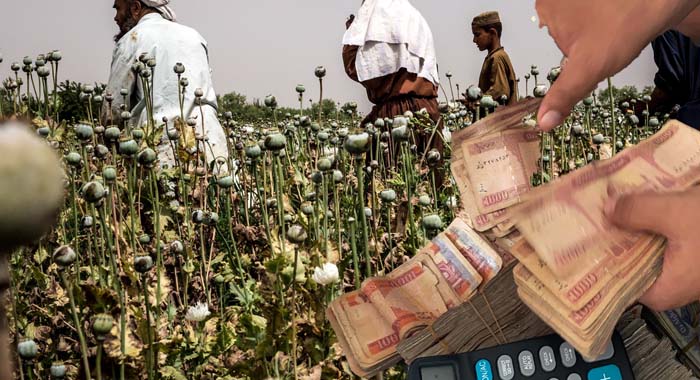
Another serious concern is the potential evolution of Afghanistan’s illicit drug economy. Although the Taliban authorities announced a ban on opium cultivation, a reduction in traditional opium production does not necessarily mean the elimination of illicit drug manufacturing. The possible expansion of synthetic drugs, including methamphetamine, warrants closer international scrutiny because these substances can be manufactured through different processes and may involve distinct supply chains.
Claims that Afghanistan has more than 5,000 synthetic drug laboratories require independent verification. Equally concerning are allegations that precursor chemicals used in illicit manufacturing may be sourced through international commercial networks associated with countries such as India and South Korea before being diverted into clandestine production. These claims must be investigated through customs records, chemical tracing, verified seizures, and credible law-enforcement assessments rather than assumed to be established facts.
Concerns have also been raised about the movement of illicit drugs through Iran, Uzbekistan, Turkmenistan, Pakistan, and maritime routes linked to the Makran coast. Regional governments and international enforcement agencies should cooperate to identify documented trafficking networks, investigate suspicious financial transactions, strengthen precursor-chemical controls, and disrupt organized criminal operations wherever evidence supports such action.
The international community must address these concerns without compromising humanitarian assistance to ordinary Afghans. Financial transparency and effective drug enforcement are compatible with the protection of vulnerable populations. Indeed, independent oversight is essential to ensuring that international resources are used responsibly and that illicit economic networks cannot exploit weaknesses in regional governance and enforcement.
The central demand is clear: international assistance to Afghanistan must be transparent, humanitarian funding must be independently monitored, and credible allegations of illicit drug production and trafficking must be investigated impartially. International institutions should provide clear accounts of their financial commitments, while regional governments should strengthen cooperation against cross-border criminal networks.
The people of Afghanistan deserve humanitarian support, but humanitarian necessity must not become a justification for financial opacity or the absence of accountability. Equally, allegations of political complicity or criminal activity must be supported by verifiable evidence. Transparency, consistent humanitarian principles, and accountability should remain the foundation of the international response to Afghanistan.



