
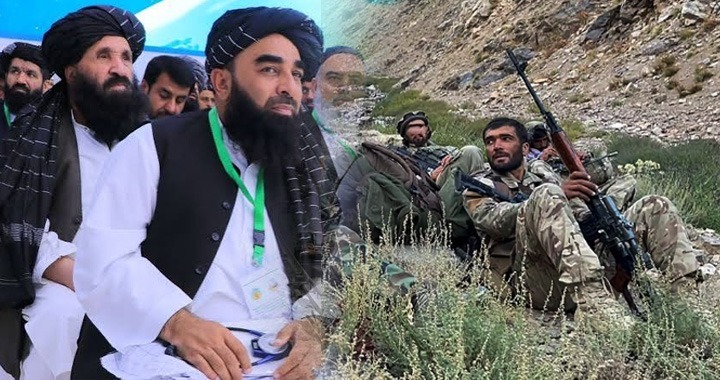
The reported killing of Mirwais Khan, a commander associated with Afghanistan’s National Resistance Front (NRF), has produced two sharply contrasting narratives. Taliban supporters have welcomed the death of an armed opponent, while resistance figures have portrayed Khan as a fighter who refused to abandon his cause.
The competing reactions reveal a question that extends beyond the fate of one commander: does the Taliban’s control of Afghanistan’s institutions amount to broad political legitimacy, or does the continued existence of opposition reflect unresolved disputes over who has the right to govern the country?
Military control and political legitimacy are not interchangeable. A government can control territory, ministries and security institutions while facing opposition to the circumstances of its rise, its policies or its exclusion of sections of society from public life.
Khan’s reported death does not, by itself, establish the strength of the resistance or the extent of public opposition to Taliban rule. It does, however, provide an entry point for examining the distinction between defeating armed opponents and resolving the political questions that sustain opposition.
The Return to Power did not Settle the Question of Representation
The Taliban returned to power in August 2021 after the collapse of the previous Afghan government and the withdrawal of international forces. Their takeover ended the former political order, but it did not produce a broadly inclusive, elected system of government.
The authorities established an administration under their leadership, while political participation and representation remained sharply constrained. Women and girls faced extensive restrictions on education, employment and public life. Opposition political figures and former officials also faced a transformed political environment in which organized dissent became more difficult.
These policies have contributed to international criticism and continuing disputes over the Taliban’s legitimacy. The question is not whether the authorities possess the practical ability to govern much of the country. It is whether control alone can resolve demands for representation, political participation and equal rights.
The absence of an electoral mandate makes it particularly important to distinguish between the authority exercised by the state and the consent of the people it governs.
It would nevertheless be inaccurate to claim, without reliable public-opinion evidence, that a particular majority of Afghans supports or rejects the Taliban. Restrictions on political expression make public sentiment difficult to measure, while Afghanistan’s population contains diverse regional, ethnic, political and social perspectives.
The legitimacy question is real. The precise distribution of public opinion requires evidence.
What Mirwais Khan’s Death Tells us, and What it does Not
The reports surrounding Khan’s killing have turned his final appearance and the circulated footage of his body into symbols in a wider information battle.
Anti-Taliban figures have praised his determination and presented his death as a sacrifice in the struggle against Taliban rule. Supporters of the authorities have celebrated the killing as a defeat for an armed opponent.
Neither reaction establishes the wider political significance of the event on its own. A commander’s death can affect morale, disrupt local networks or become a rallying point for supporters. Its longer-term implications depend on the organization involved, the replacement of its leadership, its capacity to operate and the support it can mobilize.
The NRF’s actual reach must therefore be assessed through evidence of its operational activity, organizational cohesion, recruitment, local networks and ability to sustain pressure. Online tributes may demonstrate sympathy or political identification, but they are not a substitute for evidence of widespread mobilization.
Equally, the death of a commander does not prove that the opposition has been eliminated. The distinction between a tactical setback and the collapse of a political movement remains essential.
The NRF and its leader, Ahmad Massoud, had not officially commented on Khan’s reported death in the account that prompted this analysis. Conflicting reports over the location and circumstances also counsel against drawing definitive conclusions about the operation itself.
The Limits of a Military Victory Narrative
Every government seeks to demonstrate that it can maintain security and defeat armed challengers. The Taliban authorities are no exception. The killing of an opposition commander can be presented as evidence that resistance forces are vulnerable and that the authorities retain the initiative.
But security outcomes do not answer every political question. A government may suppress an armed group without addressing the grievances of those who oppose its rule. It may reduce visible resistance while leaving political exclusion, restrictions on rights and demands for representation unresolved.
That does not mean armed resistance will necessarily expand or that the Taliban are destined to lose power. Armed movements can remain weak, fragmented and geographically isolated even where opposition to government policies exists. Their ability to convert grievances into an effective political challenge depends on leadership, resources, organization, public support and circumstances beyond any single killing.
The central point is that military control should not be mistaken for proof that the political dispute has ended.
Can Opposition Become a Credible Alternative?
For the NRF and other opponents of Taliban rule, the challenge extends beyond surviving security operations. They must demonstrate organizational capacity, establish a credible political programme and explain how they would offer a different system of governance.
Opposition to the Taliban does not automatically translate into support for any particular resistance organization. Afghans who oppose specific Taliban policies may reject armed conflict, distrust former political elites or favor other forms of political change.
A sustainable alternative would need to address these differences rather than assume that dissatisfaction with the authorities creates a unified opposition movement.
The Taliban, meanwhile, face their own test. Greater political inclusion, respect for basic rights and meaningful participation would address some of the questions that military operations cannot resolve. Such changes would not automatically end armed resistance, but they would alter the political environment in which opposition develops.
Control is not the Final Measure of Legitimacy
Mirwais Khan’s reported death may become a symbol for supporters of the resistance, while the Taliban may regard it as another security success. The broader implications will depend on developments that extend far beyond the circumstances of his death.
The more consequential question is whether Afghanistan can move from a political order sustained primarily by the authority of its rulers toward one in which governance, rights and representation command broader acceptance.
The Taliban can seek to defeat every armed challenger, but the elimination of individual commanders cannot by itself settle the question of who has the right to govern Afghanistan. Military control can establish authority. Lasting political legitimacy requires a different kind of answer.



