
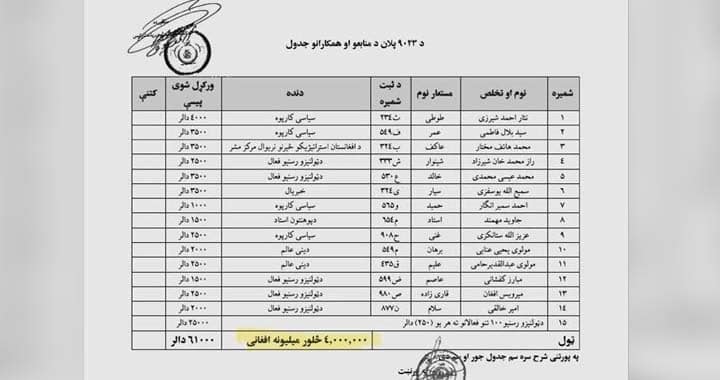
Newly surfaced documents allegedly obtained following a breach of the Taliban’s General Directorate of Intelligence (GDI) have revealed details of an organized network of social media operatives involved in promoting pro-Taliban narratives across digital platforms.
According to the documents and information shared by sources familiar with the matter, a group of mid-level online influencers is allegedly receiving monthly payments ranging between $3,500 and $4,000 to manage digital campaigns, amplify political messaging, and influence public discourse through various social media channels.
The information suggests that these individuals form part of a broader digital ecosystem designed to promote favorable narratives, counter criticism, and shape online perceptions regarding the Taliban administration.
Sources claim that while the identified individuals represent mid-tier operators, several prominent figures associated with Taliban-linked digital activities, including Haider Hashmi, Waqeel Mubariz, Burhanuddin, and members of Mullah Yaqoob’s social media team, allegedly receive significantly higher compensation for their roles in online messaging operations.
The reported network is said to operate multiple social media accounts and platforms, including pages and channels identified as ASF, Wahida, Al Mirsad, Ustad Burmak, Islamabad Post, and Info Monitor. These accounts are allegedly used to distribute coordinated messaging, engage audiences, and promote narratives aligned with Taliban interests.
The leaked information further claims that some operators have access to the social media accounts of Afghan media outlets and frequently circulate content through platforms associated with Afghan journalism, including Khama Press, Paank, Pajhwok, Shamshad News, TOLO News, and Voice of Herat (VOH). The sources allege that these channels have been used to spread misleading or unverified information aimed at influencing public opinion.
Additionally, the individuals are reportedly linked with several accounts associated with the so-called FAK information networks, including Nuqta, War Globe, Huriyat, and Markhor Facts, which are alleged to participate in digital narrative-building activities.
The revelations have raised concerns among observers regarding the increasing role of organized online influence campaigns in modern conflicts, where social media platforms are used as strategic tools to shape perceptions, manage reputations, and influence regional and international audiences.
Critics argue that the alleged allocation of substantial financial resources toward digital propaganda operations comes at a time when Afghanistan continues to face severe humanitarian challenges, including economic hardship, unemployment, and food insecurity affecting millions of ordinary citizens.
Human rights organizations and international observers have repeatedly highlighted the difficult living conditions faced by many Afghans, raising questions about priorities and resource allocation under the current administration.
The emergence of these allegations highlights the growing importance of digital information warfare as a component of contemporary political and security environments. Governments, media organizations, and independent researchers increasingly emphasize the need for transparency, verification of information sources, and awareness regarding coordinated online influence activities.
The authenticity and full scope of the leaked documents remain subject to independent verification. However, the reported findings have renewed debate over the use of social media operations as a tool for political influence and narrative management in Afghanistan and the wider region.



