
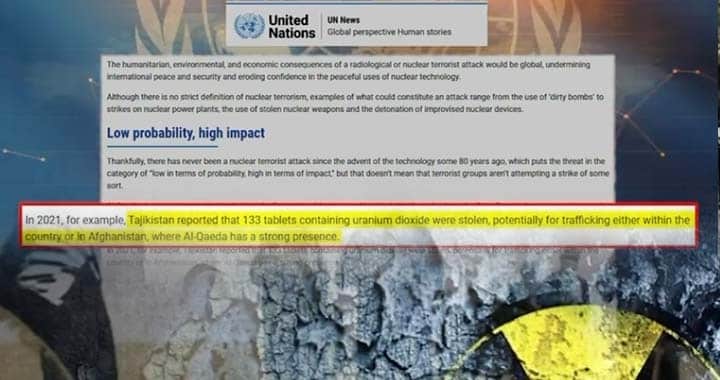
The United Nations has issued a serious warning regarding the escalating threat of nuclear terrorism originating from terrorist networks operating in and around Afghanistan, raising fresh international concerns over the country’s deteriorating security environment under the Taliban regime.
According to assessments highlighted by the United Nations Counter-Terrorism Centre (UNCCT), 133 pellets containing stolen uranium dioxide from Tajikistan could potentially fall into the hands of Al-Qaeda-linked terrorist elements present in Afghanistan, significantly heightening fears of radiological or nuclear terrorism.
The report underscores that the threat of nuclear terrorism is currently at one of its highest levels in recent years, particularly due to the growing nexus between transnational terrorist organizations, illicit trafficking networks, and access to radioactive materials.
Security experts cited in the assessment warned that Al-Qaeda has repeatedly demonstrated intent and interest in acquiring materials capable of being used in radiological attacks. The report further noted that several incidents involving the smuggling, theft, and illegal trafficking of radioactive substances have already been documented globally, intensifying concerns among international security agencies.
Counterterrorism analysts believe the situation in Afghanistan has become increasingly alarming following the return of the Taliban to power, with multiple terrorist organizations reportedly finding operational space inside the country. Experts argue that Afghanistan’s fragile governance structure, porous borders, and the presence of foreign terrorist fighters have collectively created conditions conducive to the expansion of high-risk terrorist capabilities.
According to regional observers, the United Nations, the United States, Pakistan, European nations, and Central Asian countries have repeatedly expressed concerns over terrorist groups allegedly operating from Afghan territory and posing a direct threat to regional and global security.
The report also highlighted fears that terrorist organizations active in Afghanistan are increasingly utilizing advanced technologies, sophisticated communication systems, and international terrorist networks to enhance their operational capabilities. Analysts warn that if terrorist groups gain access to radioactive materials, the consequences could extend far beyond the region and pose unprecedented risks to global security infrastructure.
Experts further argue that the Taliban regime’s alleged tolerance or inability to effectively dismantle transnational terrorist networks has contributed to growing instability and international isolation. Critics maintain that several globally designated terrorist organizations continue to maintain a presence under the broader security umbrella prevailing in Afghanistan.
International security specialists have cautioned that the convergence of extremist ideology, unsecured radioactive materials, and cross-border terrorist networks represents one of the most dangerous emerging threats facing the international community.
The latest warning is expected to intensify global discussions on counterterrorism coordination, border security, intelligence sharing, and the monitoring of radioactive materials across conflict-prone regions.
Observers warn that without decisive international action and sustained pressure on terrorist safe havens, the risk of catastrophic terrorism involving radiological or nuclear materials could continue to grow in the years ahead.



