
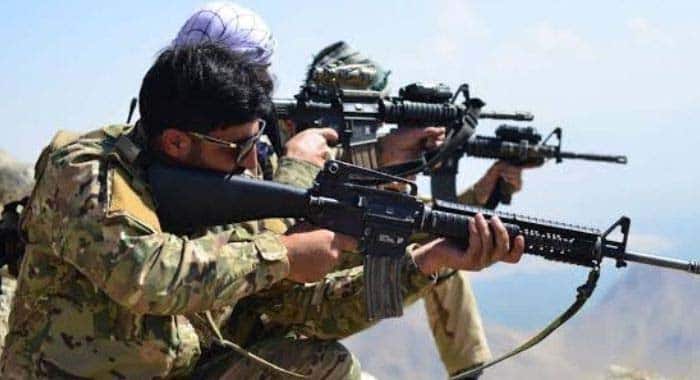
A newly released analytical report concludes that nearly five years after the Taliban’s return to power, Afghanistan’s armed resistance has entered a new and more sophisticated phase, characterized by expanding geographical reach, increasing organizational cohesion, and the emergence of new resistance movements.
According to the report, anti-Taliban activities have evolved well beyond isolated guerrilla operations. Resistance organizations are increasingly coordinating their efforts, expanding recruitment, strengthening operational capabilities, and conducting more organized and sustained military actions across multiple regions of the country. These developments suggest that Afghanistan’s armed opposition is transitioning from localized insurgent activity into a more enduring and structured resistance movement.
The report argues that while the Taliban continue to portray themselves as the country’s uncontested governing authority, developments on the ground present a markedly different picture. Resistance forces are steadily expanding their operational footprint and demonstrating an increasing ability to challenge Taliban authority in numerous provinces, particularly across northern and northeastern Afghanistan.
One of the report’s most significant findings identifies Badakhshan Province as the emerging center of Afghanistan’s armed resistance.
According to the assessment, repeated attacks against Taliban positions, growing local support, the formation of new resistance organizations, and the province’s proximity to Tajikistan have combined to create favorable conditions for sustained insurgent operations. The report also highlights Badakhshan’s rugged mountainous terrain and long-standing anti-Taliban sentiment as major strategic advantages for resistance forces.
Analysts suggest that these factors have transformed Badakhshan into one of the most strategically important theaters of anti-Taliban activity since 2021. The report notes that resistance activity is no longer confined to Panjshir and the Andarab Valley.
Instead, anti-Taliban operations have increasingly been reported across a wide range of provinces, including Kabul, Baghlan, Takhar, Kunduz, Parwan, Kapisa, Badakhshan, Balkh, Herat, and several others. This geographical expansion represents what the report describes as a transition from localized resistance toward a broader nationwide insurgency. As resistance operations spread, Taliban security forces are reportedly being compelled to deploy personnel simultaneously across multiple fronts, placing additional strain on their military and security resources.
The report cites the Sixteenth Report of the United Nations Security Council’s Analytical Support and Sanctions Monitoring Team, which documented continued activity by Afghanistan’s principal resistance organizations despite sustained Taliban counterinsurgency operations.
According to the UN figures referenced in the report:
- Between January and July 2025, the National Resistance Front (NRF) carried out 73 attacks, while the Afghanistan Freedom Front (AFF) conducted 43 attacks.
- During 2024, the Afghanistan Freedom Front claimed responsibility for 83 attacks, while the National Resistance Front reported 261 operations.
The report states that these figures demonstrate the continued operational resilience and military capability of organized resistance groups despite persistent pressure from Taliban security forces.
The analysis further indicates that the National Resistance Front claimed to have conducted 401 targeted operations across 19 provinces between March 2024 and March 2025. During the same period, the Afghanistan Freedom Front reportedly announced 87 operations while expanding its organizational presence to 31 of Afghanistan’s 34 provinces. According to the report, these figures illustrate growing confidence among resistance organizations, increased recruitment efforts, broader organizational capacity, and a long-term strategy aimed at maintaining sustained pressure on Taliban forces throughout the country.
The report identifies growing cooperation among Afghanistan’s leading resistance organizations as one of the most consequential developments. It notes that in April 2024, National Resistance Front leader Ahmad Massoud and Afghanistan Freedom Front leader Yasin Zia agreed to enhance coordination and strengthen cooperation between their respective organizations.
Following that agreement, both groups reportedly carried out multiple operations targeting Taliban intelligence facilities, checkpoints, and military installations, including synchronized attacks in several locations.
The report argues that this increasing operational coordination reflects a gradual movement toward a more unified resistance structure.
According to the report, separate operations conducted during February and April 2026 targeted Taliban positions in Baharak District and surrounding areas of Badakhshan Province. In July 2026, the National Resistance Front claimed responsibility for an attack against a Taliban brigade in Ragh District, reporting the deaths of two Taliban fighters and the destruction of military equipment.
The report states that these operations demonstrate a shift away from sporadic hit-and-run attacks toward more deliberate and coordinated military campaigns.
The analytical report also highlights the appearance of new anti-Taliban movements during 2026, describing their emergence as evidence of an increasingly decentralized and diversified resistance landscape. Among them is the National Mobilization Front (NMF), reportedly composed of former members of the Afghan National Defense and Security Forces (ANDSF), young activists, and local fighters.
The report suggests that the formation of NMF reflects expanding participation in the armed opposition beyond the established resistance organizations. Another newly established group, Sepahiyan-e-Mihan, is identified as a significant addition to the anti-Taliban movement.
According to the report, on 17 July 2026, the organization carried out a coordinated assault in Yaftal District, temporarily seizing control of the area, disarming Taliban personnel, capturing weapons and military equipment, taking control of government facilities, and raising the resistance flag.
The report characterizes this operation as one of the most significant military setbacks experienced by the Taliban since their return to power in 2021. Beyond military developments, the report argues that several internal challenges confronting the Taliban are creating favorable conditions for resistance recruitment and expansion.
These challenges include:
- Internal leadership rivalries and factional divisions;
- Ethnic grievances;
- Continuing economic difficulties;
- Declining public confidence;
- Growing dissatisfaction among former Afghan military personnel.
According to the assessment, each successful resistance operation weakens the Taliban’s narrative of nationwide stability while forcing the authorities to divert greater financial, military, and administrative resources toward internal security rather than governance.
The report concludes that if current trends continue, northern Afghanistan may witness a gradual erosion of Taliban control over time.
Among all regions, Badakhshan is assessed as the province most likely to emerge as the first major area where Taliban authority faces a sustained and serious strategic challenge.
The analysis emphasizes that Afghanistan’s security landscape is undergoing a significant transformation. Rather than representing isolated acts of insurgency, the country’s armed resistance appears to be evolving into a broader, increasingly coordinated, and more durable movement with expanding geographical reach, improving organizational structures, and growing operational effectiveness.
As these developments continue to unfold, the report suggests that Afghanistan’s long-term security environment may become increasingly contested, with implications for regional stability, humanitarian conditions, and the broader geopolitical landscape.



