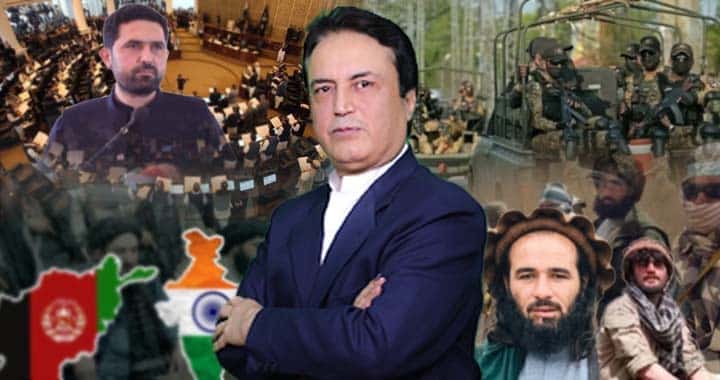
For nearly five years, Afghanistan’s interim Taliban administration has projected an image of complete territorial control. The narrative presented to the world has consistently been that the country has entered an era of stability after decades of war and that organized armed resistance has effectively disappeared. Recent developments, however, suggest that this picture deserves a more careful examination.
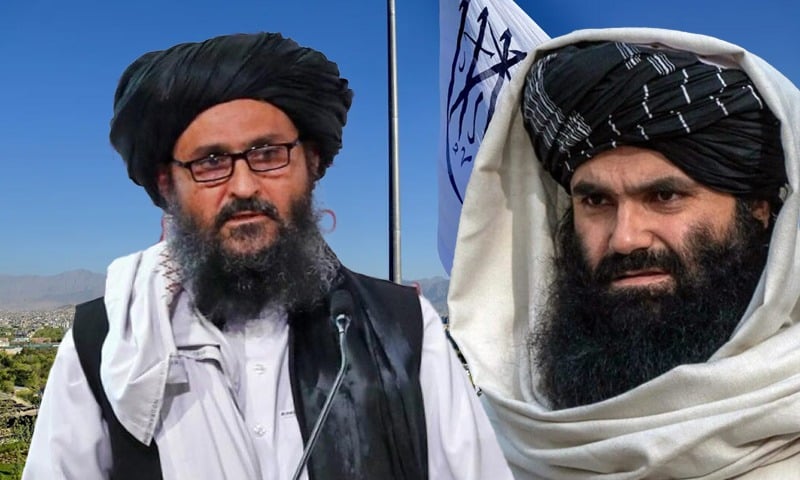
The emergence of Sipahan-e-Mehan, an armed resistance movement that has publicly announced military operations against the Taliban administration, represents far more than the appearance of another opposition group. Whether this organization ultimately grows into a nationwide movement or remains geographically confined is a question only time can answer. Yet its very emergence carries political and security implications that cannot be dismissed.
Afghanistan has witnessed armed conflict for decades, but the current situation is different. The Taliban today are not an insurgency challenging an internationally recognized government. They are themselves the governing authority. Any armed organization capable of conducting coordinated attacks against their positions is, therefore, challenging the state’s monopoly over the use of force, the most fundamental measure of governmental authority.
The reported operation in Badakhshan’s Yaftal district, regardless of competing battlefield claims, demonstrates that organized armed opposition has entered a new phase. Even temporary seizures of positions, symbolic flag hoisting, or coordinated withdrawals after attacks are politically significant. Insurgencies are rarely measured by the territory they permanently hold during their early stages. They are measured by their ability to survive, recruit, communicate, and repeatedly challenge the authority of the state.
That is precisely why these developments deserve serious attention.
The Timing Is More Significant Than the Attack
The Taliban administration has now completed nearly five years in power. Traditionally, governments consolidate authority during such a period. Administrative institutions become stronger, intelligence networks expand, security structures mature, and public confidence either stabilizes or deteriorates depending on governance.
Instead, Afghanistan now appears to be witnessing the emergence of fresh resistance.
This timing matters.
It suggests that despite military superiority, the Taliban have not entirely succeeded in converting battlefield victory into long-term political legitimacy. History repeatedly demonstrates that governing a country requires considerably different skills than capturing one.
Military victories remove governments.
Good governance prevents new insurgencies.
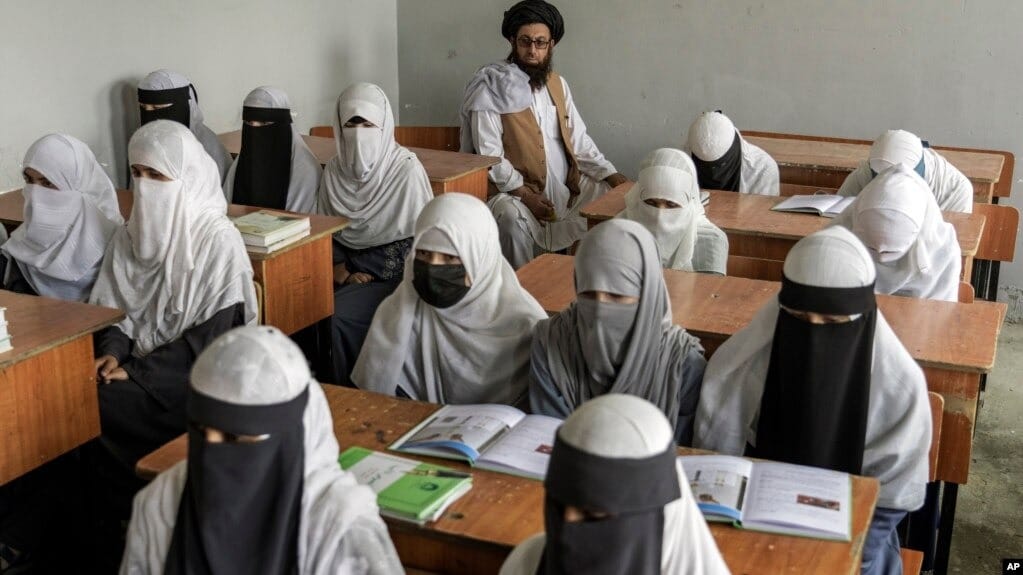
The grievances publicly highlighted by Sipahan-e-Mehan are therefore worth noting, irrespective of whether one agrees with its methods or objectives. Restrictions on women’s education, worsening economic conditions, increasing poverty, and concerns surrounding Afghan refugees living abroad have all been cited among its stated motivations.
These are not merely military issues.
They are governance issues.
No government, anywhere in the world, can indefinitely rely upon security measures alone if political, economic and social grievances continue to accumulate beneath the surface.
Pakistan Must Resist the Temptation of Assumptions
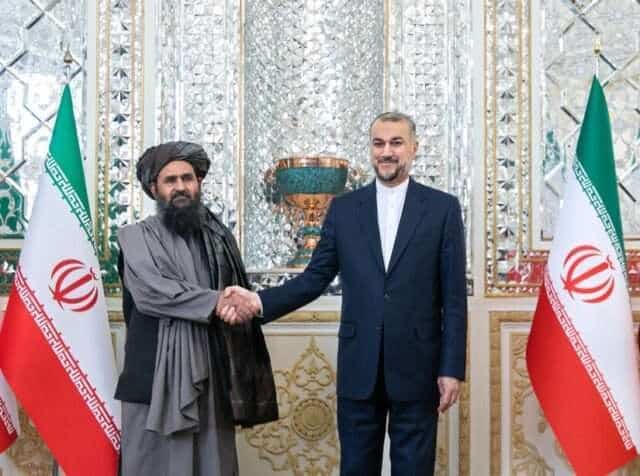
Predictably, speculation has already emerged regarding possible external supporters behind this newly announced movement. Various reports suggest that Taliban circles suspect Pakistan, Tajikistan or even Iran of encouraging or facilitating these developments.
Such assumptions should be treated cautiously.
Pakistan’s publicly declared policy regarding Afghanistan has remained remarkably consistent over the past several years. Islamabad has repeatedly maintained that it seeks a peaceful, stable Afghanistan and does not wish to interfere in its internal political affairs.
This position serves Pakistan’s own interests.
Pakistan has experienced the consequences of prolonged instability across the border more than perhaps any other regional state. Refugee flows, cross-border terrorism, illegal weapons trafficking, narcotics networks and organized militant infrastructure have all directly affected Pakistan’s national security.
Creating additional instability inside Afghanistan would hardly solve these challenges.
In fact, Pakistan’s principal concern has consistently been different.
Its concern has been the use of Afghan territory by terrorist organizations carrying out attacks inside Pakistan.
That distinction must remain clear.
Supporting internal political struggles inside Afghanistan and demanding action against terrorist sanctuaries are not the same thing.
Unfortunately, these two issues are often deliberately conflated.
The Challenge Before the Taliban
The Taliban now face a difficult strategic dilemma.
Heavy-handed security operations may temporarily suppress armed opposition in individual districts, but arrests and military crackdowns alone rarely eliminate the underlying political causes that generate resistance.
Afghanistan’s recent history offers numerous examples.
Every successive government has believed superior force alone could permanently defeat its opponents.
None ultimately succeeded.
This does not necessarily mean the Taliban administration faces imminent collapse. Such conclusions would be premature and unsupported by available evidence.
However, the emergence of organized resistance after several years of uninterrupted rule should certainly be regarded as an early warning indicator rather than dismissed as an isolated security incident.
Governments become vulnerable not when opposition appears.
They become vulnerable when they underestimate it.
A Different Conversation Inside Pakistan
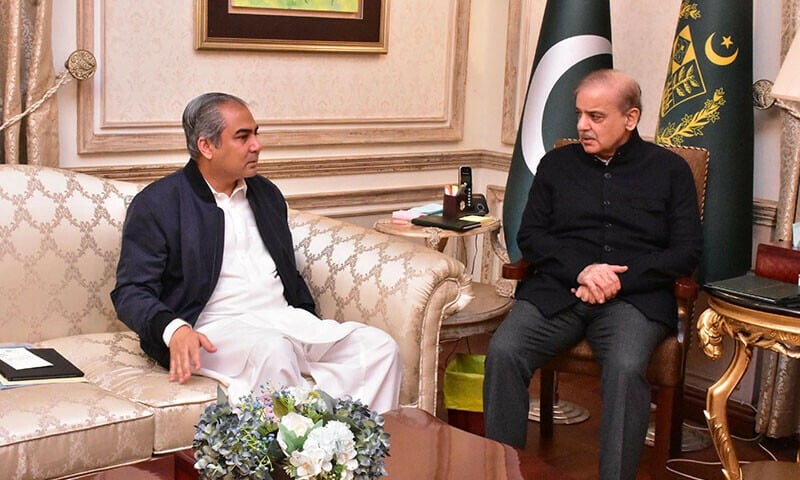
Across the border, developments inside Khyber Pakhtunkhwa present an entirely different, yet equally important, conversation.
For months, public messaging regarding intelligence-based operations often appeared inconsistent. Political debates frequently overshadowed operational realities. Statements emerging from different quarters sometimes created confusion regarding whether provincial authorities fully supported ongoing counterterrorism efforts.
Recent public declarations expressing support for intelligence-based operations and reaffirming zero tolerance against terrorism therefore represent a welcome development.
Counterterrorism cannot succeed if political messaging remains ambiguous.
Security institutions require political clarity.
The public deserves factual communication rather than competing narratives.
More importantly, terrorists should never be left guessing whether political divisions exist among those responsible for combating them.
Unity of purpose remains one of the strongest strategic advantages any state can possess.
A Policy Statement Must Now Become a Governance Policy
Words, however, must eventually translate into action.
The biggest challenge before the Khyber Pakhtunkhwa government is not issuing statements supporting intelligence-based operations. The real challenge begins after those statements are made. Counterterrorism is not won through press conferences. It is won through governance, policing, intelligence sharing, administrative capacity and the restoration of public confidence.
For years, Pakistan’s security forces have carried out successful military operations across the province. Time and again, areas infiltrated by Fitna al-Khwarij have been cleared after intelligence-based operations and handed back to the civil administration. That handover is not the end of the mission. It is the beginning of the provincial government’s responsibility.
The armed forces can dismantle terrorist hideouts, neutralize militants and clear mountainous terrain. They cannot permanently administer every district, every village and every valley. Sustainable peace depends upon whether the civil administration consolidates the gains secured through military operations.
This is where Khyber Pakhtunkhwa continues to face its greatest test.
Repeated infiltration into previously cleared areas should compel policymakers to ask difficult questions. Why do small militant groups manage to reappear? Are policing mechanisms sufficiently proactive? Is intelligence being translated into preventive action quickly enough? Are local administrative structures functioning with the speed required by an evolving terrorist threat?
These questions deserve practical answers rather than political slogans.
The Police Must Become the First Line of Defence
One encouraging development in recent months has been the increasingly proactive role played by police officers in several districts facing terrorist threats. In places where local leadership has adopted an aggressive operational posture, the security environment has shown measurable improvement.
This is precisely the direction that provincial policy should encourage.
The future of internal security cannot rest exclusively upon military deployments. Modern counterterrorism requires strong district policing, capable Counter Terrorism Departments, improved intelligence coordination and rapid response capabilities at the local level.
Pakistan has already invested heavily in strengthening these institutions. Training programmes have expanded. Modern surveillance equipment has been introduced. Communication systems have improved significantly compared with previous years.
Yet technology alone cannot substitute for leadership.
Equipment is only as effective as the people using it.
Institutional capacity must therefore remain an ongoing priority. Continuous training, professional development, intelligence analysis, cyber monitoring, drone detection and coordinated operational planning should become routine rather than exceptional.
The objective should be simple.
Prevent attacks before they occur.
Every successful prevention saves lives that rarely appear in headlines.
Public Communication Is Also Part of National Security
Another lesson deserves equal attention.
In the modern information environment, silence often creates confusion faster than misinformation itself.
When terrorist incidents occur or intelligence-based operations are underway, governments cannot afford contradictory public messaging. Citizens expect timely, factual and responsible communication from their elected representatives.
This does not mean revealing operational details that could compromise security. Sensitive information must always remain protected.
It does mean providing clarity.
Public confidence increases when governments communicate consistently. It weakens when officials appear uncertain, contradictory or disconnected from events unfolding on the ground.
Counterterrorism is fought simultaneously on two fronts.
One is the battlefield.
The other is public confidence.
Neither should be neglected.
Afghanistan and Pakistan Face Different Problems, Yet Similar Tests
Although Afghanistan and Khyber Pakhtunkhwa confront very different political realities, an interesting parallel nevertheless exists.
In Afghanistan, the principal challenge increasingly appears to be political legitimacy and governance under an internationally isolated administration.
In Khyber Pakhtunkhwa, the challenge is not legitimacy of the constitutional system, but effective governance under an elected provincial government confronting a persistent terrorist threat.
In both cases, however, governance remains central.
Security operations can reduce immediate threats.
Good governance prevents their return.
This principle has remained remarkably consistent across modern counterinsurgency campaigns around the world.
Where governance improves, extremist recruitment becomes more difficult.
Where governance deteriorates, terrorist organizations find opportunities to exploit frustration, unemployment, weak institutions and public distrust.
No amount of military success can permanently compensate for administrative failure.
The Regional Security Picture Is Becoming More Complex
The emergence of Sipahan-e-Mehan also reminds regional policymakers that Afghanistan’s internal security landscape is becoming increasingly fragmented.
The Taliban continue confronting ideological opponents, local resistance elements, Islamic State Khorasan Province and various criminal networks, all while attempting to govern a country suffering from severe economic hardship and international isolation.
This complexity carries implications beyond Afghanistan’s borders.
Instability rarely remains geographically contained.
Pakistan therefore has every legitimate reason to closely monitor developments while maintaining its stated policy of non-interference in Afghanistan’s domestic affairs. At the same time, Islamabad remains justified in insisting that Afghan territory must not serve as a launching pad for terrorist violence against Pakistan.
Those two positions are entirely compatible.
Supporting regional stability does not require accepting cross-border terrorism.
The Road Ahead
The coming months will reveal whether Sipahan-e-Mehan develops into a durable insurgent movement or remains a localized phenomenon. Equally, they will demonstrate whether the Khyber Pakhtunkhwa government’s recent support for intelligence-based operations marks a lasting policy shift or simply another political statement.
Both deserve close observation.
One represents a new security challenge emerging inside Afghanistan.
The other represents an opportunity for Pakistan to strengthen its own internal resilience.
History rarely offers governments unlimited opportunities to correct course.
Afghanistan’s evolving security dynamics and Pakistan’s continuing counterterrorism campaign together illustrate a simple but often forgotten reality: military force can create security space, but only effective governance can preserve it.
The Taliban now confront a new battlefield that they did not anticipate when they consolidated power nearly five years ago. Khyber Pakhtunkhwa, meanwhile, still confronts an older challenge, translating political authority into effective governance capable of denying terrorists the opportunity to recover.
Ultimately, neither battlefield will be decided solely by guns.
Both will be decided by the strength, credibility and effectiveness of the institutions that claim to govern the people living under their authority.