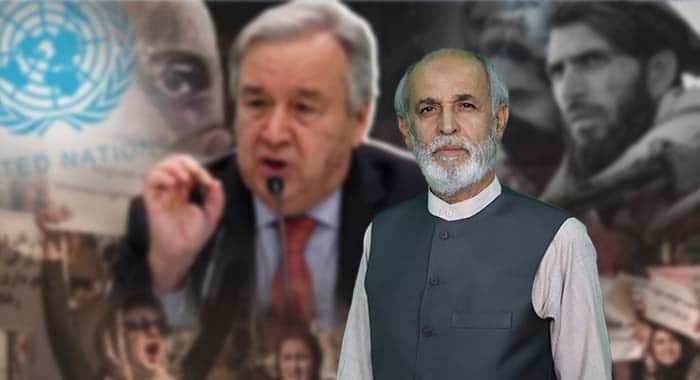
Afghanistan is once again entering a dangerous phase in its long and troubled history. The Taliban government may have succeeded in consolidating control over most of the country, but political stability should not be confused with genuine peace. Beneath the surface, Afghanistan continues to face deep social, political, religious and security challenges. Restrictions on women, the suppression of dissent, pressure on religious minorities, the growth of armed opposition and the continuing presence of militant organisations are creating an increasingly complicated environment.
Recent developments have brought these contradictions into sharp focus. The United Nations Secretary-General has issued a strongly critical assessment of the Taliban’s policies, particularly regarding women’s rights and education. In Kabul, the Taliban have reportedly taken control of the office of Khatam al-Nabieen and detained around 28 people. In Badakhshan’s Zebak district, clashes have reportedly taken place between the Taliban and opponents of the regime. At the same time, a report associated with the Hudson Institute has warned that armed resistance in Afghanistan could expand in the future.
These developments are not isolated incidents. Together, they suggest that Afghanistan’s political and security crisis is far from over. The criticism coming from UN Secretary-General António Guterres is significant because it highlights a reality that the Taliban cannot easily dismiss: Afghanistan’s internal policies have become an international issue.
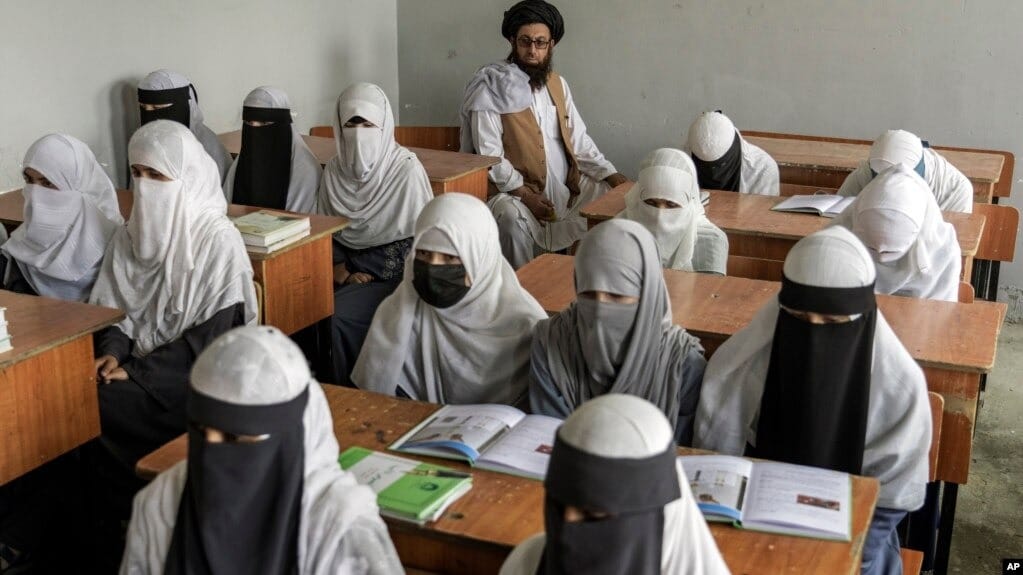
The central concern is the continuing restrictions imposed on Afghan women and girls. Their access to education, employment and wider participation in public life remains severely constrained. These policies have generated sustained criticism from the international community and have contributed significantly to Afghanistan’s diplomatic isolation. The issue is not simply about international recognition. It is ultimately about the rights and future of ordinary Afghans.
Former Afghan President Hamid Karzai has also argued that the Taliban will continue to face international difficulties unless they reconsider their policies. His position reflects a broader argument: Afghans need more than a government that controls territory. They need education, healthcare, economic opportunity, political freedom and basic rights. The Taliban’s leadership may argue that it has brought security after decades of war, but security without rights is an incomplete form of stability. A government cannot expect lasting legitimacy while large sections of its population remain excluded from education, political participation and economic life.
The continuing restrictions on women are therefore not merely a humanitarian concern. They are also a political and economic liability for the Taliban regime. If Kabul wants international recognition, stronger economic relations and sustainable development, it will eventually have to confront these issues.
The reported Taliban takeover of the Khatam al-Nabieen office in Kabul adds another troubling dimension to Afghanistan’s internal crisis. According to the information available, the organisation is not simply an office. It has educational and religious activities, including a madrassa, a college, political activities, television-related operations and computer education. The Taliban had reportedly issued notices against the organisation for approximately two years.
The situation escalated on Sunday, when a gathering was reportedly taking place and Taliban forces surrounded the premises. On Monday, they reportedly took control of the office and detained around 28 people. Among those reportedly arrested were figures identified as Sayyid Hussain Gardizi, Sayyid Hasan Sharif and Muhammad Hussain Sangardos, among others.
The reported arrests are particularly important because they raise questions about religious freedom and sectarian tensions in Afghanistan. The Taliban’s treatment of religious minorities and religious practices has previously generated controversy. During Muharram, restrictions were reportedly imposed on religious processions and gatherings in several Afghan cities, including Kabul, Herat, Mazar-i-Sharif and Ghazni, with arrests reportedly taking place in connection with violations of those restrictions.
This pattern raises a fundamental question: can Afghanistan achieve durable peace while religious differences are treated primarily as security problems? A country emerging from decades of war needs social reconciliation, not merely military control. If religious communities believe that their institutions, ceremonies and leadership are under constant pressure, grievances can deepen beneath the surface. The Taliban should understand that suppressing disagreement does not necessarily eliminate it. In many cases, it simply pushes dissent underground.
The reported clashes in Zebak district of Badakhshan are equally significant. According to the information discussed, Taliban forces attacked a centre associated with their opponents. The National Resistance Front reportedly claimed that it had repelled the attack, while local accounts suggested that substantial exchanges of fire took place between the two sides. At the time of the reports, there was no confirmed information regarding casualties.
What makes the incident important is the broader context. Badakhshan has remained one of the areas where opposition to Taliban rule has continued to attract attention. Although Taliban forces have maintained territorial control, pockets of resistance demonstrate that political opposition has not disappeared. For a period following arrests and reported surrenders by opposition figures, the situation in the area appeared comparatively calm. The renewed clash, however, indicates that this calm may have been temporary.
The lesson is clear: military control does not automatically translate into political reconciliation.
A report from the Hudson Institute has added another layer to the debate by warning that armed resistance in Afghanistan could expand. The report’s assessment is particularly relevant in light of the recent developments in Badakhshan. If opposition networks continue to survive, reorganise and attract local support, isolated incidents could potentially become part of a wider pattern. This does not necessarily mean that the Taliban are on the verge of losing power. There is a major difference between an armed insurgency capable of conducting attacks and a movement capable of seriously challenging the government nationwide.
However, the Taliban should not underestimate the political consequences of continued resistance. The more restrictive the government’s policies become, the greater the possibility that dissatisfied groups will seek alternative methods of opposition. This is particularly true when political avenues for dissent are limited. The question is therefore not simply whether armed groups can grow. The more important question is why people might become willing to support them. If political space remains closed, opposition movements can acquire relevance even when they lack the military strength to seize power.
Another major issue is the presence of Islamic State Khorasan and other militant organisations in Afghanistan. There are competing narratives regarding the scale of the Islamic State threat. Reports have raised questions about the figures presented by the Taliban concerning the group’s activities and have suggested that Kabul may be emphasising the threat in its efforts to obtain greater cooperation from countries such as China and Russia. This is where Afghanistan’s geopolitical strategy becomes particularly interesting.
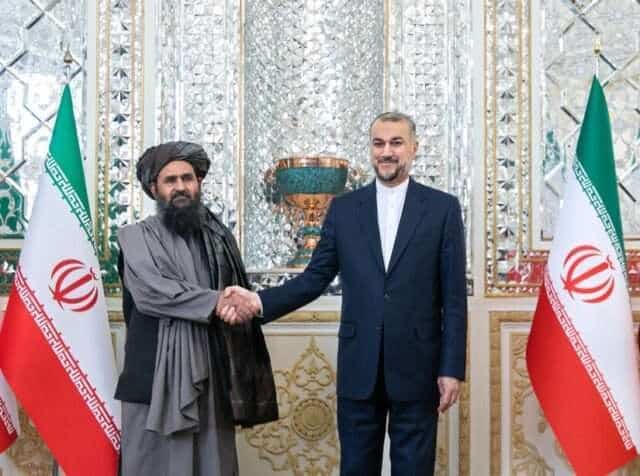
The Taliban are seeking stronger relationships with neighbouring and regional powers. They have increased their engagement with Central Asian countries, including Kazakhstan, Uzbekistan, Kyrgyzstan and Turkmenistan. They have also maintained contacts with Iran and Turkey while attempting to deepen economic links with China.
The reported Saudi agreement, described as extending over 25 years, is also presented as an important development that could increase trade and potentially provide economic benefits. China is particularly important because of its economic power and its geographical proximity. The Taliban have sought to strengthen connectivity with China, including through routes associated with the Wakhan Corridor.
But Beijing’s relationship with Kabul is not without serious reservations. China is deeply concerned about militant organisations operating in or around Afghanistan, particularly groups that could threaten Chinese interests. The presence of Uyghur militants and concerns over the East Turkestan Islamic Movement are especially sensitive issues for Beijing.
China therefore faces a delicate balancing act. It wants stability, trade and economic connectivity with Afghanistan, but it also wants assurances that Afghan territory will not be used against Chinese interests. The Taliban’s challenge is to convince China and other regional powers that they can provide security while simultaneously managing Afghanistan’s internal militant landscape.
For Pakistan, developments inside Afghanistan cannot be viewed from a distance. The relationship between Pakistan and Afghanistan has deteriorated significantly, with border tensions, security disputes and disruptions to trade creating a dangerous deadlock. The closure or severe restriction of the traditional trade routes has affected communities and businesses on both sides. At the same time, the absence of sustained political dialogue makes security cooperation much more difficult.
The problem becomes even more complicated when militant organisations operate across or around the border. The historical connection between the Afghan war and militant networks in the region is extensive. The conflict in Afghanistan involved not only Afghan Taliban forces but also Arab fighters, Pakistani religious groups and a variety of other organisations. Networks associated with groups such as the Haqqani network also developed across national boundaries. Over time, relationships between militant organisations in Pakistan and Afghanistan became deeply interconnected. That history matters today. Even when governments disagree, militant networks can retain their own relationships. This is why the security problem cannot be solved simply by closing a border.
The situation in Khyber Pakhtunkhwa demonstrates how directly these regional dynamics affect Pakistan. In the Matta area of Swat, police reportedly conducted an operation in which around six people were arrested. Such arrests can be valuable if authorities use them not merely to detain suspects but to uncover the broader network behind an attack. Investigations should determine where the suspects came from, who facilitated them, how they operated and whether additional members of their network remain active.
There have also been reports suggesting that individuals connected with attacks in the Matta area may have links outside Swat, including areas such as Bajaur, Dir, Buner, Jamrud and Peshawar. If these links are confirmed, they would demonstrate the importance of intelligence-led investigations rather than relying exclusively on post-incident arrests. Pakistan has repeatedly suffered from the consequences of inadequate investigation and intelligence coordination. Every terrorist incident should therefore be treated as an opportunity to map the entire network behind it.
The objective should not be to arrest six people. The objective should be to understand the organisation that produced those six people. Another worrying development is the emergence of what can be described as a broader militant ecosystem involving groups such as the Tehrik-i-Taliban Pakistan and Islamic State Khorasan. Even if the number of attacks fluctuates from month to month, terrorism has not disappeared from Pakistan. Khyber Pakhtunkhwa and Balochistan continue to face serious security challenges.
A sealed border may reduce some forms of cross-border movement, but it cannot by itself eliminate militancy. Security cooperation between Pakistan and Afghanistan is therefore essential. Unfortunately, political relations are currently characterised by mistrust, limited communication and a broader diplomatic deadlock. This is precisely the environment in which militant actors can benefit. Groups that oppose both Pakistan and the Taliban may exploit tensions between the two governments. The longer the political deadlock continues, the more opportunities such actors may find to expand their activities.
The future of the Taliban regime will ultimately depend not only on its ability to maintain control but on how it governs. The Taliban have received advice from figures associated with their own system to reconsider policies concerning education, politics, administration, security and relations with neighbouring countries. The message is important: even within Afghanistan’s broader political environment, there is recognition that policy changes are necessary.
If restrictions on women continue, political opponents remain suppressed, religious communities face pressure and alternative political voices remain excluded, the possibility of renewed resistance will increase. The armed opposition groups associated with figures such as Ahmad Massoud and other resistance networks may not currently possess the capability to overthrow the Taliban. But political grievances can provide them with oxygen. Meanwhile, the presence of IS-K and other militant organisations creates another layer of instability.
For Pakistan, the consequences could be severe. If Afghanistan remains politically isolated, economically fragile and internally divided, militant organisations may continue to exploit the vacuum. If Pakistan-Afghanistan relations remain frozen, cross-border security cooperation will remain weak. And if attacks in Khyber Pakhtunkhwa and Balochistan continue, bilateral tensions could become even more dangerous.
Afghanistan stands at a crossroads. The Taliban have achieved what many governments before them failed to achieve: they have established nationwide territorial control. But territorial control is only the beginning of governance. The real test is whether they can transform control into legitimacy.
That requires more than military strength. It requires respect for human rights, meaningful access to education, religious freedom, political inclusion, economic opportunity and constructive relations with neighbours. The UN criticism, the reported Khatam al-Nabieen arrests, the clashes in Zebak and warnings about expanding armed resistance should therefore be viewed as interconnected warning signs.
The danger is not necessarily that the Taliban will suddenly collapse. The greater danger is that Afghanistan could settle into a prolonged cycle of repression, resistance, militancy and international isolation. Pakistan, meanwhile, cannot afford to treat Afghanistan’s problems as someone else’s crisis. The two countries share geography, history, communities and security challenges. A deterioration in Afghanistan inevitably creates consequences for Pakistan. The way forward is neither endless confrontation nor unconditional acceptance. It is sustained diplomacy, stronger intelligence cooperation, border management, protection of civilian rights and pressure for political reform.
Ultimately, Afghanistan needs a political order in which people do not have to choose between security and freedom. Until that balance is found, the apparent calm in Afghanistan will remain fragile and the next crisis may already be taking shape beneath the surface.