Shamim Shahid
Pakistan’s western frontier is once again sending a troubling message: the security crisis is no longer confined to isolated militant attacks or occasional border incidents. From the tense situation in Bajaur to the emergence of controversial security committees in Bannu, and from the prolonged diplomatic deadlock with Afghanistan to reports of growing opposition to the Taliban regime, a much larger and more complicated picture is emerging.
What makes the present moment particularly dangerous is not simply the number of incidents taking place. It is the apparent absence of a clear, unified strategy to deal with them. Where the state needs clarity, ambiguity is increasingly visible. Where negotiations are required, deadlock continues. And where institutions are expected to enforce the law, alternative structures are beginning to raise questions about who actually holds authority.
The bomb blast in Bajaur is the latest reminder of how fragile the security environment has become. The incident reportedly occurred in Damadola, a border area close to Afghanistan, injuring two children who were subsequently taken to hospital. The atmosphere in the area remains tense, and no group has so far publicly claimed responsibility for the blast. Nevertheless, local police have described the incident as a terrorist attack.
That distinction matters. In a region already exposed to militant activity, targeted killings and cross-border insecurity, every unexplained explosion generates fear well beyond the immediate victims. Bajaur is not an ordinary district facing an ordinary law-and-order problem. Its geographical location, proximity to Afghanistan and history of militancy make it particularly vulnerable to the spillover of regional instability.
Whenever an incident of this nature occurs, suspicion naturally falls on militant organizations such as the Tehrik-i-Taliban Pakistan or Daesh, among others. But suspicion is not evidence. Until responsibility is established through a credible investigation or a verified claim, authorities must be careful not to turn assumptions into conclusions.
The more immediate concern is that such incidents are occurring in an environment where the security situation is already tense. Targeted killings and other attacks have contributed to a growing sense of insecurity. For ordinary residents, the debate over which organization is responsible is secondary to a much simpler question: Who will protect them?
That question leads directly to another troubling development in Bannu. Reports about differences within security committees in Bannu and Lakki Marwat deserve serious attention because they touch the very foundation of state authority. The reported formation of local security committees, and the controversy surrounding their activities, raises an uncomfortable question: why are parallel or semi-parallel security arrangements being allowed to emerge in the first place?
The argument behind such arrangements may be understandable. In areas where people have suffered from terrorism for years, communities naturally want greater protection. If citizens believe the formal security system is unable to protect them quickly enough, they may seek alternative mechanisms.
But understandable motives do not automatically make an arrangement legitimate or sustainable. The rule of law depends on clearly defined authority. Police investigate. Courts determine guilt. Law-enforcement institutions enforce the law. Once informal groups begin taking on responsibilities that belong to state institutions particularly arresting, punishing or prosecuting people the distinction between community protection and parallel justice becomes dangerously blurred.
The reported disagreements began after police in Bannu moved against certain individuals, prompting opposition from sections of the local security committees. The fact that differences have emerged between these groups and the police should be a warning to provincial authorities.
The most disturbing aspect is not merely the disagreement itself. It is the apparent delay in an effective government response. If the government believes these committees are legitimate and necessary, it must clearly define their mandate, authority and limits. If they are not legitimate, the government must dismantle them and strengthen the institutions that are constitutionally responsible for security.
There can be no middle ground where the state expects informal groups to maintain order but simultaneously remains unwilling or unable to control what those groups do. The irony is particularly striking: these committees were reportedly established in response to insecurity, yet the region has continued to experience terrorist incidents. This should prompt an honest assessment of whether such arrangements are actually improving security or merely creating another layer of uncertainty.
The police must be given the opportunity and the resources to perform their duties. If policing has weaknesses, those weaknesses should be addressed through training, intelligence, resources, accountability and institutional reform. Creating parallel structures risks weakening the very state institutions that need to become stronger.
The provincial government therefore owes the public a clear position. Silence is not neutrality when questions of state authority and public security are involved. The broader problem, however, extends beyond Bannu and Bajaur. Pakistan’s relationship with Afghanistan remains locked in a prolonged and increasingly dangerous stalemate. The fundamental Pakistani position is straightforward: Afghanistan should take practical and verifiable action against terrorist organizations operating from its territory, particularly those whose activities threaten Pakistan.
The Afghan side has its own concerns and objections. But whatever the disagreements, the fact remains that negotiations between the two countries have not produced a lasting breakthrough. The deadlock has reportedly continued for two to three months, with the last significant round of negotiations taking place in April with Turkish intervention. Since then, there has been little visible progress. This is precisely where diplomacy becomes essential. Pakistan is right to insist that security concerns cannot simply be ignored. But diplomacy does not mean abandoning security demands. In fact, diplomacy is often the mechanism through which security demands can be converted into practical agreements.
A negotiation does not begin after every problem has already been solved. Negotiations begin because problems remain unresolved. Therefore, insisting on practical action while simultaneously allowing the diplomatic channel to remain frozen is unlikely to produce a solution. The two countries need a process through which demands can be discussed, agreements can be reached and implementation mechanisms can be established. There is a logical sequence to successful diplomacy: dialogue, agreement, implementation and verification.
Without dialogue, there can be no agreement. Without an agreement, there is no common framework for implementation. And without verification, neither side can develop confidence that commitments are actually being fulfilled. The deadlock must therefore be broken.
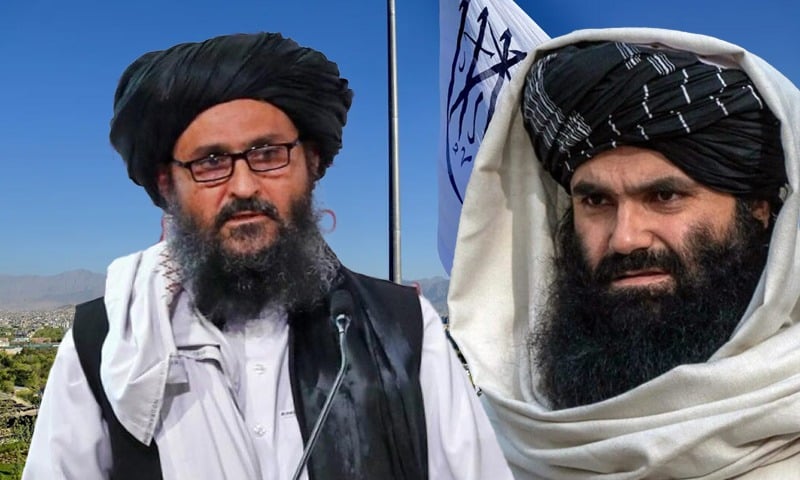
There is another dimension that should not be ignored: public rhetoric. Statements from Afghan officials, Pakistani politicians, security figures and commentators increasingly contribute to an atmosphere in which confrontation appears easier than compromise. References to disagreements involving Taliban figures such as Zabihullah Mujahid and Amir Khan Muttaqi, and the broader polarization surrounding Pakistan-Afghanistan relations, demonstrate how difficult the diplomatic environment has become.
Yet there is an important distinction between diplomatic tension and war. The people of Pakistan and Afghanistan should not be treated as enemies simply because their governments disagree. Millions of families, traders and communities on both sides of the border have historical, cultural and economic connections. Social media, television and print media can magnify confrontation because conflict generates attention. But governments must think beyond headlines.
Pakistan and Afghanistan have interests that cannot be separated from each other. Trade, transit, border management, political relations and regional connectivity all require communication. Afghanistan is not only Pakistan’s neighbor; it is also a potential route toward Central Asia. Pakistan’s own ambitions for regional trade and connectivity are linked to stability in Afghanistan. Closing doors may produce temporary political satisfaction, but it carries economic and strategic costs. The two countries therefore need dialogue not only on terrorism, but also on trade, transit, border management and political relations. A comprehensive diplomatic process is more useful than discussing every dispute in isolation.
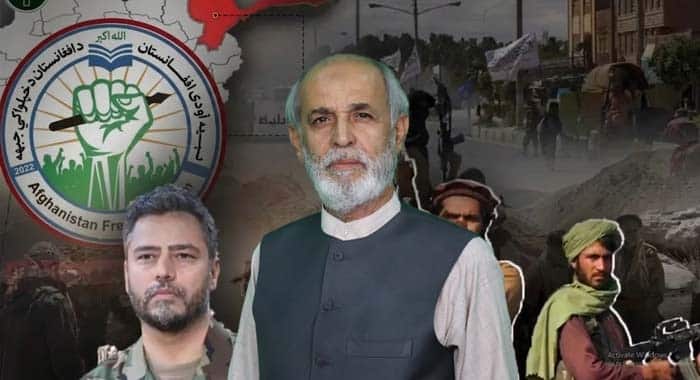
Against this already tense background, another report has emerged from Afghanistan: that the United Front has killed a senior Taliban commander or official in Kandahar, identified in the supplied material as Sami Uddin/Samiruddin. At present, this claim must be treated with caution.
The report has circulated on social media, but the Afghan authorities have reportedly not issued a clear official confirmation. That absence of confirmation is significant. If such a killing had actually taken place, particularly involving a senior figure in Kandahar, it would represent a serious security and political development. Kandahar is central to the Taliban’s political and organizational power, and an attack there would carry significance far beyond the individual involved. The United Front and resistance figures have reportedly claimed for weeks that their networks have a presence in and around Kandahar. If a credible attack against a senior Taliban figure were eventually confirmed, it could therefore become a major propaganda and political achievement for the resistance.
But until credible evidence emerges, responsible analysis requires restraint. Social media is not a substitute for verification. In Afghanistan’s highly contested information environment, competing factions have strong incentives to exaggerate victories, minimize defeats and shape public perception. The lesson is simple: important claims should be investigated, not merely repeated.
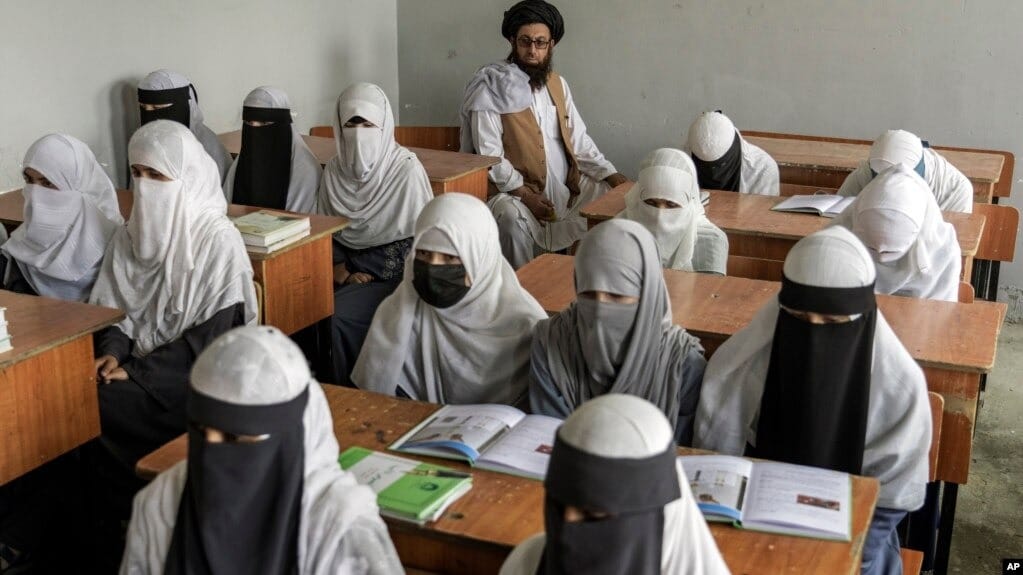
Perhaps even more significant is the reported development involving 180 religious scholars associated with the National Resistance Front and their alleged issuance of a fatwa against the Taliban authorities. According to the information provided, the scholars argue that several Taliban policies are incompatible with Islamic principles. Their objections reportedly include restrictions on women’s education and employment, suppression of political opponents, pressure on language and cultural expression, and alleged mistreatment or repression of sections of Afghan society. Whether one agrees with the religious or political interpretation of the fatwa is less important than what its emergence tells us about Afghanistan’s internal political landscape.
The Taliban have traditionally presented themselves as an Islamic movement with a religious justification for their political authority. Therefore, opposition from religious scholars is potentially more consequential than criticism from ordinary political opponents. It challenges the Taliban on their own ideological terrain.
At the same time, the reported fatwa should not automatically be interpreted as evidence that a new armed uprising is inevitable. Afghanistan has endured decades of war. Its people are exhausted. Afghans who have lost parents, children, homes and livelihoods have little appetite for another cycle of conflict. Many ordinary citizens want security, education, employment and dignity more than they want another change of government through violence.
This is perhaps the greatest warning for every political actor in Afghanistan: the Afghan people should not be forced to choose between repression and war. They deserve something different. The passage of roughly five years since the Taliban returned to power provides enough time to evaluate the direction of the country. According to the information discussed, resistance activity continues through groups such as the National Resistance Front and the United Front. At the same time, opposition statements from prominent Afghan political figures have become more visible.
Former President Hamid Karzai, former President Ashraf Ghani, former intelligence chief Rahmatullah Nabil and Gulbuddin Hekmatyar have all, in different ways and at different times, expressed positions critical of Taliban rule. The growing number of critics does not necessarily mean the Taliban government is on the verge of collapse. Political opposition is not automatically equivalent to regime change. But it does indicate something important: the Taliban should not assume that political stability can be maintained indefinitely through control alone. A government survives in the long term not simply because it can suppress opposition, but because people believe their future is better under that government than under the alternatives.
That requires governance, economic opportunity, education, political inclusion, justice and security. The reported opposition of religious scholars should therefore be viewed as a moment for reflection rather than merely another enemy statement. The Taliban have an opportunity to reconsider their policies—both domestically and toward neighboring countries. They must ask themselves why relations with Pakistan remain so difficult. They must consider why restrictions on women continue to generate international and domestic criticism. They must examine why political opposition continues to grow. And they must determine whether their current approach is producing genuine stability or merely postponing a larger confrontation.
Yet the responsibility does not rest solely with Kabul. Pakistan also needs a coherent and clearly communicated policy. The uncertainty surrounding Bannu’s security committees, the continuing violence in Bajaur and the diplomatic deadlock with Afghanistan are connected by one central issue: the authority and strategy of the state. The provincial government cannot remain silent when parallel security structures are being debated. The federal government cannot allow Pakistan-Afghanistan relations to drift indefinitely without a diplomatic mechanism. And security institutions must continue to distinguish between credible intelligence, verified facts and political speculation.
Pakistan’s message to Kabul should remain firm but diplomatic: terrorism cannot be tolerated, but disagreements must be addressed through a structured negotiation process. Afghanistan, meanwhile, should understand that practical action against militant groups is not merely a Pakistani demand. Long-term stability inside Afghanistan itself requires preventing the country from becoming a sanctuary for organizations capable of destabilizing its neighbors.
The alternative is a cycle in which every terrorist attack produces diplomatic confrontation, every confrontation produces border tension, and every border tension makes cooperation even more difficult. That cycle benefits nobody except those who thrive on instability.
From the injured children of Bajaur to the confused authority surrounding security committees in Bannu; from the stalled Pakistan-Afghanistan negotiations to unverified reports from Kandahar; and from the reported fatwa of 180 scholars to the growing criticism of Taliban policies, the region is sending multiple warnings at once. The greatest danger is not necessarily one dramatic event.
It is the accumulation of smaller crises. When local security structures begin competing with state institutions, when terrorism becomes normalized, when diplomatic channels remain closed, when social media reports are treated as facts, and when political opposition grows without a peaceful mechanism for dialogue, instability becomes systemic.
This is why both Pakistan and Afghanistan need statesmanship rather than slogans. Pakistan must strengthen its own institutions while maintaining pressure for concrete action against terrorism. Afghanistan must recognize that sovereignty carries responsibilities toward neighbors as well as citizens. Both sides must reopen meaningful negotiations and create mechanisms through which commitments can actually be implemented and verified. And above all, ordinary Pakistanis and Afghans must not become victims of a conflict they did not create.
The western frontier does not need another generation of war. It needs functioning institutions, credible security, open diplomatic channels, responsible political leadership and a commitment to the principle that disputes however serious are ultimately better solved around a negotiating table than on a battlefield.
The choice before Pakistan and Afghanistan is becoming increasingly clear. They can allow mistrust, militancy and political confrontation to deepen until the space for compromise disappears. Or they can recognize this moment as a warning and act before the next crisis arrives.
The time for ambiguity is running out.