
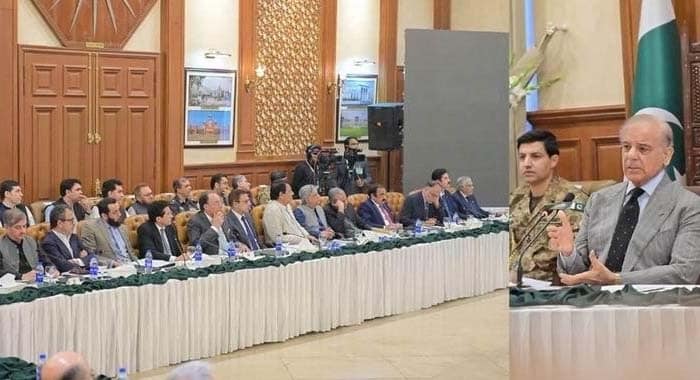
The central question confronting Pakistan’s political and military leadership in Khyber Pakhtunkhwa is when and how terrorism will finally end. The discussion places responsibility not only on security forces fighting terrorists but also on governments, communities, political leaders and religious figures whose actions or positions can influence the environment in which terrorist networks operate.
The core argument is that security forces can clear an area of terrorists, but lasting peace requires a broader effort to prevent their return, dismantle their support networks and stop them from finding shelter, resources and public legitimacy.
The discussion also draws a direct connection between the resurgence of terrorism in Khyber Pakhtunkhwa, the policies adopted by successive PTI governments, the relationship between the Afghan Taliban and the banned Tehreek-e-Taliban Pakistan (TTP), and the political narratives surrounding Pakistan’s security policy.
From the 2017 Operations to the Return of Terrorists
The briefing recalls that security forces cleared areas of terrorists in 2017 and handed responsibility for maintaining peace and administration back to the provincial government. At the time, PTI was governing Khyber Pakhtunkhwa and was responsible for implementing the National Action Plan (NAP), strengthening the civilian administration and creating conditions that would prevent terrorist groups from regrouping.
The argument is that the provincial government had a responsibility to ensure that areas cleared through security operations did not again become safe havens for terrorist organizations. This required effective governance, sustained law enforcement and measures to prevent recruitment, financing and logistical support for terrorist networks.
However, the briefing maintains that these responsibilities were not fulfilled adequately. It also places responsibility on society, arguing that local communities failed to prevent terrorists from taking shelter and rebuilding their networks among the population.
The discussion further turns to PTI’s period in federal government, arguing that terrorists were brought back to Pakistan and imprisoned terrorists were released. According to this account, those who returned subsequently re-established themselves in different areas and resumed attacks.
The broader point is that the gains achieved by security forces cannot endure if terrorists are allowed to return, reorganize and exploit weaknesses in governance. Clearing territory is one part of counterterrorism; preventing terrorist networks from taking root again is another.
Local Facilitators and the Responsibility of Society
The briefing emphasizes that terrorists do not simply appear in an area without support. They depend on people who provide shelter, assistance, information, resources and protection. It therefore asks whether political and social leaders who supported the return of terrorists or speak in their favor should also be held responsible for enabling their activities.
The same question is directed at religious figures who defend terrorist groups, refer to them as the Taliban without distinguishing their actions, or fail to acknowledge the sacrifices of security personnel fighting them.
The discussion particularly criticizes clerics described as ‘ulema-e-soo’, or corrupt religious scholars, who refuse to recognize security personnel killed in counterterrorism operations as martyrs or avoid attending their funerals out of fear of terrorist groups.
It argues that society must remain vigilant and distance itself from those who shelter or facilitate terrorists. Such assistance, the briefing maintains, should carry social stigma rather than bring political influence, religious legitimacy or local protection.
The argument is unequivocal: terrorism will not end permanently while the people who facilitate terrorist activity continue to operate within society. Counterterrorism must therefore address not only the armed perpetrators but also the networks that sustain them.
Afghan Taliban and TTP: Two Sides of the Same Coin
The briefing identifies the Afghan Taliban and the TTP as two sides of the same coin, arguing that the organizations share an ideological outlook and regard attacks against Pakistanis as religiously justified.
It further states that the Afghan Taliban provide modern, US-origin weapons to the TTP for use in attacks inside Pakistan. It maintains that terrorist networks operating in Pakistan have also drawn personnel and support from Afghanistan, citing a figure that 80 percent of recent suicide bombers were Afghan nationals.
The central argument is that Pakistan cannot eliminate the roots of terrorism while treating the Afghan Taliban as brothers and overlooking the security implications of terrorist networks operating from Afghan territory. It challenges the idea that support for Afghanistan or the Afghan Taliban can be separated from the consequences of cross-border terrorism.
The briefing frames the issue as a fundamental contradiction: Pakistan cannot sympathize with those accused of enabling attacks while simultaneously seeking to protect the people targeted by those attacks.
It also questions political and social groups that support the Afghan Taliban, oppose restrictions on Afghan nationals’ residence in Pakistan, or argue that Pakistan is equally the homeland of Afghans. The discussion links these positions to the Lar-o-Bar narrative and challenges the rejection of the Pakistan-Afghanistan border.
The Durand Line, Pashtun Identity and Territorial Arguments
The briefing directly challenges the use of shared Pashtun ethnicity as a basis for rejecting the existing border between Pakistan and Afghanistan.
It cites figures of approximately 40 million Pashtuns in Pakistan and 15 million in Afghanistan, using them to question the logic of ethnic claims to territory. The argument asks that if borders are to be determined by the concentration of an ethnic population, why should Pakistan not advance a territorial claim extending towards Kabul on the basis of the Pashtun population there?
It further argues that those rejecting the Durand Line should explain what alternative border arrangement they propose, including whether they would accept a boundary drawn according to the distribution of Pashtun populations.
The discussion presents the issue as more than a dispute over identity. It links the rejection of Pakistan’s border, support for the Afghan Taliban and the accommodation of terrorist networks to questions of national security and political loyalty.
Its central position is that ethnic identity should not be used to undermine Pakistan’s territorial integrity or to provide political cover for forces involved in terrorism.
PTI’s two Political Narratives Under Scrutiny
The briefing also examines what it describes as two narratives through which PTI sought to maintain its political popularity and survival.
At the national level, it characterizes the party’s narrative as presenting Imran Khan as indispensable to Pakistan’s functioning while portraying other political leaders as corrupt. The discussion rejects this position, arguing that the country continues to function without Khan and accusing him of corruption.
At the provincial level, the briefing describes a different narrative: that security in Khyber Pakhtunkhwa had deteriorated to the point that security forces should leave and the provincial government should handle the situation itself.
It argues that this position sought to portray security forces as incapable of controlling terrorism while shifting responsibility towards the federal government. The briefing further alleges that allowing terrorist networks to grow served this political narrative by strengthening calls for the withdrawal of security forces.
It also links the province’s security challenges to allegations of corruption, the embezzlement of billions of rupees, smuggling and drug cultivation, arguing that these issues were obscured by political confrontation over counterterrorism policy.
The briefing maintains that terrorism is a national security problem, not an issue that can be confined to provincial politics. It therefore calls for a coordinated national response rather than a contest between federal and provincial governments over who should control security policy.
Pakistan’s Young Population and the Crisis of Governance
The discussion extends beyond terrorism to Pakistan’s political and administrative system, arguing that the country’s young population wants peace, education, employment and good governance.
It cites a figure of approximately 170 million young people in Pakistan and points to youth-led unrest in Nepal, Sri Lanka, India and Bangladesh as warnings about the consequences of poor governance and public frustration.
The briefing argues that Pakistan must improve governance to prevent similar discontent from deepening. It identifies dynastic politics, nepotism, favoritism and corruption as structural problems that prevent the system from delivering for ordinary citizens.
It calls for an end to these practices, maintaining that lasting progress will remain elusive unless political and administrative institutions become more accountable and responsive to public needs.
The discussion uses a village saying about children being fortunate when they do not inherit an ancestral feud to describe the burden facing Pakistan’s younger generation. In Pakistan’s case, it argues, approximately 170 million young people are inheriting a crisis shaped by terrorism, instability and poor governance.
Instead of receiving opportunities for education, employment and a secure future, young people are being left to bear the consequences of prolonged conflict and political dysfunction.
The briefing urges political leaders not to mobilize young people through ethnic nationalism in ways that expose them to terrorism and violence. It argues that their aspirations should be directed towards peace, prosperity and effective governance rather than prolonged conflict.
A Direct Warning to Political Leaders and Religious Figures
The briefing concludes with a strong warning to political leaders and religious figures who describe terrorists as their brothers or refuse to condemn their violence.
Its argument is that anyone who identifies with a person responsible for killing others must answer for the implications of that association. It also maintains that political leaders who refuse to recognize Pakistan’s borders are acting against the country’s national interests.
The overall message is that terrorism cannot be defeated through security operations alone. The state must continue targeting terrorist networks, while society must refuse to provide them with shelter, support or legitimacy. Governments must prevent their return, political leaders must take responsibility for their positions, and religious figures must clearly distinguish between faith and violence.
The briefing presents the path to lasting peace as a combination of sustained counterterrorism operations, effective governance, social accountability and a clear national position against terrorism and those who facilitate it.



