
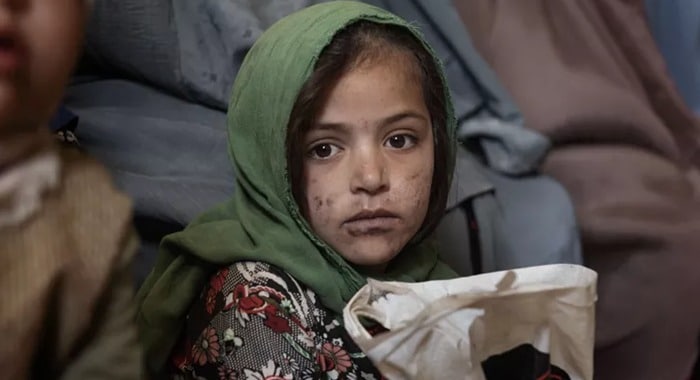
A newly released global assessment has placed Afghanistan at the bottom of international child welfare rankings, highlighting what researchers describe as a severe breakdown in children’s rights, protection, and access to essential services.
The Kids Rights Index 2026, published on 1 July by the Kids Rights Foundation in collaboration with Erasmus University in Rotterdam, evaluates 194 countries worldwide based on children’s rights, including access to healthcare, education, nutrition, safety, and protection from physical, psychological, and social abuse.
According to the report, Iceland, Switzerland, and Finland rank at the top of the global index, where children are described as enjoying the highest levels of protection, healthcare, education, and welfare support. These countries are highlighted as global benchmarks for child rights and well-being.
At the other end of the ranking, Afghanistan has been placed at 194th position, the lowest among all countries assessed. The report states that in Afghanistan, children’s fundamental rights have not only been neglected but are being severely undermined across multiple sectors, including education, healthcare, nutrition, and protection.
The findings have sparked widespread international attention, with the report asserting that Afghanistan remains one of the most challenging environments globally for children’s survival and development. It concludes that children in Afghanistan face widespread deprivation and lack access to basic necessities required for a safe and healthy upbringing.
The report’s findings are further reinforced by data from the United Nations Children’s Fund (UNICEF), which estimates that approximately 11.6 million children in Afghanistan are currently suffering from severe deprivation of basic rights. These include lack of adequate food, absence of educational opportunities, limited healthcare access, and insufficient child protection systems.
UNICEF’s assessment warns that millions of Afghan children are being left without essential support structures, increasing the risk of long-term humanitarian consequences for an entire generation. The organization has also raised concerns over worsening vulnerability among children, particularly in economically disadvantaged and rural communities.
In addition, reports cited in international media have highlighted concerns regarding child protection risks in Afghanistan, including allegations of child exploitation and forced labor. One detailed investigation published in foreign English-language media has also raised claims of the alleged sale of underage girls, naming individuals and referencing specific cases. These allegations have intensified global concern over the humanitarian situation affecting children in the country.
The developments have drawn strong reactions from international observers, with many describing the situation as one of the most serious child welfare crises in the world today.
In response to the Kids Rights Index 2026, representatives of the Afghan administration rejected the findings, calling them “baseless” and “false.” Officials stated that children’s rights are being safeguarded and pointed to measures restricting child labor as evidence of protection efforts. The administration insists that the situation on the ground is improving and disputes the methodology and conclusions of the report.
However, international experts and monitoring organizations continue to report significant gaps between official claims and conditions experienced by children across Afghanistan. Humanitarian agencies stress that millions of children remain without adequate access to education, healthcare, nutrition, and protection services.
The report also notes that no Muslim-majority country appears among the top global performers in child rights protection, underscoring broader regional disparities in child welfare indicators.
Analysts further emphasize that Afghanistan’s international standing remains weak, with limited diplomatic recognition and ongoing concerns regarding governance, human rights, and institutional capacity. These factors continue to influence the country’s ability to attract international support and development assistance.
Despite political assertions from Kabul, Afghanistan’s position in global child rights rankings reflects what many observers describe as a long-term structural crisis affecting the country’s youngest population.
International attention remains focused on the humanitarian situation, with aid agencies warning that without urgent intervention, millions of Afghan children will continue to face severe deprivation and long-term developmental harm.
The situation remains critical and under close global monitoring as new assessments and humanitarian updates are expected in the coming months.



