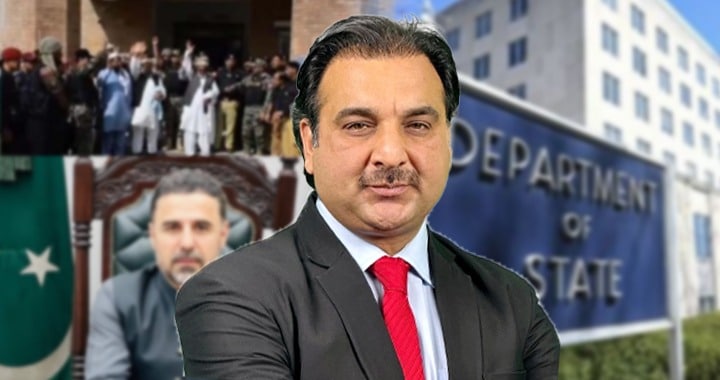
(Irfan Khan)
In an increasingly interconnected but deeply unstable regional environment, South Asia continues to sit at the crossroads of security dilemmas, political uncertainty, and humanitarian strain. A recent discussion touching on Pakistan–United States counter-terrorism cooperation, Afghanistan’s worsening internal crisis, and the alleged kidnapping of a provincial legislator in Waziristan reflects more than isolated developments it reveals a larger pattern of contested narratives, governance challenges, and evolving security doctrines.
What emerges is not a simple story of right and wrong, but a complex web in which diplomacy, conflict, state legitimacy, and public perception intersect. To understand these developments properly, one must look beyond headline claims and examine the deeper structural realities shaping the region.
One of the most significant themes in recent discourse is the evolving counter-terrorism understanding between Pakistan and the United States. Although the U.S. withdrawal from Afghanistan marked a decisive end to its two-decade military presence in the region, it did not eliminate Washington’s strategic interest in South Asian stability. Instead, it shifted from direct intervention to a more distant, intelligence-driven and diplomatic engagement.
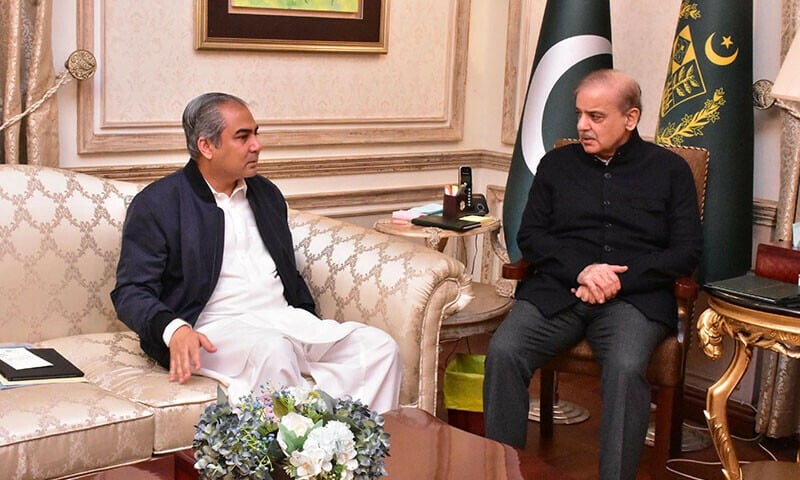
Within this context, statements of support for Pakistan’s right to defend itself against terrorism carry considerable diplomatic weight. They reflect a recognition at least at a rhetorical level that terrorism in the region remains a transnational issue, not confined within artificial borders. For Pakistan, such acknowledgments are often interpreted as validation of its long-standing position that militant networks operating in border regions continue to pose internal security threats.
However, the strategic reality is more complicated than mutual agreement on principle. While both countries may converge on the need to combat extremist violence, they do not always align on methodology, attribution, or political framing. Pakistan emphasizes cross-border militancy concerns, particularly linked to Afghanistan’s border regions. The United States, on the other hand, tends to prioritize broader regional stability and counter-terrorism containment rather than endorsing specific narratives in bilateral disputes.
The real challenge lies in translating rhetorical alignment into operational cooperation. Intelligence sharing, border security mechanisms, and counter-insurgency coordination remain sensitive areas where trust deficits still exist. Moreover, with Washington’s reduced military footprint in the region, its leverage is now more indirect than directive.
In essence, the relationship has shifted from alliance-based engagement to issue-based cooperation—fragile, selective, and heavily dependent on shifting geopolitical priorities. Perhaps the most alarming dimension of the regional picture is Afghanistan’s worsening internal situation. Reports of medicine shortages in hospitals, declining access to basic healthcare, unemployment, and reduced humanitarian support highlight the severity of the crisis facing ordinary citizens.
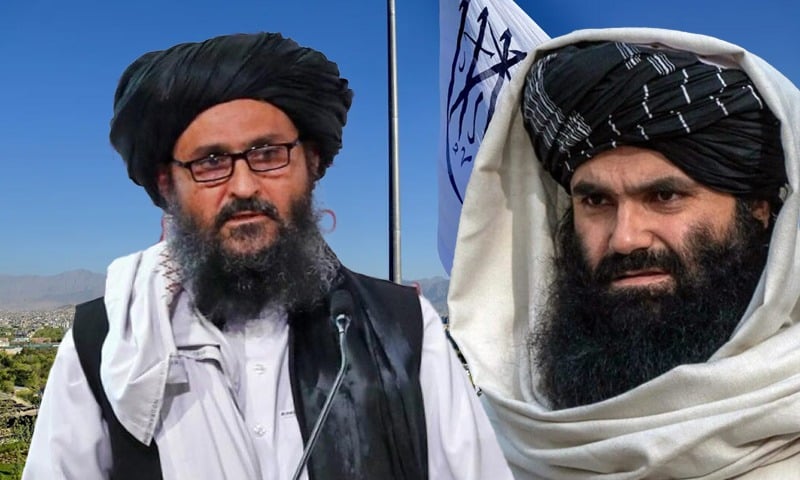
At the heart of this issue lies a fundamental governance dilemma. Afghanistan’s current ruling structure lacks broad international recognition, which severely limits its access to global financial systems, development aid, and institutional partnerships. This isolation has created a cascading effect: reduced foreign assistance leads to economic contraction, which in turn weakens public service delivery and deepens humanitarian distress.
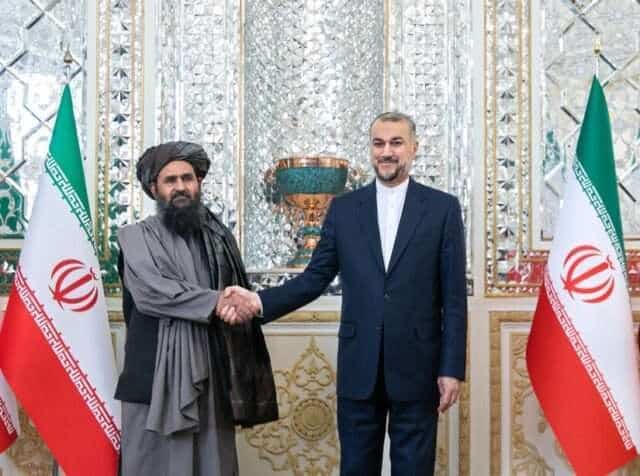
The absence of formal diplomatic normalization with most countries further complicates matters. While informal communication channels exist, they are insufficient to sustain large-scale development or stabilize key sectors such as health, education, and employment. The result is a state apparatus that controls territory but struggles to deliver governance in a modern administrative sense.
Critically, this situation also fuels a cycle of migration and capital flight. Skilled individuals and business owners often seek opportunities outside the country, depriving the domestic economy of human capital. In the long term, this brain drain can entrench underdevelopment and weaken prospects for economic recovery.
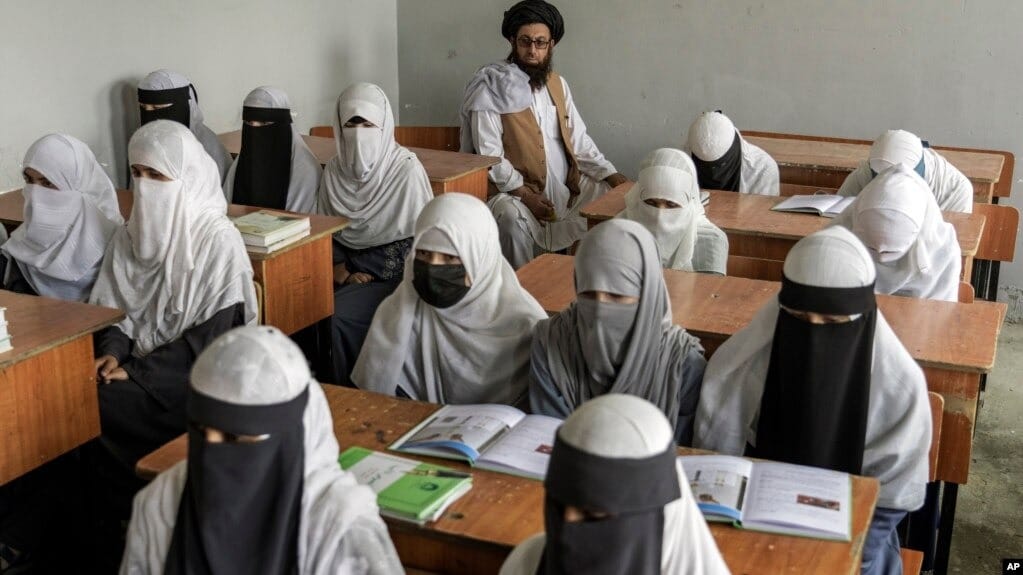
Education, particularly for women and girls, remains one of the most contentious and consequential aspects of Afghanistan’s internal policy environment. Restrictions and uncertainty in this sector have broader implications beyond human rights debates they directly affect workforce development, healthcare systems, and long-term economic productivity.
Yet it is also important to recognize that Afghanistan’s crisis is not solely the product of internal policy decisions. Years of conflict, international intervention, and sudden withdrawal of external support have all contributed to the structural fragility now visible across institutions. The current situation is, therefore, the result of accumulated historical pressures rather than a single governing decision
The reported kidnapping of a provincial legislator in Waziristan introduces another layer of complexity one where security realities intersect with political narrative and media interpretation. In conflict-affected regions such as Waziristan, information often travels faster than verification. Social media amplifies this dynamic, where early reports can quickly evolve into dominant narratives regardless of factual certainty. Allegations, counter-allegations, and speculative interpretations often circulate before official confirmation is available.
This creates a challenging environment for both governance and public understanding. On one hand, there are genuine security concerns in remote and mountainous regions where militant activity has historically existed. On the other, there is a parallel risk of misinformation shaping public perception and political discourse.
The case in question highlights how quickly a localized incident can become politicized. Competing narratives ranging from claims of abduction to suggestions of staged events or misunderstandings—illustrate the difficulty of establishing clarity in real time.
What is particularly significant is not just the incident itself, but the broader environment it reflects: a region where governance structures, security operations, and local political dynamics intersect in unpredictable ways. In such contexts, the absence of transparent communication mechanisms often leads to a vacuum filled by speculation.
This is not unique to Waziristan. Many conflict-affected areas globally face similar challenges where limited access, security restrictions, and political sensitivities constrain information flow. Taken together, these developments point toward a broader structural triangle shaping South Asia’s current instability:
- Security Pressures – Cross-border militancy concerns, counter-terrorism operations, and regional instability continue to define state priorities, particularly for Pakistan and its neighbors.
- Governance Constraints – Afghanistan’s institutional isolation and internal policy challenges highlight how governance capacity directly affects humanitarian outcomes.
- Legitimacy and Narrative Control – In areas like Waziristan, the battle is not only physical but informational, where perception can influence political outcomes as much as reality.
These three dimensions constantly interact. Weak governance amplifies security challenges. Security crises undermine economic development. Narrative conflicts distort both policy response and public understanding. One of the most overlooked aspects of regional instability is the role of media both traditional and digital in shaping public perception. In fast-moving security situations, incomplete information can easily be presented as fact, leading to misinterpretation and polarization.
Responsible journalism in such environments requires caution, verification, and contextual awareness. However, the pressure for immediacy often competes with the need for accuracy. Social media further complicates this balance by rewarding speed and emotional impact over nuance.
As a result, public discourse becomes fragmented. Competing narratives coexist without resolution, and trust in information sources gradually erodes. Over time, this can have a corrosive effect not only on public opinion but also on policy formulation, as governments respond to narratives as much as to realities.
The developments discussed from Pakistan–U.S. counter-terrorism dialogue to Afghanistan’s humanitarian crisis and localized security incidents in Waziristan are not isolated events. They are expressions of a broader regional condition defined by uncertainty, transition, and unresolved conflict legacies.
At its core, South Asia’s security environment is shaped by a paradox. On one hand, states seek stability through cooperation, military preparedness, and diplomatic engagement. On the other, persistent governance gaps, historical grievances, and information disorder continue to undermine that stability.
There are no simple solutions to these challenges. Counter-terrorism cooperation cannot succeed without trust and shared definitions of threat. Humanitarian recovery in Afghanistan cannot progress without functional governance and international engagement. And local security incidents cannot be properly understood without stronger verification mechanisms and responsible information practices.
What is clear, however, is that the region stands at a critical juncture. The choices made by states, institutions, and media ecosystems will determine whether current instability evolves into managed coexistence or deeper fragmentation.
In such a landscape, clarity is not a luxury, it is a necessity.