
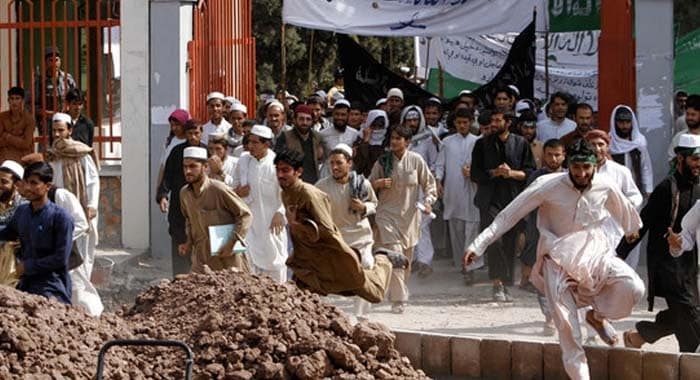
Public discourse inside Afghanistan and among Afghan communities abroad has increasingly reflected growing dissatisfaction with the current political and governance situation under the Taliban administration, as criticism intensifies across social media platforms, civil circles, and informal political spaces.
According to emerging public sentiment, Afghan citizens are increasingly voicing frustration over governance challenges, economic stagnation, and limited access to essential services. Social media platforms, including X (formerly Twitter), have seen widespread expressions of anger, disappointment, and emotional reactions from users who believe the country’s current trajectory has not met public expectations.
Observers note that the tone of public commentary reflects deepening frustration, with citizens expressing concerns over declining economic opportunities, restrictions affecting education and employment, and reduced investment inflows. Many young Afghans and members of the business community are reportedly considering migration due to limited domestic prospects.
Public discourse further highlights concerns regarding the utilization of international assistance and frozen financial assets made available to Afghanistan in recent years. Questions are being raised by segments of the population regarding transparency, allocation, and the impact of such resources on national development, infrastructure, education, and healthcare.
Analysts cited in public discussions suggest that Afghanistan’s geographical position offers significant potential as a regional hub for trade, transit connectivity, and tourism. Regions such as Balkh, Herat, Bamiyan, and Panjshir are frequently referenced for their historical, cultural, and natural significance. However, concerns remain that these opportunities have not been fully realized due to prevailing policy constraints and limited economic engagement.
Public sentiment also reflects concern over broader governance outcomes, including unemployment, inflationary pressures, and restrictions affecting educational access and social mobility. These factors are widely cited as contributing to a sense of economic and social uncertainty among citizens.
At the same time, calls are emerging from various segments of society for the development of a more inclusive, transparent, and accountable governance framework. Some voices have emphasized the importance of structured economic planning, expansion of cross-border trade, and skill development initiatives, particularly for the youth population.
There are also growing calls for enhanced regional cooperation to improve economic stability and connectivity, including proposals for strengthened trade corridors and joint development initiatives with neighboring countries. Public discussions have highlighted the importance of long-term planning aimed at transforming Afghanistan into a peaceful and economically viable state.
Political observers note that the current wave of public criticism reflects broader concerns about governance performance and long-term national direction. They emphasize that sustained public dissatisfaction, if unaddressed, may continue to shape internal discourse and external perceptions.
The evolving situation underscores a widening gap between public expectations and governance realities, with increasing calls for policy reassessment and institutional reform aimed at improving socio-economic conditions and national stability.
Further developments are expected as public discourse continues to evolve across domestic and international platforms.



