
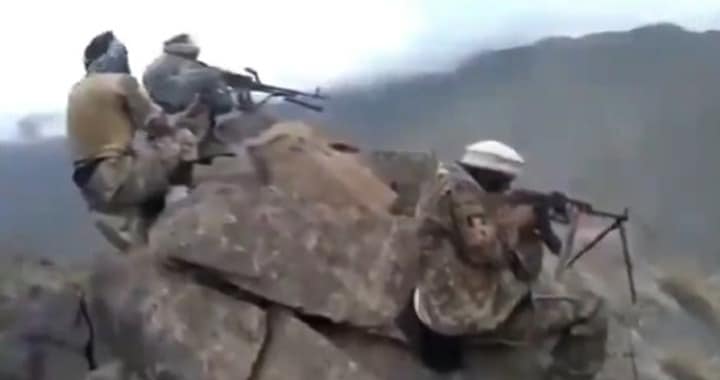
A recent report by the United States-based research organization Foundation for Defense of Democracies (FDD) has highlighted a significant increase in anti-Taliban resistance activities in Afghanistan’s northeastern Badakhshan province during the final two weeks of July, with resistance groups carrying out a series of operations, including a temporary takeover of a district center.
According to a report published by FDD’s research publication, Long War Journal, anti-Taliban groups intensified their activities during the second half of July, increasing pressure on Taliban authorities and challenging their control in several areas of Badakhshan.
The report stated that on 17 July, the newly established resistance group Sepahian-e Mihan launched an attack on the headquarters of Yeftal-e Sufla district with approximately 25 fighters. The group reportedly took control of the district center for several hours before withdrawing from the area.
The report described the incident as a significant development, noting that it was reportedly the first time since the Taliban returned to power in August 2021 that a district center temporarily fell out of Taliban control.
The Taliban administration acknowledged the temporary takeover of the district center but presented a different account of the incident. Taliban officials claimed that local authorities were not present at the location at the time of the attack and stated that several individuals allegedly involved in the operation had later been arrested.
The Taliban’s Chief of Army Staff, Fasihuddin Fitrat, also visited the district following the incident and repeated the government’s claims regarding the situation and subsequent actions taken against those involved.
However, Qayum Malang, the leader of Sepahian-e Mihan, rejected Taliban claims in an audio message released on 22 July, stating that none of his fighters had been captured.
Following the Yeftal-e Sufla incident, the report stated that additional attacks were carried out by anti-Taliban groups in different parts of Badakhshan.
On 23 July, the Afghanistan Freedom Front (AFF) claimed that it had captured several Taliban checkpoints in Zebak district and maintained its positions despite counterattacks. The group also claimed that it had shot down two Taliban drones during the clashes.
On the same day, the National Resistance Front (NRF), led by Ahmad Massoud, claimed responsibility for an attack on a Taliban checkpoint in Kiran wa Munjan district. The group claimed that the operation resulted in the death of one Taliban personnel member and injuries to two others.
The FDD report noted that while there is currently no confirmed evidence of formal joint military operations between different anti-Taliban resistance factions, increasing contacts and coordination among these groups could indicate the possibility of greater cooperation in the future.
The report further assessed that Badakhshan is increasingly emerging as a key center of anti-Taliban resistance activity, with multiple groups continuing to challenge Taliban authority through armed operations and localized campaigns.
The developments come amid a broader period of heightened security tensions in Badakhshan, where Taliban forces, opposition groups, and other armed actors continue to compete for influence and control in the province.



