
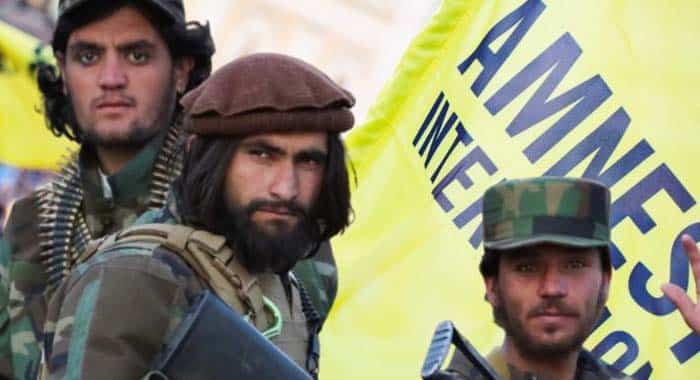
Pakistan has expressed serious reservations regarding Amnesty International’s latest report, stating that the organization’s recent allegations raise significant questions about its credibility, objectivity, and assessment of the broader security environment.
According to Pakistan’s official position, the report fails to present the complete context surrounding the country’s counterterrorism operations and overlooks the persistent cross-border terrorist threats emanating from Afghan territory.
Pakistan stated that Amnesty International has repeatedly highlighted narratives attributed to the Afghan Taliban and casualty figures published by the United Nations Assistance Mission in Afghanistan (UNAMA), while failing to acknowledge the devastating impact of terrorist organizations operating from Afghanistan.
According to the statement, the report does not adequately reflect the thousands of Pakistani civilians and security personnel who have lost their lives in attacks planned or carried out by terrorist organizations, including the Tehreek-e-Taliban Pakistan (TTP), Al-Qaeda, and Daesh-Khorasan (ISKP) from Afghan territory.
Pakistan argued that omitting this broader security reality presents an incomplete picture of the regional counterterrorism landscape. Pakistan further stated that Amnesty International’s latest report relies heavily on information provided by UNAMA, despite longstanding concerns regarding the mission’s operational limitations in Afghanistan.
According to Pakistan, UNAMA is often required to depend on information originating from Taliban-controlled areas, local sources, and reporting channels that cannot always be independently verified due to the highly restricted operating environment inside Afghanistan.
The statement maintained that such limitations should be carefully considered when evaluating reports relating to complex security incidents. Pakistan emphasized that focusing exclusively on casualty claims without examining the wider counterterrorism context risks reinforcing the Taliban’s narrative while overlooking the methods employed by terrorist organizations.
According to the statement, terrorist groups have repeatedly exploited civilian areas and allegedly used civilians as human shields, making the operational environment significantly more complex for security forces engaged in counterterrorism operations.
Pakistan maintained that any impartial assessment must examine both civilian impacts and the operational realities created by terrorist organizations operating from across the border.
The statement reaffirmed that Pakistan possesses the internationally recognized right of self-defense against persistent cross-border terrorist threats in accordance with international law.
Pakistan stated that its security operations are intelligence-driven and directed exclusively against verified terrorist hideouts, operational infrastructure, and facilities associated with terrorist organizations responsible for planning and supporting attacks against Pakistan. The country reiterated that counterterrorism actions are undertaken on the basis of verified intelligence with the objective of protecting its citizens and safeguarding national security.
Pakistan concluded that one-sided reports lacking the broader regional security context risk undermining ongoing international efforts to combat terrorism and fail to accurately reflect the realities faced by countries confronting sustained cross-border terrorist threats.
The statement emphasized that any credible assessment of counterterrorism operations should consider the full spectrum of security challenges, including the continued presence of internationally recognized terrorist organizations in Afghanistan, the responsibilities of relevant authorities in preventing their activities, and the legitimate security concerns of states affected by cross-border terrorism.
Pakistan reaffirmed its commitment to counterterrorism efforts conducted in accordance with international law while calling for objective, balanced, and comprehensive assessments that reflect the complex realities of regional security.



