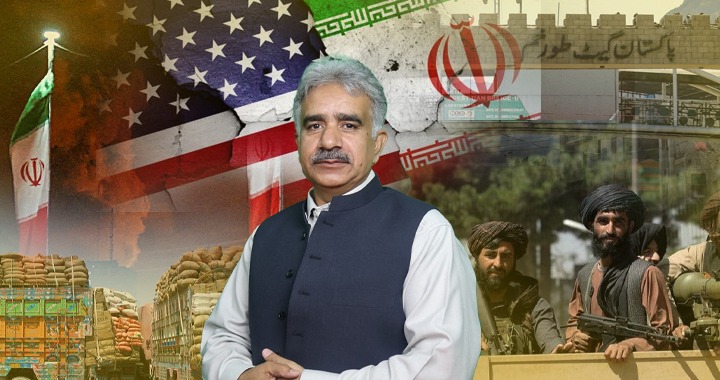
A fresh revelation by former Afghan intelligence chief Ahmad Zia Siraj has once again pulled back the curtain on a reality many in the region already understand but global actors often hesitate to confront directly, the continued presence, facilitation, and operational space enjoyed by terrorist groups inside Afghanistan.
This is not an isolated claim. Over the past few years, multiple international platforms, including the United Nations Security Council monitoring mechanisms and even statements from regional powers, have pointed toward the same pattern, Afghanistan remains host to a complex web of terrorist organizations. These include the banned Tehreek-e-Taliban Pakistan, Balochistan Liberation Army, Jamaat-ul-Ahrar, ISKP, and several Central Asian groups.
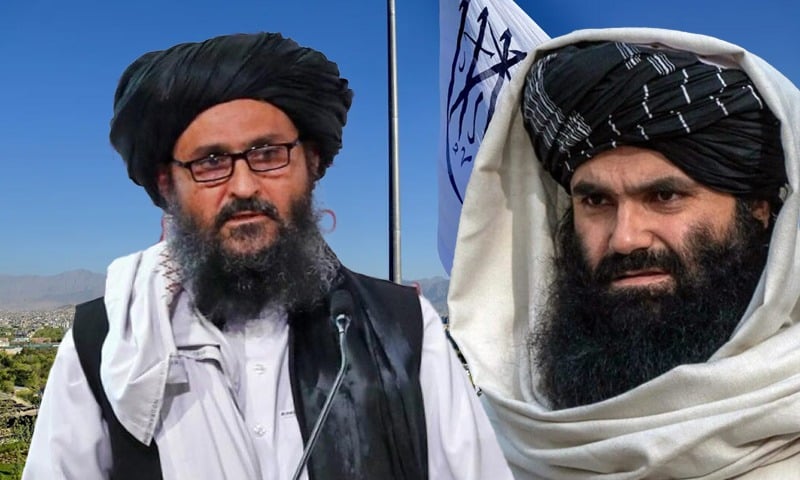
The persistence of these networks is not accidental. It reflects a deeper ideological and strategic alignment. For the Afghan Taliban, many of these groups are not seen through the lens of terrorism but rather as ideological allies or wartime partners. This perception, shaped by decades of conflict, has translated into a reluctance, or outright refusal, to act against them.
A System, Not a Coincidence
What emerges is not a loose or fragmented arrangement but a structured ecosystem. Reports and field intelligence have consistently pointed toward the existence of training facilities, logistical hubs, and coordinated operational planning within Afghan territory.
This raises a fundamental question, can such an extensive infrastructure function without the knowledge, or at least tacit approval, of the de facto authorities in Kabul?
The answer, increasingly, appears self-evident.
Beyond ideology, there is also a strategic calculus at play. These groups serve as leverage, tools that can be activated, restrained, or redirected depending on the geopolitical context. Whether in dealings with regional states or in shaping internal dynamics, their utility extends beyond the battlefield.
Negotiations or Tactical Pause?
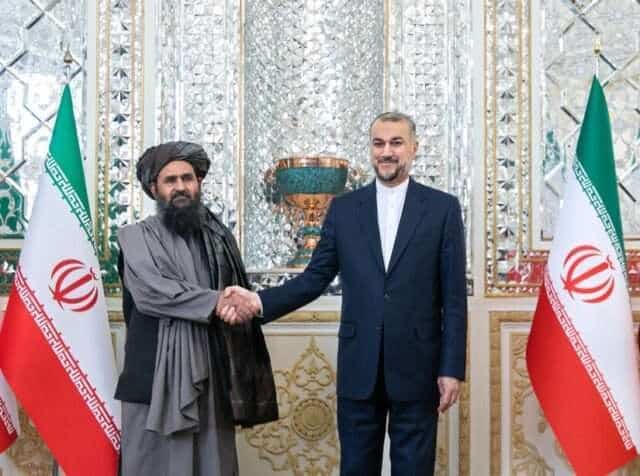
At the same time, diplomatic engagement continues. Talks, including those reportedly linked to Urumqi, signal an ongoing attempt to manage tensions. But here lies the contradiction, negotiations on one hand, and continued tolerance, or facilitation, of terrorist actors on the other.
This duality is not new. It reflects a pattern where dialogue is used to create space, ease pressure, and regain strategic breathing room, rather than to fundamentally alter behavior.
Recent developments reinforce this interpretation. Border restrictions, disruption of informal trade channels, and tighter controls by Pakistan have significantly constrained the operational and financial networks that once thrived on porous frontiers. The closure of key crossings and stricter regulation of transit routes have altered the equation.
In parallel, Pakistan’s calibrated security actions targeting terrorist infrastructure have added another layer of pressure, limiting the operational depth previously enjoyed by these groups.
Midway Pivot: Pressure Meets Diplomacy
This evolving dynamic places Pakistan in a uniquely complex position.
On one side lies an active security challenge, cross-border attacks, infiltration attempts, and the persistent threat of terrorism emanating from Afghan soil. On the other lies the necessity of engagement, the recognition that a complete breakdown in relations would only deepen instability across the western frontier.
This is where Pakistan’s approach has begun to stand out. Rather than choosing between confrontation and diplomacy, it has pursued both simultaneously, applying pressure where necessary while keeping channels open.
The same dual-track strategy is now visible on a broader stage.
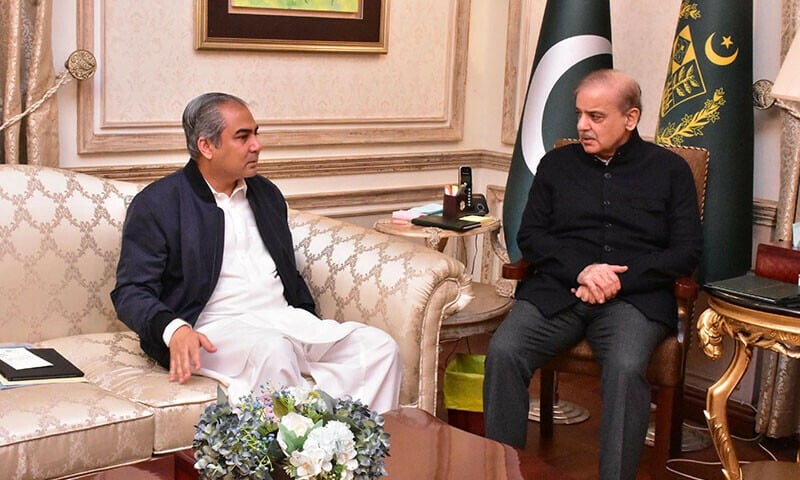
Pakistan’s role in facilitating dialogue between the United States and Iran marks a significant shift in its regional positioning. From being viewed primarily through a security lens, it is increasingly being recognized as a diplomatic intermediary capable of engaging multiple, often opposing, actors.
The stakes here are far larger than bilateral relations. Any escalation between the United States and Iran carries global consequences, from energy markets to regional alignments. The possibility of disruptions in critical maritime routes would reverberate far beyond the Middle East.
In this context, Pakistan’s involvement is not incidental, it is strategic.
The Taliban’s Internal Contradictions
Even within Afghanistan, signs of strain are becoming more visible. Questions are being raised, quietly but increasingly, about the costs of current policies.
Why prioritize the presence of thousands of foreign fighters over the stability and economic future of the Afghan population?
Why risk regional isolation for alliances that bring limited long-term benefit?
These are not merely external critiques; they reflect an internal tension between ideological commitments and governance realities.
The Afghan Taliban, despite being the acting authority, continue to face a legitimacy deficit internationally. Their inability, or unwillingness, to address core concerns, terrorism, inclusivity, and governance, keeps them locked in a cycle of isolation.
Recent incidents, including high-profile attacks within Afghanistan itself, further underscore the fragility of the internal security environment. A state that cannot fully secure its own urban centers finds it increasingly difficult to project control beyond them.
A Region at a Crossroads
Looking ahead, the region stands at a delicate intersection.
Dialogue remains essential. Pakistan cannot afford perpetual instability on its western border, especially given its broader regional commitments and security considerations. Engagement, therefore, is not a choice but a necessity.
However, dialogue without accountability risks becoming an exercise in repetition.
For any meaningful progress, certain fundamentals must be addressed, verifiable action against terrorist networks, transparency in security cooperation, and a clear shift in policy from ambiguity to accountability.
Without these, talks may continue, but outcomes will remain elusive.
At the same time, Pakistan’s expanding diplomatic footprint offers a counterbalance. By positioning itself as both a security actor and a diplomatic facilitator, it is reshaping its role in the region.
If sustained, this approach could redefine regional dynamics, turning Pakistan from a frontline state in the war against terrorism into a central node in the architecture of regional stability.
The challenge, however, lies in ensuring that diplomacy does not outpace ground realities, and that the gap between commitments and actions, particularly across the western border, is finally closed.