
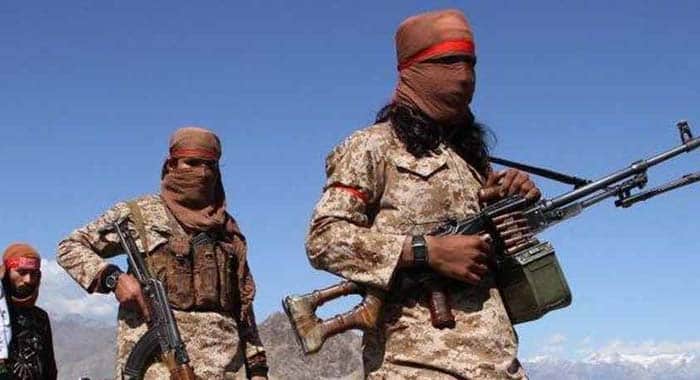
Pakistan has called on the Afghan Taliban Regime to move beyond denials and demonstrate, through concrete and verifiable action, that Afghan territory is no longer being used by Fitna al-Khawarij and its affiliated networks to threaten Pakistan’s security. Rejecting Kabul’s assertion that Afghanistan lacks the capacity or intent to destabilise Pakistan, Islamabad has stressed that the issue is not one of competing narratives, but of addressing the persistent threat posed by Khawarij operating from Afghan soil.
In a statement, the Ministry of Information and Broadcasting described the Afghan Taliban Regime’s recent allegations against Pakistan’s security institutions as diversionary, emphasising that such claims do not absolve Kabul of its responsibility to prevent Khawarij groups from operating from Afghan territory. Pakistan’s longstanding concerns, the Ministry noted, are supported by international assessments and the continuing pattern of Khawarij violence affecting the country.
Pakistan’s concerns are reflected in assessments cited by the Ministry, including the United Nations Security Council’s Analytical Support and Sanctions Monitoring Team’s sixteenth report (S/2025/796) and the US Lead Inspector General’s Operation Enduring Sentinel report to Congress for January–March 2026.
According to the US report, the Afghan Taliban continued to allow the outlawed Tehreek-e-Taliban Pakistan (TTP) to operate from Afghan territory. It further assessed that Taliban support and greater freedom for the group contributed to increased attacks against Pakistan, estimating the TTP’s strength at 4,000–6,000 fighters.
These findings, Pakistan maintains, underscore the need to move beyond general assurances and address the operational presence, support structures and cross-border activities of Khawarij networks.
Pakistan has highlighted repeated attempts by armed Khawarij to infiltrate across the Pakistan-Afghanistan border, the killing of Afghan nationals and members of Khawarij groups during counterterrorism operations, and the recovery of foreign-origin weapons from Khawarij elements. Islamabad has also raised concerns over the alleged facilitation of Khawarij groups by Afghan Taliban officials, including officials in Kandahar.
The Ministry stressed that such concerns require credible explanations and demonstrable corrective measures, not blanket denials. The fundamental test of Kabul’s counterterrorism commitments, Pakistan maintains, is whether Khawarij sanctuaries are dismantled, support networks disrupted and cross-border infiltration effectively prevented.
Pakistan has called on the Afghan Taliban Regime to end any tolerance, facilitation or support for Khawarij organisations, including the TTP, the Balochistan Liberation Army (BLA) and their affiliates, and ensure that Afghan territory is not used to plan, prepare or launch attacks against Pakistan.
The urgency of Pakistan’s concerns is underscored by the persistent rise in Khawarij violence since the Afghan Taliban returned to power in 2021, particularly in Khyber Pakhtunkhwa and Balochistan. September 2026 reportedly recorded Pakistan’s highest monthly number of Khawarij attacks in 12 years, highlighting the growing pressure on national security and the need for effective action against Khawarij networks.
Despite multiple rounds of engagement, the issue of Khawarij groups operating from Afghan territory remains a major point of contention between Islamabad and Kabul. Pakistan maintains that meaningful progress is impossible unless the threat is addressed through practical measures that can be verified.
Pakistan has reiterated that its security measures are directed against Khawarij threats, not the Afghan people. Peace and stability in both countries are closely interconnected, and preventing Khawarij organisations from exploiting Afghan territory is essential to regional security, economic cooperation and public confidence.
Islamabad remains open to responsible engagement based on mutual respect, credible commitments and concrete action. However, it will continue to take all necessary measures to protect its citizens, sovereignty and territorial integrity.
Pakistan’s position is unequivocal: the credibility of counterterrorism commitments must be judged by results, not statements. Lasting regional peace requires the Afghan Taliban Regime to verifiably end the use of Afghan territory for Khawarij activities against Pakistan.



