
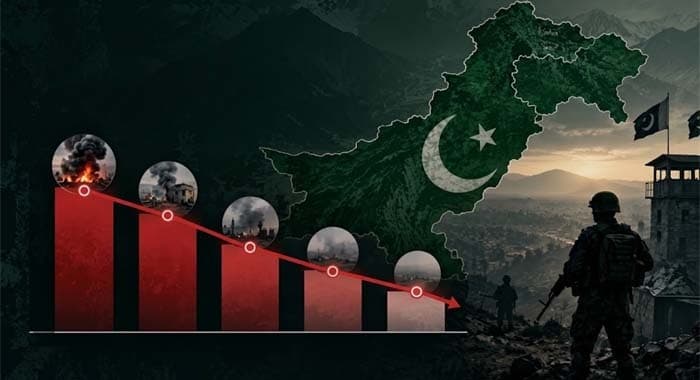
Sustained counterterrorism operations by Pakistan’s security forces have coincided with a significant decline in militant violence, with terrorist attacks falling by approximately 66 per cent over five weeks, according to a latest report by the Pakistan Institute for Conflict and Security Studies (PICSS).
The report highlights a notable reduction in attacks between 18–24 September and 16–22 October, with the number of recorded incidents declining from 61 to 21. The trend points to an improvement in the security situation amid continued counterterrorism efforts, particularly in Khyber Pakhtunkhwa and Balochistan, two provinces that have borne the brunt of terrorist violence.
According to PICSS, militant attacks across Pakistan decreased by 38 per cent during 16–22 October compared with the preceding week. The number of people injured in these incidents also declined from 20 to 11, representing a reduction of 45 per cent.
These figures indicate a substantial week-on-week decline in both the frequency of attacks and the number of people injured. While sustained vigilance remains essential, the latest assessment underscores the importance of intelligence-led operations, coordinated security measures and continued pressure on networks responsible for violence.
PICSS reported that security forces eliminated 33 militants during 10 operations. The operations form part of ongoing efforts to disrupt armed networks, weaken their operational capabilities and prevent further attacks against civilians and security personnel.
The reported decline in attacks, alongside these operations, highlights the importance of maintaining operational momentum and strengthening measures to prevent militant groups from reorganising or exploiting security gaps.
The PICSS report also examined developments within militant organisations, including a leadership dispute within Fitna al-Hindustan and changes in the propaganda strategy of Fitna al-Khawarij.
These developments underscore the evolving nature of the security challenge. Beyond armed operations, effective counterterrorism requires sustained intelligence gathering, disruption of support networks and close monitoring of recruitment, communication and propaganda activities that militant organisations use to sustain their influence and operational capacity.
The latest figures offer an encouraging indication of the changing security landscape, particularly in regions that have experienced persistent militant violence. However, a decline in reported attacks does not eliminate the underlying threat, and continued vigilance remains necessary to consolidate these gains.
Pakistan’s security priorities remain focused on protecting citizens, preventing attacks, dismantling militant networks and ensuring lasting peace across the country. Sustained coordination among security institutions, timely intelligence and effective action against militant infrastructure will remain critical to maintaining the downward trend.
The latest PICSS assessment highlights a significant five-week decline in terrorist attacks, reinforcing the importance of sustained counterterrorism efforts to protect lives and strengthen security across Pakistan.



