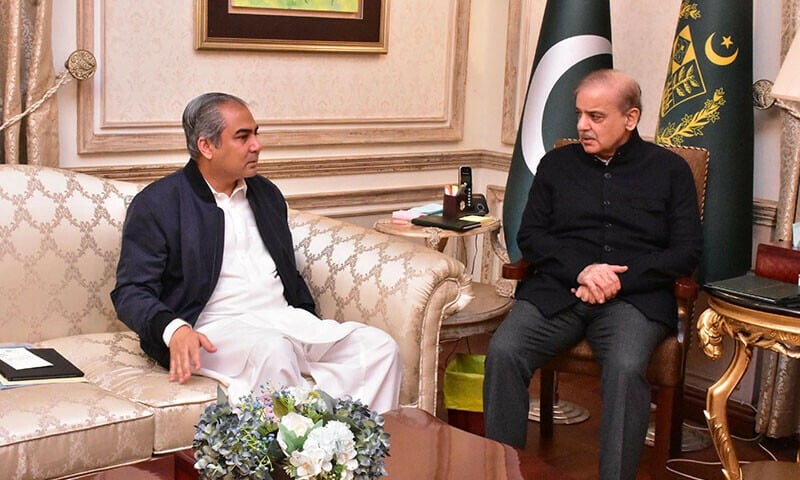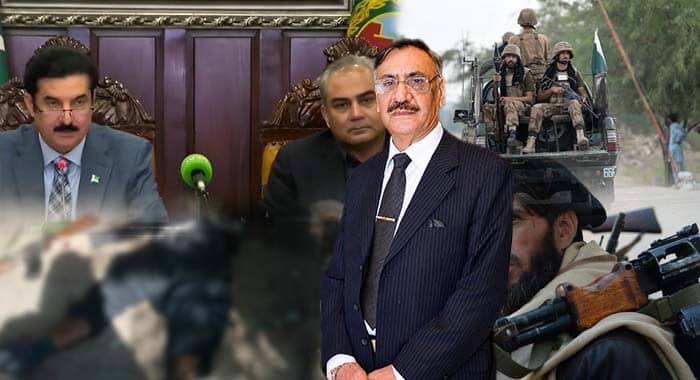
The imposition of emergency in 12 districts of Khyber Pakhtunkhwa on October 11, 2026, has opened a new chapter in the province’s political and security landscape. Under the announced arrangement, the provincial government’s executive functions were placed in abeyance, authority was transferred to the governor, and an 11-member advisory council was established to assist in administering provincial affairs. A separate administrative mechanism was also created for 12 districts severely affected by terrorism. The federal government cited deteriorating security and inadequate cooperation in counterterrorism as reasons for the decision, while the Pakistan Tehreek-e-Insaf (PTI) rejected the accusations and challenged the move politically and legally.
This distinction is essential: the emergency proclamation applies to the province, while the special administrative mechanism is intended to address conditions in the designated 12 districts. These are related but separate aspects of the new arrangement. The development raises questions that extend far beyond the transfer of executive authority. Will the new system improve coordination between federal and provincial institutions? Will it provide police officers with better weapons, equipment, intelligence, and operational support? Can it prevent militant organizations from exploiting administrative weaknesses? And will the change bring meaningful development to communities that have remained vulnerable to insecurity and neglect?
These questions require answers grounded in practical results rather than political declarations. Khyber Pakhtunkhwa needs a strategy that addresses two urgent responsibilities simultaneously: restoring law and order and correcting the governance weaknesses that prevent public institutions from serving citizens effectively. An emergency can alter administrative arrangements, but it cannot automatically eliminate militancy, resolve political mistrust, or repair the relationship between the state and its citizens. Those objectives require sustained institutional effort, consistent policy, and measurable improvements in people’s lives.
The resurgence of the Tehreek-e-Taliban Pakistan (TTP) represents one of Pakistan’s most serious internal security challenges. Attacks on police officers, security personnel, civilians, and places of worship have inflicted enormous suffering on communities across Khyber Pakhtunkhwa. The central problem is not simply the existence of militant groups. It is the difficulty of establishing a consistent national response when political leaders and institutions disagree over how those groups should be confronted. Differences between federal and provincial authorities over negotiations with the Taliban and the TTP have contributed to a wider debate about whether dialogue can produce sustainable peace or provide armed organizations with opportunities to reorganize.
Negotiations are not inherently ineffective. Under carefully defined conditions, dialogue may help secure surrender, reduce violence, or encourage individuals to abandon militancy. However, negotiations cannot be allowed to become an alternative to accountability or a mechanism through which armed groups retain their capabilities while demanding political concessions. Any engagement must have clear objectives, verifiable commitments, enforceable conditions, and consequences for violations. The protection of citizens must remain the overriding consideration.
A state cannot afford contradictory signals in which one institution seeks to dismantle militant networks while another appears willing to accommodate them without adequate safeguards. Such inconsistency can undermine public confidence and complicate the work of security agencies. The new administrative arrangement should therefore be evaluated by whether it produces better coordination, more effective intelligence-sharing, improved investigations, and a measurable reduction in militant violence. The objective should not be to turn counterterrorism into a contest between political parties. It should be to establish a national policy that survives changes in government and places the safety of citizens above partisan interests.
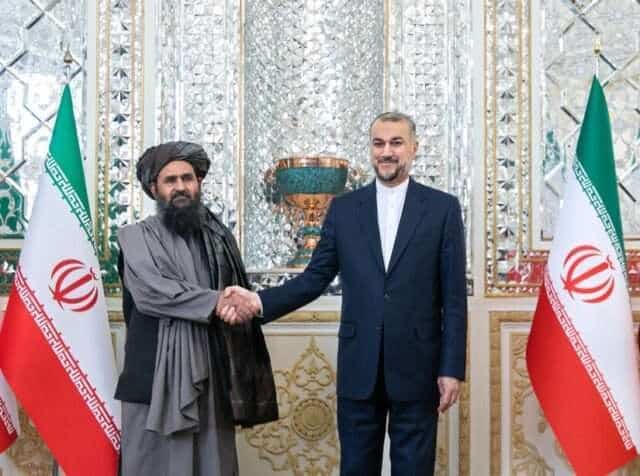
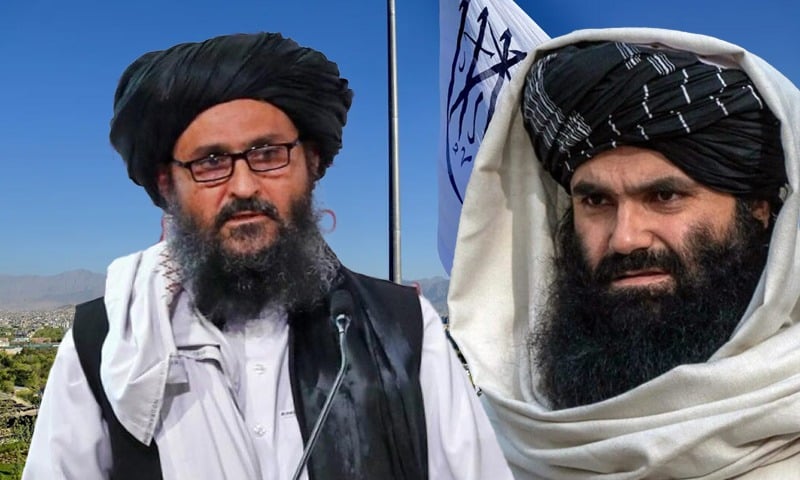
Pakistan’s security situation is closely connected to developments across its western border. The relationship between the Afghan Taliban and the TTP remains a significant concern for Islamabad because of allegations that militant networks operating from Afghan territory have carried out attacks inside Pakistan. The two organizations must be distinguished, but their relationship has important implications for Pakistan’s security and foreign policy. Pakistan needs sustained diplomatic engagement with Afghanistan, supported by clear demands and verifiable outcomes. Border security, the prevention of cross-border attacks, and action against militant networks must remain central to bilateral discussions.
Diplomatic assurances are meaningful only when they translate into practical improvements. A decline in attacks, effective action against militant infrastructure, and stronger mechanisms for cooperation would provide more convincing evidence of progress than public statements alone. The federal government bears primary responsibility for defense and foreign policy, while provincial institutions play essential roles in policing, local intelligence, rehabilitation, and community protection. These responsibilities must complement one another. No province can pursue an entirely separate national security or foreign policy. Equally, federal authorities need the cooperation of provincial institutions to implement effective security measures on the ground. Political disagreements should not prevent coordination against organizations responsible for violence. The state must be capable of pursuing diplomacy without compromising public safety and of taking lawful security action without abandoning the prospect of peace.
One of the most difficult questions in counterterrorism is whether militants should be permitted to return to Pakistan after surrendering or expressing a willingness to abandon violence. A policy that rejects every possibility of surrender could miss opportunities to weaken militant organizations. Yet allowing individuals accused of serious crimes to return to their communities without investigation or accountability can deepen public anger and undermine the legitimacy of the state. Consider the position of families whose relatives have been killed in terrorist attacks. They cannot reasonably be expected to accept the return of an alleged perpetrator without answers, particularly if the individual appears to enjoy protection while victims continue to wait for justice.
Reconciliation must therefore be distinguished from impunity. Individuals who surrender should be processed through lawful procedures. Allegations of murder, terrorism, and other serious offences must be investigated, and cases supported by sufficient evidence should proceed before competent courts. Where guilt cannot be established, the accused must receive the protections guaranteed by law.
This approach protects both the rights of victims and the legal rights of the accused. It also creates a possible pathway for weakening militant organizations. Individuals willing to abandon violence may be separated from those determined to continue fighting, provided that screening, prosecution, rehabilitation, and monitoring are conducted through credible legal and institutional arrangements. Justice must not be sacrificed in the pursuit of a quick settlement. Nor should counterterrorism become a justification for punishment without due process. A durable peace requires both accountability for past crimes and a lawful route away from future violence.
Governor’s rule has placed the future of provincial administration at the centre of the national debate. Its supporters argue that stronger federal coordination is necessary to address worsening security conditions, while opponents view the intervention as politically motivated and damaging to democratic representation. These competing positions make independent scrutiny especially important.
The federal government has cited the deterioration of law and order and the alleged failure of the previous provincial administration to cooperate adequately in counterterrorism. PTI has rejected accusations of links to militant organizations and disputed the justification for suspending its government. Such serious allegations must be assessed through credible evidence and appropriate legal and constitutional processes rather than treated as settled merely because one political side asserts them. Associated Press The effectiveness of governor’s rule must ultimately be measured against concrete objectives. Are attacks declining? Are police officers better protected? Are investigations producing results? Are vulnerable communities safer? Are public services functioning more effectively?
Constitutional authority also carries responsibilities. Emergency arrangements should remain subject to the applicable constitutional procedures, parliamentary scrutiny, judicial review, and protections for fundamental rights. A temporary administrative intervention must not become an excuse to weaken accountability or indefinitely sideline elected representation. The challenge is to restore security while preserving the institutional principles that give the state its legitimacy. Security and democracy should not be treated as mutually exclusive objectives.
The creation of a separate administrative mechanism for 12 terrorism-affected districts introduces another important dimension to the debate. The designated districts are Dera Ismail Khan, Tank, Lakki Marwat, Bannu, Bajaur, Mohmand, Khyber, Kurram, Orakzai, North Waziristan, and the upper and lower parts of South Waziristan. The arrangement brings together four settled districts and eight merged tribal districts under a dedicated administrative structure. The purpose of this arrangement should be to focus administrative attention and resources on areas experiencing particularly severe security challenges.
It must not be confused with the creation of new provinces or the permanent redrawing of provincial boundaries. Administrative reorganization, constitutional changes, and the establishment of additional provinces are different matters, each carrying its own legal and institutional requirements. The special mechanism could help address longstanding problems of coordination, resource allocation, and administrative access. However, the creation of a secretariat or the appointment of a new administrator will not automatically improve public services.
Its success will depend on whether the designated districts receive adequate funding, capable personnel, clear lines of responsibility, and meaningful oversight. The government should establish measurable benchmarks for performance, including the delivery of essential services, the execution of development projects, the handling of public complaints, and coordination between civilian administrators and security institutions. An administrative structure is a means to an end, not an achievement in itself. The real question is whether it improves life for the people it is intended to serve.
The security crisis has also exposed a broader problem in Pakistan’s governance model: the concentration of authority and resources in provincial capitals, often at the expense of distant districts. In large provinces, major development projects, senior officials, and budgetary decisions tend to be concentrated in a limited number of urban centres. Residents of remote districts can struggle to obtain attention for problems that require decisions from provincial authorities. A person travelling from Dera Ghazi Khan to Lahore to resolve an administrative issue faces more than a geographical inconvenience. The journey reflects the financial, bureaucratic, and political barriers that can separate citizens from the state.
Effective governance should not depend on a citizen’s ability to travel hundreds of kilometres, secure influential connections, or navigate an unnecessarily complicated administrative system. The problem is not that provincial capitals receive investment. Major cities require infrastructure, healthcare, education, transportation, and economic opportunities. The problem arises when the needs of distant communities remain inadequately represented in budgetary decisions and development planning.
Administrative decentralization could help bridge this gap by placing decision-making closer to the people affected by it. However, decentralization must involve real authority and financial resources. Establishing new offices without transferring responsibilities or providing adequate budgets would simply reproduce existing weaknesses on a smaller scale.
The most important strategic lesson is that security and development are separate but mutually reinforcing responsibilities. The proposed administrative arrangement for the 12 districts is primarily a governance and development initiative. It cannot, by itself, dismantle militant networks or guarantee the protection of vulnerable communities. In areas affected by terrorism, a road cannot fulfil its economic purpose if workers are threatened or residents fear travelling along it. A school cannot function properly if teachers cannot reach it safely. A hospital cannot provide reliable healthcare if staff, patients, and medical supplies remain exposed to violence.
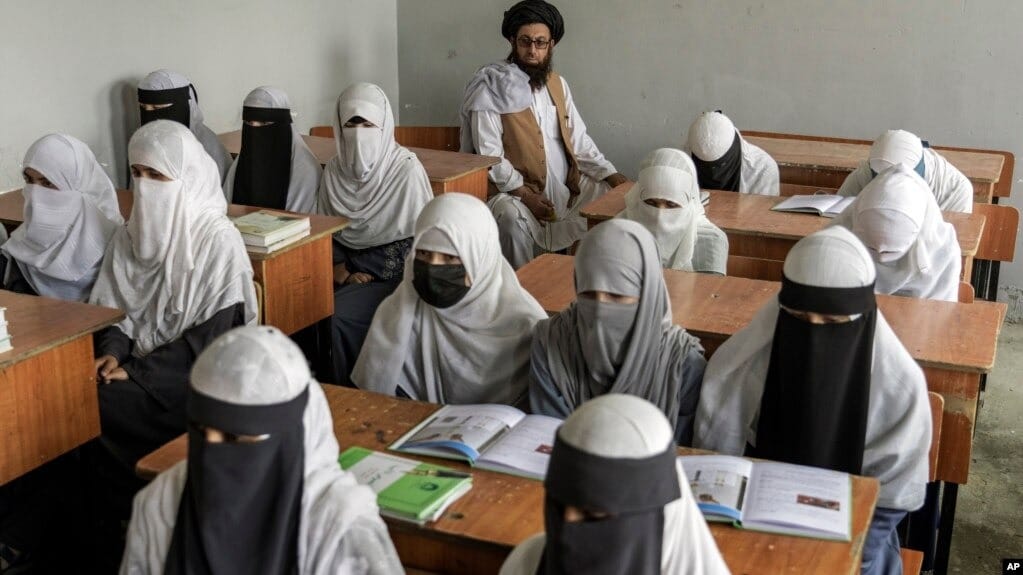
Security is therefore essential for sustained development. But development also strengthens security. Communities deprived of employment, education, healthcare, and meaningful political participation may lose confidence in the state. Militant organizations can attempt to exploit these grievances, although deprivation alone does not explain or justify terrorism.
The government must therefore pursue two coordinated lines of effort. The first should focus on law and order: intelligence-led policing, protection of civilians, effective investigations, professional prosecution, security for public infrastructure, and coordination among the relevant institutions. The second should focus on development: schools, hospitals, roads, employment opportunities, local economic investment, public services, and transparent administration.
Neither can substitute for the other. Development spending cannot compensate for an inability to protect citizens, while security operations cannot permanently resolve the consequences of institutional neglect. The two approaches must be planned together, with security agencies and civilian administrators coordinating their responsibilities while maintaining appropriate institutional boundaries.
The sacrifices of police officers and security personnel underline the need for practical improvements in operational preparedness. Police officers require appropriate weapons, protective equipment, secure communications, reliable transport, intelligence support, forensic capabilities, and professional training. They also need institutional support for investigations, witness protection, and prosecution. The provision of new equipment should be based on operational requirements rather than political announcements. Resources must reach the officers and units facing the greatest risks, with transparent procurement and appropriate oversight.
Police effectiveness also depends on public trust. Communities must be able to report threats and cooperate with investigations without fear of arbitrary treatment or collective punishment. In the designated districts, the presence of police stations, senior police officers, deputy commissioners, and other administrative officials does not automatically guarantee effective governance. These institutions must possess the expertise, resources, and authority required to perform their duties in a difficult security environment.
Specialized local knowledge is particularly important in the former tribal districts, where geography, community structures, economic conditions, and the history of conflict shape the security environment. A professional approach must distinguish between civilians living in affected areas and individuals involved in militant activity. The cooperation of ordinary citizens is indispensable to identifying threats, protecting public infrastructure, and rebuilding stability. The state must protect frontline personnel while ensuring that security measures remain lawful, proportionate, and accountable.
The special administrative mechanism for the 12 districts could offer lessons for wider governance reform, but its effectiveness must be demonstrated before similar arrangements are adopted elsewhere. The government should evaluate whether the model improves the speed of administrative decisions, increases transparency in spending, strengthens public services, and makes officials more accessible to citizens. It should also examine whether the arrangement reduces bureaucratic duplication or creates another layer of administrative complexity.
If the model proves effective, its lessons could inform reforms in Punjab’s southern districts and other underserved regions. If it fails to deliver, the reasons should be identified and addressed before further expansion. Administrative reform should be guided by evidence, public consultation, and constitutional principles. Neither the creation of new provinces nor the establishment of special administrative units should be treated as an automatic cure for weak governance. The ultimate objective is a state in which public services and justice are accessible regardless of where a citizen lives.
Khyber Pakhtunkhwa’s emergency and the special administrative arrangement for 12 terrorism-affected districts have placed Pakistan before a complex test of security, governance, and democratic accountability. The state must confront the TTP threat with consistency, strengthen cooperation between federal and provincial institutions, pursue credible diplomacy with Afghanistan, equip police and security personnel, and ensure that individuals accused of serious crimes are dealt with through the judicial system. At the same time, it must address the centralization of political authority and development resources that has left many communities struggling to obtain basic services. Empowered local governments, fairer budget allocations, improved administrative access, and a serious debate on additional provinces could contribute to a more responsive system.
Governor’s rule and emergency arrangements should be judged by their practical results and their adherence to constitutional requirements. Political accusations must be investigated rather than accepted as established facts, and exceptional measures must remain subject to accountability. Most importantly, security and development must advance together. A state that cannot protect its citizens cannot guarantee prosperity; a state that neglects its citizens cannot easily build the trust required for lasting peace.
The real measure of success will not be the transfer of authority, the creation of a secretariat, or the announcement of a new administrative model. It will be whether terrorist attacks decline, police officers are better protected, courts deliver justice, public resources reach neglected districts, and citizens can approach their government without fear, excessive expense, or political connections. Pakistan does not merely need a new administrative arrangement. It needs institutions that work, a security policy that remains consistent, and a development strategy that reaches beyond the major cities.
The emergency in Khyber Pakhtunkhwa must ultimately be measured against one fundamental objective: transforming a period of extraordinary intervention into a lasting improvement in the security, dignity, and everyday lives of the people.