
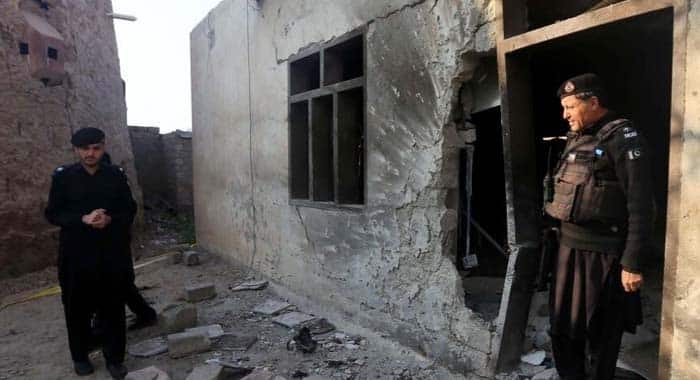
The persistent resurgence of terrorism in Khyber Pakhtunkhwa, the mounting casualties among police personnel, and the deteriorating security situation in several sensitive districts have intensified scrutiny of the provincial government’s counterterrorism strategy, administrative performance, and preparedness to protect citizens.
Despite the Pakistan Tehreek-e-Insaf (PTI) having remained part of the provincial government since 2013 through successive terms, the continuing security crisis raises important questions about the effectiveness of counterterrorism measures, the strengthening of law enforcement institutions, and the protection of vulnerable communities across the province.
While the police and security forces continue to make sacrifices in the fight against terrorism, residents of affected areas are increasingly confronted with fear, uncertainty, and concerns about their personal safety. The situation demands a comprehensive assessment of existing security arrangements, institutional capacity, and the effectiveness of policies intended to prevent militant violence.
Khyber Pakhtunkhwa’s geographical proximity to Afghanistan presents complex security challenges, including the threat of cross-border militant movement and the activities of armed extremist organisations. The broader regional security environment, militant networks, federal policies, and developments across the border also influence the province’s security landscape.
However, these challenges do not diminish the provincial government’s responsibility to strengthen policing, improve intelligence coordination, enhance the operational capacity of counterterrorism institutions, fill vacant posts, modernise equipment, and secure vulnerable police stations and checkpoints.
Southern districts and the merged tribal districts have been particularly affected by recurring security threats. Areas including Kurram, Orakzai, North Waziristan, Lakki Marwat, Tank, Upper Waziristan, and Lower Waziristan continue to face serious challenges associated with militant violence and law enforcement operations.
The reported designation of 26 districts of Khyber Pakhtunkhwa as high-threat areas further underscores the scale of the security challenge and the need for targeted, adequately resourced, and accountable counterterrorism measures.
The Khyber Pakhtunkhwa Police have suffered significant losses while confronting terrorism. According to figures cited in the available information, 159 police personnel were martyred in terrorist attacks during 2025, while 536 attacks targeting the police were reported during the same year.
The information also cites a figure of 122 police personnel martyred during the first six months of 2026. These figures, which require verification against the relevant official reporting periods and records, point to the serious risks faced by frontline law enforcement personnel.
The scale of reported casualties reinforces the urgency of improving force protection, providing modern weapons and surveillance equipment, strengthening intelligence-led operations, upgrading vulnerable police installations, and ensuring that personnel deployed in high-risk areas receive appropriate training and logistical support. Protecting police personnel is not merely an institutional obligation; it is fundamental to maintaining public confidence and ensuring that law enforcement agencies can perform their duties effectively.
Statements attributed to Federal Defence Minister Khawaja Asif have highlighted the magnitude of the security crisis. According to figures cited in his remarks, approximately 6,200 terrorist incidents occurred in Khyber Pakhtunkhwa over a two-year period, resulting in around 1,200 deaths. He also attributed 37 suicide attacks to Afghan nationals.
The minister further stated that 14 suicide attacks had occurred in the province during the current year up to the time of his remarks, with Afghan nationals allegedly involved in most of them.
Separately, figures cited for 2025 indicate that Pakistan experienced 23 suicide and fedayeen attacks nationwide, of which 14 reportedly occurred in Khyber Pakhtunkhwa. These figures should be assessed against their original sources, reporting periods, and definitions, as datasets compiled by different institutions may vary. Allegations concerning the nationality of attackers should likewise be attributed to the officials making those claims rather than treated as independently established findings.
Nevertheless, the reported frequency of attacks highlights the need for stronger preventive intelligence, improved inter-agency coordination, effective border management, and sustained action against militant networks.
The continued deterioration of the security environment has brought renewed attention to the performance of successive PTI-led provincial administrations since 2013. The central issue is not simply how long a political party has governed, but whether its policies and investments have delivered measurable improvements in public safety, institutional preparedness, and the prevention of terrorist violence.
Several critical questions warrant a transparent and evidence-based assessment:
- Police capacity: To what extent have recruitment gaps been addressed, and are police stations and checkpoints adequately staffed and equipped?
- Operational preparedness: Have counterterrorism institutions received the training, technology, intelligence support, and resources required to confront evolving threats?
- Protection of frontline personnel: What practical measures have been implemented to reduce casualties among police officers serving in high-risk districts?
- Intelligence and coordination: How effectively are provincial police, counterterrorism departments, and federal security institutions sharing intelligence and coordinating operations?
- Public safety: What measurable progress has been achieved in reducing attacks, protecting vulnerable communities, and restoring public confidence in affected areas?
- Accountability and resource allocation: Are public funds allocated to policing and counterterrorism producing demonstrable improvements in security outcomes?
These questions are essential to evaluating governance and should be addressed through official data, transparent reporting, and independent scrutiny rather than political rhetoric alone.
Counterterrorism cannot succeed through statements, meetings, or short-term security operations alone. It requires a sustained, coordinated strategy that combines effective law enforcement, reliable intelligence, institutional capacity-building, protection of vulnerable installations, and cooperation between provincial and federal authorities. Particular attention must be given to districts facing persistent militant threats, where police personnel operate under exceptionally difficult conditions and residents continue to experience the consequences of insecurity.
Strengthening police infrastructure, filling critical vacancies, improving surveillance and communications systems, ensuring adequate protective equipment, and enhancing the professional capacity of counterterrorism units should remain key priorities. At the same time, the complex regional dimensions of terrorism require effective border security, diplomatic engagement, and coordinated action against armed groups operating across territorial boundaries.
The safety of citizens must remain the central measure of success. Police officers should have the resources and institutional support necessary to carry out their responsibilities, while communities affected by violence must receive effective protection and reassurance.
The resurgence of terrorism in Khyber Pakhtunkhwa is a serious challenge to public security, economic activity, education, and normal civilian life. The continued loss of police personnel and the reported frequency of suicide attacks demand urgent attention from all relevant authorities. In the context of PTI’s extended tenure in provincial governance, a transparent review of counterterrorism policies, budgetary priorities, recruitment, institutional preparedness, and security outcomes is both necessary and justified.
The fundamental question remains: Have the measures adopted over successive years adequately strengthened the province’s capacity to prevent terrorism and protect its people? A credible answer must be grounded in verified statistics, documented policy implementation, and measurable results. Ultimately, the performance of any government must be judged not by political claims, but by its ability to safeguard lives, strengthen law enforcement institutions, restore public confidence, and deliver a tangible and sustained reduction in terrorist violence.
The people of Khyber Pakhtunkhwa deserve security, effective governance, and accountability. Ensuring these fundamental obligations requires a coordinated, evidence-based, and results-oriented approach to counterterrorism.



