
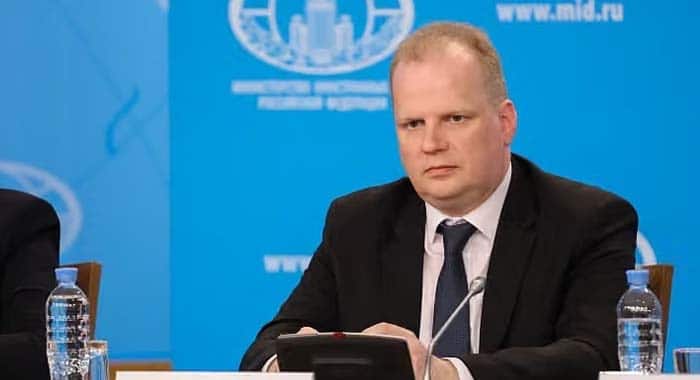
Russia has warned that the potential return of United States military facilities to Afghanistan could pose a direct threat to countries across the region, underscoring growing geopolitical sensitivities surrounding Afghanistan’s strategic position and the future of regional security cooperation.
Russian Security Council Deputy Secretary Alexander Venediktov said Moscow was working to prevent extra-regional powers from re-establishing a military presence in Afghanistan. His remarks, published by Interfax on Monday, reflect Russia’s concerns about the possible consequences of renewed US military involvement in a country that has remained central to regional security calculations for decades.
Venediktov stated that Washington had not concealed its intentions regarding the restoration of military facilities in Afghanistan, warning that the establishment of such a base could threaten regional stability. The Russian official’s comments highlight Moscow’s continued focus on Afghanistan as a key component of its broader Eurasian security strategy, particularly amid evolving political, military and diplomatic dynamics across the region.
Venediktov described cooperation with the Taliban as being in Russia’s national interests, arguing that engagement with the Afghan authorities contributes to regional security and supports Moscow’s objective of building a stable and peaceful Eurasian region. According to the Russian official, nearly all countries in the region maintain contacts with the Taliban leadership, reflecting the growing importance of dialogue with Kabul in addressing shared security concerns.
He also pointed to discussions within the Shanghai Cooperation Organisation (SCO) regarding the possible resumption of engagement with Afghanistan through the organisation’s contact group. Such discussions could provide a multilateral platform for regional countries to address Afghanistan-related security challenges, explore diplomatic engagement and consider opportunities for economic cooperation.
Moscow’s position indicates that Russia views continued communication with the Taliban as an important instrument for limiting external military involvement while maintaining channels for addressing regional threats.
Venediktov said relations between Russia and the Taliban authorities were developing across political, security and economic sectors, involving diplomatic officials, government representatives and business communities on both sides. The expansion of these contacts reflects Moscow’s interest in maintaining a working relationship with Afghanistan’s de facto authorities while pursuing its wider regional objectives.
Security cooperation remains an important dimension of this engagement, particularly given longstanding concerns over terrorism, extremist networks and instability originating from Afghan territory. Russia has consistently emphasized the importance of preventing Afghanistan from becoming a source of threats to neighbouring countries. Its approach combines direct engagement with the Taliban authorities and efforts to strengthen regional diplomatic coordination. However, the broader security environment remains complex, with regional governments continuing to assess the implications of developments in Afghanistan for their own national interests.
Beyond security and diplomacy, Venediktov highlighted efforts to strengthen economic relations between Russia and Afghanistan. He referred to the establishment of a joint economic and trade working group between Moscow and Kabul, which is intended to facilitate cooperation and strengthen the legal framework governing bilateral engagement. The Russian official stressed that economic cooperation, particularly in transport and energy, was important to Moscow.
Transport connectivity and energy-related initiatives could provide opportunities to expand commercial exchanges, improve regional links and support broader economic engagement. Their implementation, however, will depend on practical arrangements, investment, infrastructure requirements and the prevailing regional environment. The development of institutional mechanisms for economic cooperation also suggests that Moscow is seeking to establish more structured channels for engagement with Afghanistan beyond immediate security concerns.
Russia’s warning about a potential US military return comes amid continued international attention to Afghanistan’s strategic location and its implications for the security interests of neighbouring and regional powers. The country occupies a significant position between Central Asia, South Asia and the wider Eurasian region. Developments affecting its security arrangements can therefore influence diplomatic relations, regional connectivity and the strategic calculations of multiple countries.
For Moscow, preventing the re-establishment of an outside military presence in Afghanistan is consistent with its stated preference for regional security arrangements and cooperation with neighbouring states. At the same time, Russia’s expanding engagement with the Taliban reflects a pragmatic effort to maintain diplomatic access, address security concerns and pursue economic interests in a country whose political future remains consequential for the wider region.



