
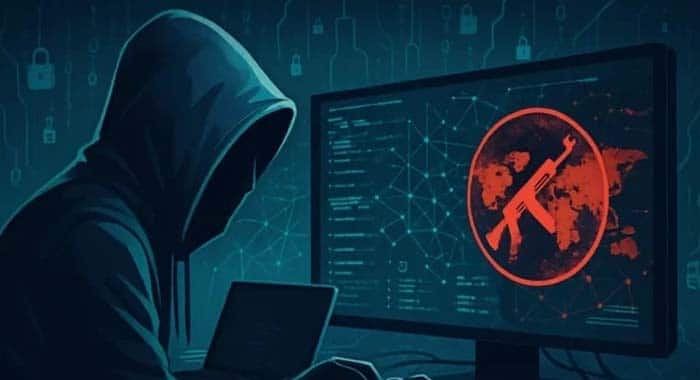
Artificial intelligence (AI) is rapidly transforming education, healthcare, business and national security. While law enforcement and intelligence agencies are increasingly exploring AI to strengthen counterterrorism efforts, the potential misuse of this technology by terrorist groups presents a growing challenge for security institutions worldwide.
Three major concerns stand out: the spread of misinformation and disinformation, the direct use of AI by terrorists, and the emerging phenomenon known as the “Liar’s Dividend,” in which authentic digital evidence is dismissed as fake by exploiting widespread uncertainty about AI-generated content.
As AI technology becomes more accessible, counterterrorism agencies must prepare for its potential impact on emergency response, intelligence gathering, criminal investigations and prosecutions.
Misinformation and disinformation have long complicated security operations, but AI has made it easier to create and distribute convincing fake images, videos and audio recordings. In the aftermath of a terrorist attack, when facts remain unclear and public anxiety is high, fabricated content can spread rapidly through social media. Such material may falsely attribute responsibility for an attack, exaggerate casualties, misrepresent security operations or provoke public panic.
Disinformation may also be circulated by individuals or groups seeking political advantage, promoting an extremist agenda or creating confusion among emergency responders. Deepfakes—AI-generated or manipulated media designed to appear authentic are particularly concerning because they can make fabricated events seem credible. Their growing accessibility increases the risk that false information will influence public perceptions before authorities can verify the facts.
Security agencies must therefore establish effective verification procedures and ensure that operational decisions are based on reliable, corroborated information rather than unverified online content.
Terrorist organizations and individuals may also exploit AI for propaganda production, digital research, surveillance-related activities and operational planning. AI tools can reduce the technical barriers to producing sophisticated propaganda, translating extremist material into multiple languages and generating synthetic audio or video. These capabilities may help terrorist actors reach wider audiences, manipulate narratives and attract potential recruits.
The growing integration of AI into unmanned aerial vehicles and other military technologies also highlights the potential security implications of increasingly automated systems. However, terrorist groups do not necessarily require advanced technology to carry out attacks. Security agencies must assess credible evidence of technological misuse without exaggerating capabilities or assuming that every individual using AI poses a security threat.
Investigators should also recognize that AI tools can make certain technical information more accessible to individuals without formal scientific or engineering training. Where legally authorized, digital investigations may need to consider relevant AI-assisted research and online activity alongside other evidence, while distinguishing legitimate technology use from conduct indicating criminal intent.
Another emerging concern is the “Liar’s Dividend,” a concept examined by legal scholars Bobby Chesney and Danielle Citron. The phenomenon occurs when individuals exploit public awareness of deepfakes to dismiss authentic recordings, photographs or videos by claiming they have been artificially generated or manipulated.
This creates a dual challenge: fabricated evidence may be accepted as genuine, while authentic evidence may be rejected as fake. In terrorism investigations, such claims can complicate the identification of perpetrators, undermine confidence in digital evidence and create additional obstacles for prosecutors. Judges and juries may also face difficulties evaluating disputes over increasingly sophisticated synthetic media.
To address this challenge, investigators should preserve original digital files, maintain proper records of evidence handling, use qualified forensic specialists where necessary and corroborate digital material through independent sources. AI-detection tools should not be treated as infallible, as their results can vary depending on the material being examined. Ultimately, the authenticity and evidentiary value of digital material must be assessed through rigorous, legally appropriate procedures.
The evolving threat landscape requires a coordinated response from law enforcement, intelligence agencies, forensic specialists and prosecutors.
Security institutions should prioritize three key measures:
- Professional training: Equip personnel with the knowledge to recognize potential deepfakes, assess unverified information critically and avoid premature conclusions during security emergencies.
- Stronger digital investigations: Improve evidence preservation, forensic analysis and verification procedures to distinguish authentic material from AI-generated content.
- Interagency coordination: Establish effective information-sharing and crisis communication mechanisms to prevent misinformation from disrupting operational decisions or undermining public confidence.
Public awareness is equally important. Citizens should be encouraged to verify alarming claims before sharing them and rely on credible sources during emergencies.
Artificial intelligence is creating new opportunities for innovation, but its potential misuse introduces serious challenges for counterterrorism operations. AI-generated disinformation can distort public understanding, terrorist exploitation of AI can expand certain technological capabilities, and the “Liar’s Dividend” can undermine the credibility of genuine digital evidence. There is no single solution to these emerging threats. Effective preparedness requires continuous training, reliable verification systems, strong digital forensics and cooperation among relevant institutions.
For counterterrorism agencies, the challenge is no longer simply to obtain digital evidence, but to establish its authenticity, understand how it may have been manipulated and ensure that critical decisions are guided by verified facts rather than fabricated narratives. A proactive, coordinated and evidence-based approach will be essential to protecting public safety, maintaining institutional credibility and strengthening national security in the age of artificial intelligence.



