
Five years after returning to power in Afghanistan, the Taliban continues to exercise control over the country’s provincial capitals and national institutions. With no conventional rival currently capable of mounting a direct military challenge to Kabul, the Taliban has repeatedly presented its territorial dominance and improved security as evidence that Afghanistan has entered a more stable political era.
Yet beneath this apparent consolidation of power, a different picture may be emerging. Armed opposition groups are claiming operations across an increasingly broad geographical area, new organisations are entering the anti-Taliban struggle, and former Afghan security personnel remain a potential source of military experience and organisational capacity for resistance movements.
The developments raise a consequential question: Has the Taliban secured lasting stability in Afghanistan, or is its increasingly contested rule creating the conditions for another prolonged insurgency?
The evidence does not indicate that the Taliban is on the verge of losing power. No resistance organisation controls a major city, and the United Nations continues to assess that armed opposition groups do not pose a significant threat to the Taliban’s territorial control. Nevertheless, the reported expansion of resistance activity beyond its traditional northern strongholds suggests that the country’s security challenges may be more geographically dispersed and politically complex than the Taliban’s claims of consolidated control imply.
The distinction between controlling territory and securing lasting political stability is becoming increasingly important for Afghanistan’s future.
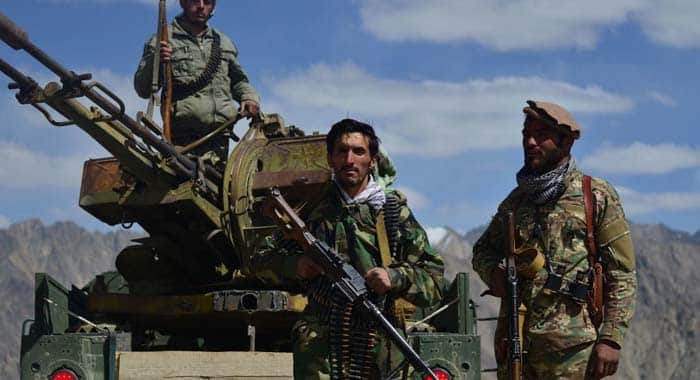
During the initial years following the Taliban’s takeover in August 2021, anti-Taliban armed resistance was concentrated primarily in northern and northeastern provinces, including Panjshir, Badakhshan, Takhar and Baghlan.
The National Resistance Front (NRF) and the Afghanistan Freedom Front (AFF) emerged as prominent organisations challenging Taliban rule. Their concentration in areas associated with the former Afghan Republic allowed the Taliban to portray armed opposition as a limited movement largely confined to a northern geographic and political base.
More recent reporting, however, points to a broader pattern of claimed resistance activity.
According to the figures cited in the supplied material, the United Nations Secretary-General’s September report recorded 88 attacks claimed by armed opposition groups across 21 provinces between May 1 and July 31. UN investigators reportedly verified 55 of those attacks while concluding that the resistance did not significantly threaten Taliban territorial control.
Figures compiled for August and September indicate a further geographical expansion. The supplied data attribute 119 claimed attacks across 26 of Afghanistan’s 34 provinces to several opposition organisations.
These figures cover a substantially wider area, extending beyond the north and northeast into central, eastern, southern and western Afghanistan.
The distinction between reported attacks and verified incidents is essential. The totals attributed to resistance groups are claims made by the organisations themselves, and their accounts of casualties or operational success require independent scrutiny. Nevertheless, if the geographical distribution of these claims is corroborated, it could indicate that anti-Taliban armed activity is no longer confined to the areas where resistance first emerged after 2021.
A geographically dispersed insurgency does not necessarily possess the capacity to threaten a government’s survival. However, it can complicate security planning, stretch administrative resources and create persistent vulnerabilities across multiple regions.
The strategic question is therefore not simply how many attacks have been claimed, but whether resistance activity is becoming more difficult to isolate and contain.
The figures provided attribute the following numbers of claimed operations to various anti-Taliban organisations during August and September:
- Afghanistan United Front (AUF): 59 claimed operations.
- Afghanistan Freedom Front (AFF): 29 claimed operations.
- National Resistance Front (NRF): 11 claimed operations.
- National Independence Front (NIF): Nine claimed operations.
- Afghan Green Trend: Seven claimed operations.
- Two newer organisations: Two claimed operations each.
These figures should be understood as reported claims rather than independently established measures of operational effectiveness. Differences in reporting practices, verification standards and organisational incentives make direct comparisons difficult.
Even so, the reported activity points to a fragmented opposition landscape involving several organisations with different leadership structures, political objectives and geographical priorities.
This fragmentation presents a challenge to the resistance itself. Without a unified command, a common political programme and sustained coordination, the various organisations may struggle to transform isolated operations into a coherent national movement capable of presenting a credible alternative to Taliban rule.
At the same time, fragmentation does not necessarily make the opposition strategically irrelevant.
Multiple armed networks can impose security costs on a government even when none possesses the resources to capture and administer territory. Repeated attacks on personnel, installations and administrative structures can require continuing security deployments and complicate efforts to present the country as fully pacified. The Taliban may therefore face a security challenge that is persistent and geographically dispersed without developing into a conventional struggle for control of Kabul.
One of the most notable developments described in the supplied material is the emergence of the Afghanistan United Front, led by former Afghan National Army Lieutenant General Sami Sadat, whose armed campaign reportedly began in August 2026. The organisation claims operations in Helmand, Kandahar, Nimroz, Ghor, Badghis and Faryab.
The reported geographical reach is significant because several of these provinces lie outside the traditional northern and northeastern areas most closely associated with the post-2021 armed resistance. The AUF has also been described as having a substantial Pashtun profile and drawing heavily on former Afghan security personnel. This distinguishes it from resistance organisations whose leadership and recruitment bases have been more closely associated with particular northern communities.
If its claimed presence in southern Afghanistan is independently corroborated, the AUF could complicate the Taliban’s argument that armed opposition remains primarily a northern phenomenon. However, the organisation’s claims should not be mistaken for proof that it has established durable territorial control, extensive local support or a sustained operational presence in the provinces it names.
Nor does the emergence of a Pashtun-led opposition organisation establish the existence of a broader Pashtun uprising against Taliban rule. Afghanistan’s political and social landscape remains diverse, and the attitudes of individual communities cannot be inferred solely from the activities of an armed organisation.
The more defensible conclusion is that the reported emergence of resistance activity in the south raises questions about the geographical reach and social composition of the opposition. If such activity becomes sustained and independently verified, it could make the security challenge more nationally dispersed, even without bringing the Taliban’s control of major population centres into immediate question.
Afghanistan’s anti-Taliban opposition remains divided among organisations with distinct leaderships, backgrounds and political priorities. The NRF, associated with Ahmad Massoud, and the AFF, associated with Yasin Zia, have been prominent in the armed opposition. The AUF, the National Independence Front, Afghan Green Trend, the Afghanistan Republican Front, the Homeland Soldiers Front and other organisations add further complexity to the landscape described in the supplied material. These groups do not necessarily share the same vision for Afghanistan’s political future, nor can their operational claims be taken as evidence of a unified national command.
Their fragmentation is one of the Taliban’s most significant advantages. Without effective coordination, the opposition may struggle to pool resources, sustain operations across regions or develop a common political platform capable of attracting broad public support.
Yet the absence of a unified resistance leadership does not eliminate the possibility of prolonged insecurity. A decentralised pattern of opposition can persist through multiple independent organisations, each operating within a limited geographical area and pursuing its own objectives. Such a pattern may be less capable of overthrowing a government than a coordinated nationwide insurgency, but it can still impose a sustained security burden.
The central uncertainty is whether Afghanistan’s resistance groups will remain disconnected networks or eventually develop greater coordination, shared political objectives and a more durable presence across the country. At present, the information supplied does not establish that such unification is underway.
Another important factor concerns the Taliban’s treatment of former officials and members of Afghanistan’s security institutions following the 2021 takeover. After returning to power, Taliban leaders announced a general amnesty for former government personnel and members of the former Afghan security forces. The pledge was intended to signal that former adversaries could remain in Afghanistan without facing systematic reprisals.
Subsequent reporting by the United Nations Assistance Mission in Afghanistan (UNAMA) documented alleged violations affecting former officials and security personnel, including extrajudicial killings, arbitrary detention, torture, ill-treatment and enforced disappearances. The supplied material argues that reports of such abuses have continued into 2026. The precise number and circumstances of recent cases require reference to current, independently verifiable documentation.
Nevertheless, the broader issue is significant: confidence in an amnesty can influence whether former security personnel believe they have a viable future outside armed opposition. Former soldiers, commandos, police officers and intelligence personnel may possess military training, organisational experience, local knowledge and professional networks. Those capabilities could be relevant to resistance organisations seeking experienced personnel.
However, it would be inaccurate to assume that all former security personnel support armed resistance or that reported abuses inevitably lead individuals to join opposition groups. Many may remain disengaged from politics, leave the country, seek civilian employment or avoid further conflict. The potential connection between repression and renewed armed opposition should therefore be treated as a plausible security concern rather than an established explanation for every act of resistance.
The Taliban’s consolidation of power has relied on its ability to prevent organised challenges to its authority. Yet the methods used to maintain control may also affect the incentives facing former adversaries and dissatisfied communities. Where credible assurances of safety are absent, individuals who fear detention, retaliation or exclusion may become less willing to pursue peaceful accommodation with the authorities.
In some circumstances, this can reduce the space for reconciliation and increase the appeal of opposition networks that promise protection or political change. This creates a potential strategic contradiction. Measures intended to discourage dissent may, if accompanied by abuses and the absence of meaningful avenues for peaceful opposition, deepen grievances and make political accommodation more difficult.
It does not follow that every grievance produces an insurgency or that armed resistance necessarily enjoys broad public support. Nor does it establish that the Taliban’s governing structures are incapable of adapting. The central concern is whether the absence of credible safeguards, political inclusion and accountability could sustain conditions in which armed opposition remains attractive to a portion of the population. The long-term stability of Afghanistan will depend not only on the government’s ability to suppress challenges, but also on whether it can reduce the grievances and insecurity that allow those challenges to persist.
The Taliban also faces a separate security threat from the Islamic State–Khorasan Province (ISIS-K), an organisation whose ideology, objectives and operational agenda differ fundamentally from those of other anti-Taliban resistance groups. The distinction is important. Nationalist, republican or politically motivated Afghan opposition organisations may challenge the Taliban over its governance, legitimacy and political system. ISIS-K, by contrast, pursues a transnational extremist agenda and has attacked Taliban personnel, Afghan civilians and other targets.
These actors should not be grouped together simply because they oppose the Taliban. Their motivations, recruitment networks, methods and potential consequences for regional security are different. Any assessment of Afghanistan’s security environment must therefore distinguish between armed political opposition and transnational extremist violence. The simultaneous existence of these separate threats could nevertheless complicate the Taliban’s security priorities. The authorities must contend with challenges that differ in purpose and organisation, potentially requiring different intelligence, law-enforcement and security responses.
The existence of multiple threats does not demonstrate that Taliban control is about to collapse. It does, however, complicate any claim that territorial dominance alone has resolved Afghanistan’s underlying security problems.
The Taliban continues to hold a substantial advantage over its armed opponents. It controls the provincial capitals, commands the country’s principal governing institutions and faces no resistance organisation with the conventional military strength required to launch a credible campaign to capture Kabul. The United Nations’ reported assessment that armed opposition groups do not significantly threaten Taliban territorial control reinforces this distinction. However, territorial control is only one measure of political stability.
A government may retain every provincial capital while facing persistent attacks, localised insecurity, public distrust and continuing resistance in areas beyond its strongest security networks. Conversely, an increase in claimed attacks does not automatically indicate that an insurgency is gaining the organisational capacity or popular support needed to threaten a government’s survival.
The most useful indicators will therefore extend beyond raw attack totals. Observers should examine whether independently verified attacks are spreading geographically, whether opposition groups can sustain their activities over time, whether their claims correspond to demonstrable operational capacity, and whether former security personnel are joining their ranks in meaningful numbers.
They should also monitor whether the Taliban can maintain administrative control, provide public security, resolve local grievances and prevent violence from becoming entrenched in additional regions. These indicators would provide a more reliable assessment of Afghanistan’s trajectory than either the Taliban’s claims of complete stability or opposition organisations’ claims of growing military success.



