
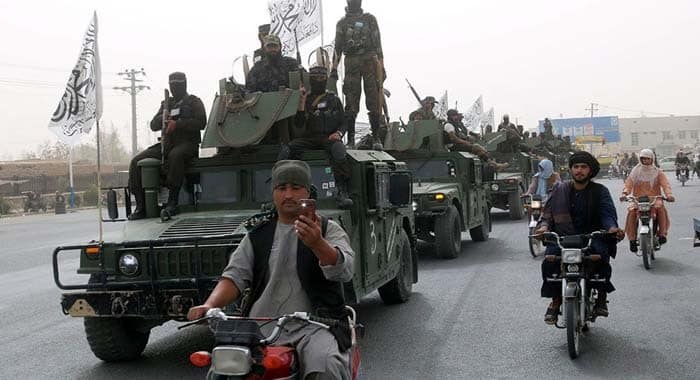
Russia’s growing rapprochement with the Taliban authorities in Afghanistan is emerging as a significant geopolitical development with potential implications for the ongoing war in Ukraine. What began as pragmatic diplomatic engagement has evolved into a broader relationship shaped by strategic interests, regional security considerations, and the pursuit of greater political influence.
Moscow’s decision to remove the Taliban from its terrorist designation, followed by its formal recognition of the Taliban-led government, represents an important shift in Russia’s approach to Afghanistan. Reports of further military cooperation in 2026 have added a new dimension to this evolving relationship, prompting questions about whether the partnership could eventually extend beyond diplomacy and regional security into the realm of military manpower.
Against the backdrop of Russia’s continuing personnel requirements in Ukraine, a consequential question deserves closer examination: Could Moscow seek to recruit Afghan fighters, directly or indirectly, to reinforce its military campaign against Ukraine?
The possibility has attracted attention amid claims from some sources that the Taliban authorities have agreed to send fighters to Ukraine. Such claims, however, require independent verification. The existence of closer relations between Russia and the Taliban does not, in itself, establish that a formal deployment agreement has been concluded.
Nevertheless, the convergence of Russia’s military requirements, Afghanistan’s history of prolonged conflict, and the deepening relationship between Moscow and Kabul makes this an important issue for policymakers, security analysts, and international observers.
Russia’s engagement with the Taliban reflects a broader reassessment of its interests in Afghanistan and Central Asia. Moscow has sought to maintain channels of communication with the Taliban-led administration while pursuing regional stability, counterterrorism objectives, economic engagement, and a stronger diplomatic position.
The formal recognition of the Taliban government has given this relationship a more substantial political foundation. It also signals Moscow’s willingness to pursue its interests through direct engagement with Afghanistan’s current authorities despite the continuing international controversies surrounding the Taliban’s governance and human rights record.
The reported expansion of military cooperation in 2026 raises further questions about the scope and future direction of bilateral relations. The full details of the reported arrangements, including their practical implementation and any implications for personnel cooperation, remain insufficiently clear to support definitive conclusions about a possible Afghan deployment to Ukraine.
Even so, the broader strategic significance is difficult to ignore. A relationship initially driven by diplomatic pragmatism could create opportunities for cooperation across a wider range of security issues. Whether those opportunities will include the recruitment of Afghan nationals for service in Russia’s war remains uncertain. The question warrants examination precisely because the political relationship is changing while the military demands of the Ukraine conflict continue.
The war in Ukraine has placed sustained demands on Russia’s armed forces, requiring the continuing recruitment, training, equipping, and replacement of military personnel. Casualties, prolonged deployments, operational commitments, and the need to maintain pressure along an extensive front have made manpower an important factor in Russia’s ability to sustain its military campaign. At the same time, Ukraine’s expanding use of drones, battlefield surveillance, electronic warfare, and long-range strike capabilities has complicated Russian operations and increased the risks faced by personnel and logistical networks.
These pressures provide a strategic context in which Moscow could have an incentive to examine additional sources of manpower. Foreign recruitment is one possible avenue, although its potential contribution should not be overstated. Recruiting personnel from abroad would require more than access to individuals with previous combat experience. It would also involve questions of legal status, military training, compensation, language, discipline, equipment, command structures, and integration into existing Russian units. Any potential recruitment of Afghan fighters would therefore need to be assessed against Russia’s broader military requirements and its existing recruitment mechanisms. The central issue is whether a prospective source of foreign personnel could provide a meaningful and sustainable contribution to the Russian war effort, rather than simply whether such recruitment is theoretically possible.
Afghanistan’s decades of armed conflict have produced generations of individuals with experience in irregular warfare, small-unit operations, and combat in difficult environments. Some members of Afghanistan’s current security structures and former combat networks possess extensive battlefield experience. From a purely strategic perspective, such experience could attract the attention of foreign military organisations seeking personnel familiar with demanding combat conditions.
However, it would be misleading to describe Afghanistan’s entire population of former combatants as a unified or readily available pool of recruits. Afghan fighters have different political loyalties, organisational affiliations, personal circumstances, and motivations. Their willingness to serve abroad would depend on numerous factors, including compensation, personal security, political commitments, and the risks associated with participating in a foreign conflict.
Furthermore, experience acquired in Afghanistan would not automatically translate into effectiveness on the Ukrainian battlefield. The war in Ukraine is heavily shaped by drone reconnaissance and strikes, artillery, electronic warfare, fortified defensive positions, and technologically intensive battlefield operations. Personnel would require appropriate preparation and integration to operate effectively within such an environment.
Consequently, the potential value of Afghan recruits would depend on their actual capabilities, the roles assigned to them, and the arrangements governing their service. Afghanistan’s history of conflict may provide a relevant background to the discussion, but it does not establish that its fighters are available for Russian deployment or that the Taliban authorities have decided to provide them.
The possibility of Afghan participation in Russia’s war raises a broader question about the relationship between political cooperation and military personnel arrangements. If Moscow and Kabul continue to deepen their engagement, new channels of contact could emerge between government institutions, security organisations, recruiters, and other intermediaries. In principle, such channels could create opportunities for Afghan nationals to explore military service or contractual arrangements with Russian forces.
Several scenarios are conceivable, including individual enlistment, recruitment through intermediaries, or more formal arrangements involving Afghan institutions. These remain hypothetical pathways, not confirmation that any such programme has been authorised or implemented. A government-to-government agreement to provide combat personnel would be particularly consequential. It would represent a more direct form of involvement in the Ukraine war than diplomatic engagement or cooperation on regional security.
Such an arrangement would also raise significant questions about sovereignty, responsibility, recruitment practices, military command, and the treatment of personnel deployed abroad. For the Taliban authorities, facilitating the departure of fighters for a foreign war could carry political costs. It could create tensions within Afghanistan, raise concerns about the movement of armed personnel, and expose the administration to criticism over its involvement in a conflict beyond the country’s borders.
For Russia, any recruitment arrangement would need to demonstrate practical value while accounting for training requirements, operational risks, and the political implications of casualties among foreign personnel. These considerations suggest that even if interest exists on either side, translating it into a large-scale and operationally effective arrangement would involve substantial challenges.
Reports alleging that the Taliban government has agreed to send fighters to Ukraine have added urgency to the debate. If independently confirmed, such an agreement would represent a notable development in the relationship between Moscow and Kabul.
However, allegations of this kind require careful scrutiny, particularly in a wartime information environment where unverified reports and competing strategic narratives can circulate rapidly.
A responsible assessment must distinguish among three separate developments:
- Political rapprochement: Russia and the Taliban authorities are strengthening their official relationship.
- Potential recruitment: Individuals or intermediaries may explore arrangements for Afghan nationals to serve with Russian forces.
- An organised deployment agreement: The relevant authorities have formally agreed to send personnel, with evidence of authorisation and implementation.
These developments are not interchangeable. Evidence supporting the first does not automatically establish the second or third.
To establish whether an agreement exists, investigators and journalists would need credible documentation, attributable official statements, independently corroborated reporting, or verifiable evidence of recruitment and deployment preparations.
Several questions remain central to determining the credibility of the claims:
- Have the Taliban authorities formally confirmed or authorised the deployment of Afghan fighters to Ukraine?
- Has the Russian government or military acknowledged an agreement concerning Afghan combat personnel?
- Does the reported arrangement involve an official state agreement, individual recruitment, or activity by private intermediaries?
- Is there independently verified evidence of recruitment, training, transportation, or deployment?
- If Afghan nationals are involved, what would their contractual status, military roles, and chain of command be?
Until these questions are answered through reliable evidence, the claim that the Taliban government has agreed to send fighters to Ukraine should remain explicitly attributed and unverified. This distinction does not diminish the strategic importance of the issue. Rather, it establishes the evidentiary standard necessary for credible analysis of a potentially significant international development.



