
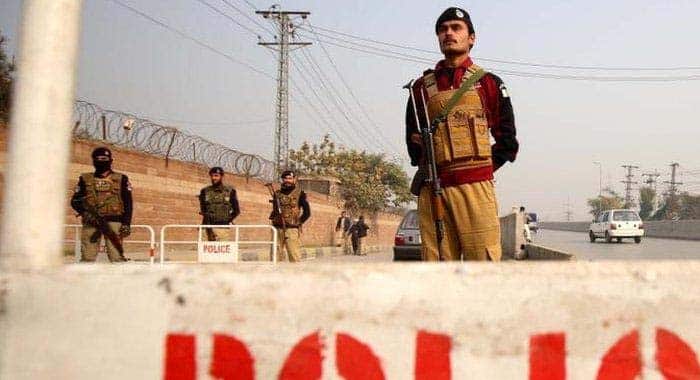
Serious questions are being raised over the operational capacity, resources and preparedness of the Khyber Pakhtunkhwa Police and Counter-Terrorism Department (CTD) amid the province’s continuing battle against terrorism.
Critics have alleged that the Pakistan Tehreek-e-Insaf (PTI)-led provincial government has failed to provide the frontline security forces with adequate resources despite substantial financial allocations and the province’s prolonged exposure to terrorism.
The allegations have intensified following reports highlighting significant shortages in CTD personnel, protected vehicles, forensic capabilities and other specialised counterterrorism infrastructure.
However, the provincial government has disputed the broader characterisation that police resources have been deliberately withheld, saying that security spending and police allocations have increased substantially. The competing claims have placed the utilisation and effectiveness of security funding under renewed public scrutiny.
According to official police documents cited in recent reporting, the Khyber Pakhtunkhwa CTD has a total strength of approximately 3,844 personnel, but only 25 are permanent employees. The department relies heavily on personnel temporarily deputed from the executive police force.
The same reporting states that the CTD currently possesses only 17 bulletproof double-cabin vehicles for operations across the province and faces shortages in modern forensic facilities, surveillance equipment, locators, jammers, armoured vehicles and other specialised resources.
The reported figures have raised concerns about whether the province’s specialised counterterrorism force has the permanent manpower and protective infrastructure required to confront increasingly sophisticated terrorist tactics.
The security challenge has evolved considerably, with militant groups employing explosives, drones, surveillance technology and other modern methods. Recent reporting has specifically highlighted concerns over the ability of police units to respond to threats involving drones and improvised explosive devices.
The wider police force is also reported to be operating with a significant manpower deficit.
Earlier reporting documented a shortage of approximately 17,000 police personnel, while around 13,500 personnel were deployed on security duties for politicians, government officials and sensitive installations. More recent reporting has again cited these figures in the ongoing debate over the deployment and availability of the provincial police workforce.
The figures have prompted questions about whether sufficient personnel remain available for policing, counterterrorism operations, investigation, intelligence gathering and protection of vulnerable communities in terrorism-affected districts.
For a province facing persistent attacks, the allocation of thousands of police personnel to VIP and installation security has become a particularly sensitive issue. The security situation is particularly challenging in the merged tribal districts, where difficult terrain, dispersed settlements and militant activity place additional demands on law-enforcement agencies. Critics contend that weaknesses in police infrastructure in these areas leave personnel vulnerable to terrorist attacks involving explosives, remotely operated devices and drones.
The debate has consequently moved beyond the simple question of the size of police budgets to whether allocated resources are actually reaching frontline units in the form of trained personnel, protective equipment, intelligence systems, vehicles, forensic capabilities and modern surveillance technology.
The issue of financial resources has become a central point of the controversy. Critics have questioned how substantial federal and National Finance Commission-related resources available to the province have translated into practical improvements in police and CTD capabilities. The provincial government, however, has strongly contested suggestions that it has failed to fund the police adequately.
In June, KP Finance Adviser Muzammil Aslam said the provincial police budget represented 8.7 per cent of the provincial budget, compared with 3.9 per cent in Punjab, and stated that Rs170 billion had been allocated for security during the current year. He also said the police budget had been increased by Rs46 billion, or 37 per cent, in the preceding financial year. The provincial government has further stated that additional funds have been allocated for the CTD and Special Branch and that thousands of new police posts have been approved.
These claims present a significantly different picture from allegations that the police have been intentionally deprived of resources.
The central question emerging from the debate is therefore not simply how much money has been allocated, but how effectively those resources have been converted into operational capability. A substantial budget allocation does not automatically translate into adequate protection for officers on the ground.
For a modern counterterrorism force, operational capacity depends on a combination of trained manpower, intelligence systems, forensic laboratories, protected mobility, surveillance technology, communications equipment, explosive-detection capabilities, anti-drone systems and rapid-response infrastructure. Recent reporting indicates that KP has begun procurement and expansion projects in several of these areas. According to officials, more than Rs7.77 billion had been approved to strengthen the CTD, with Rs7.05 billion reportedly released for equipment including bulletproof and armoured vehicles, modern weapons, drones, anti-drone guns, locators and jammers. Recruitment of 638 permanent field operators has also been initiated.
The challenge, therefore, increasingly concerns the speed, scale and effectiveness with which these measures translate into operational improvements.
Counterterrorism investigations also depend heavily on forensic capabilities. Critics have raised concerns over the province’s dependence on forensic facilities outside Khyber Pakhtunkhwa for certain specialised forms of evidence analysis. The absence or limited availability of advanced forensic infrastructure can potentially slow investigations, evidence processing and intelligence development, particularly in cases involving explosives, digital devices, weapons and other material recovered from terrorist suspects. Modern counterterrorism operations increasingly rely on the ability to convert evidence collected at crime scenes into actionable intelligence.
Khyber Pakhtunkhwa Police remains one of Pakistan’s principal frontline institutions in the fight against terrorism. The force has suffered substantial casualties over decades of counterterrorism operations and continues to conduct intelligence-based operations, search operations and security deployments across the province.
The police itself reported extensive counterterrorism activity during the first half of 2026, including 2,004 intelligence-based operations, the arrest of 504 terrorists and the killing of 182 terrorists and wanted suspects, according to figures reported from the Central Police Office. The report also stated that police faced hundreds of attacks and used surveillance and anti-drone capabilities to counter threats.
These figures underline the scale of the operational burden carried by the provincial police.
The controversy over police resources has also become part of a wider political dispute concerning the administration and oversight of the Khyber Pakhtunkhwa Police. Recent debate over proposed changes to the provincial police law has raised questions about police autonomy, administrative control and the relationship between elected political authorities and professional policing structures.
Critics have warned that greater political influence over operational and administrative decisions could affect the effectiveness and independence of the force, while proponents of administrative reforms argue that elected governments must retain appropriate oversight over provincial institutions.
For the people of Khyber Pakhtunkhwa, the most important measure of security policy remains whether police officers have the equipment, manpower and institutional support required to confront terrorist threats. The province continues to face attacks in which militants have demonstrated increasing use of explosives, drones and advanced weapons.
Against such threats, frontline personnel require more than budgetary announcements. They require equipment that is actually delivered, trained personnel deployed where they are most needed, functioning forensic infrastructure, reliable intelligence systems and adequate protection during operations.
The continuing debate over KP police funding and preparedness therefore warrants transparent examination of allocations, procurement, delivery schedules, staffing levels and operational outcomes.
Khyber Pakhtunkhwa remains at the centre of Pakistan’s counterterrorism challenge. While the provincial government maintains that substantial additional resources have been committed to police and security, critics continue to point to shortages affecting the CTD and frontline policing.
The available evidence shows that both issues deserve scrutiny: the scale of resources being allocated and whether those resources are translating quickly enough into effective capabilities on the ground. For a police force confronting terrorism on a daily basis, the margin for delay is narrow.
The ultimate responsibility of any security policy is to ensure that the personnel sent into harm’s way are equipped, trained and supported to protect the lives of citizens and themselves. As terrorism continues to evolve, the effectiveness of Khyber Pakhtunkhwa’s response will depend not merely on the amount of money announced, but on how efficiently that investment strengthens the institutions standing on the frontline.



