
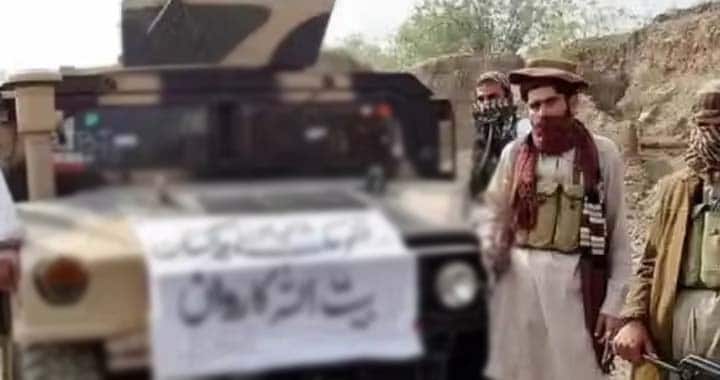
Pakistan’s relations with the Afghan Taliban have deteriorated sharply over one central issue: the continued wave of terrorism affecting Pakistan and the presence of militant networks operating from Afghan territory.
The latest tensions come amid a series of deadly attacks in Pakistan, including the recent terrorist attack in Kohat, where worshippers were among those killed. A subsequent police operation resulted in the killing of seven terrorists, with most of those identified being Afghan nationals.
For Pakistan, the message to the Taliban authorities has remained straightforward: prevent terrorist groups from using Afghan soil against Pakistan and take effective action against those responsible for attacks inside the country. The Taliban leadership, headed by Mullah Hibatullah Akhundzada, has repeatedly denied involvement in terrorism against Pakistan and maintains that Afghan territory is not being used to conduct attacks against other countries.
The continuing contradiction has raised a fundamental question in Islamabad: if the Taliban authorities deny involvement, how are militants continuing to cross from Afghanistan into Pakistan and carry out attacks?
Despite the Taliban’s return to power, Afghanistan continues to host a number of militant organisations. The Tehreek-e-Taliban Pakistan (TTP) maintains a significant presence in Afghanistan, while other international and regional militant groups, including Al-Qaeda and ISIS, have also been cited in assessments of Afghanistan’s security environment. The continued presence of such organisations has remained a major concern for neighbouring countries, particularly Pakistan, which has repeatedly accused the Taliban authorities of allowing the TTP to maintain sanctuaries and operational infrastructure. Pakistan has called for concrete and verifiable measures against these networks rather than assurances alone.
The Taliban authorities are also confronting internal challenges as they attempt to consolidate their rule across Afghanistan. Differences within the Taliban movement have frequently been discussed in relation to ideological, political and regional considerations, including distinctions between influential centres in Kabul, Kandahar and Herat. Mullah Hibatullah Akhundzada is based in Kandahar, which remains the principal centre of Taliban authority. At the same time, the Taliban government continues to face criticism over its policies toward women and girls, particularly restrictions on education and participation in public life. These policies have contributed to continued international pressure on the Taliban authorities and raised questions about their ability to establish broader domestic legitimacy.
The relationship between the Afghan Taliban and the TTP has become one of the most contentious issues between Kabul and Islamabad. Pakistan maintains that the TTP has benefited from sanctuary and support inside Afghanistan and that militants operating from across the border have been responsible for attacks against Pakistani civilians and security personnel.
The Taliban authorities deny providing support for terrorism against Pakistan. The widening gap between these positions has transformed what was once a relationship marked by extensive political and security engagement into an increasingly confrontational one.
Pakistan has also accused India of expanding its influence in Afghanistan and using the country as a platform for activities directed against Pakistan. Islamabad has repeatedly raised concerns regarding the activities of Indian intelligence operatives in the region and their alleged links to militant networks targeting Pakistan. The material cited in support of these claims includes accounts attributed to individuals apprehended by Pakistani security agencies.
India has rejected Pakistan’s accusations. The growing relationship between New Delhi and Kabul has nevertheless become a significant element of Pakistan’s regional security assessment.
Pakistan has also pointed to its historical role in Afghanistan, arguing that Islamabad made significant political, diplomatic and strategic sacrifices during the decades-long Afghan conflict. Pakistan maintains that it played a major role in supporting the Afghan resistance during the Soviet occupation and subsequently remained deeply involved in efforts surrounding Afghanistan’s political and security future. Islamabad has expressed concern that the Taliban have failed to acknowledge this historical relationship while increasingly strengthening ties with countries that Pakistan considers hostile to its security interests.
Afghanistan’s strategic position has also attracted increasing attention from major regional powers. China has maintained engagement with the Taliban authorities while expressing concerns regarding terrorism and regional security. Beijing has also sought stability along its borders and greater security cooperation between Afghanistan and Pakistan.
Russia has likewise maintained relations with the Taliban authorities, while broader regional engagement with Kabul continues to evolve. Pakistan’s position remains that regional engagement with Afghanistan should be accompanied by meaningful action against terrorist organisations operating from Afghan territory.
The continuing deterioration in Pakistan-Taliban relations has placed the Afghan authorities before a critical security and diplomatic challenge. Pakistan wants the Taliban leadership to prevent Afghan territory from being used as a launching ground for terrorism against Pakistan, dismantle militant infrastructure and address the presence of organisations such as the TTP.
The Taliban, meanwhile, continue to deny responsibility for attacks inside Pakistan. The unresolved dispute has created a cycle of terrorism, accusations, diplomatic confrontation and growing security tensions along the Pakistan-Afghanistan border.
For Pakistan, the issue is ultimately one of national security and civilian protePakistan ction. Islamabad maintains that lasting peace between the two countries cannot be achieved while militant organisations continue to operate from Afghan territory.
The future of Pakistan-Taliban relations will therefore depend heavily on whether Kabul can address Islamabad’s security concerns through concrete, sustained and verifiable action against cross-border terrorism.



