
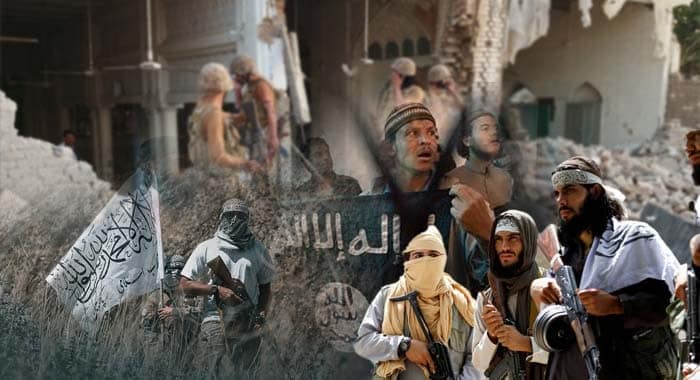
For years, Al-Qaeda in the Indian Subcontinent (AQIS) was regarded as an organisation operating broadly in support of the Tehreek-e-Taliban Pakistan (TTP) and its wider militant ecosystem. However, according to the assessment presented by informed sources, differences between AQIS and elements of the TTP began to emerge in 2024, eventually contributing to the development of a more fragmented militant landscape.
According to this account, AQIS subsequently began developing its own network of proxies rather than relying exclusively on its previous relationship with the TTP. In March 2025, AQIS allegedly launched a proxy under the name Harakat Inqilab-e-Islami, while simultaneously beginning to patronise Hafiz Gul Bahadur’s Tehreek-e-Taliban Ghazwa-e-Hind (TTG).
This process reportedly culminated in the establishment of Itihad-ul-Mujahideen Pakistan in April 2025.
The development represented a potentially significant evolution in the militant landscape: rather than functioning merely as a supporting ideological or propaganda actor, AQIS was increasingly, according to this assessment, attempting to build a network through which it could pursue its objectives via affiliated or proxy formations. This was not, however, AQIS’s first attempt to develop such a structure.
Before the emergence of Harakat Inqilab-e-Islami, AQIS had reportedly launched another proxy, Tehreek-e-Jihad Pakistan (TJP), which also received support from the TTP. The subsequent emergence of additional formations and alliances therefore suggests a complicated web of overlapping relationships, rivalries and tactical cooperation among militant organisations operating in and around Afghanistan and Pakistan.
The latest question surrounding this militant ecosystem concerns the suicide attack in Kohat. According to the information available to the author, Itihad-ul-Mujahideen claimed responsibility for the attack through its Pashto-language Telegram channel. However, the organisation’s Urdu- and English-language channels remained conspicuously silent regarding the Kohat attack.
That discrepancy is significant. According to sources cited in this assessment, the Urdu and English media channels associated with Itihad-ul-Mujahideen are operated by AQIS. The same sources claim that AQIS subsequently issued a statement expressing its displeasure over the Kohat attack, although it stopped short of explicitly condemning the attack.
If accurate, this divergence between the group’s Pashto messaging and its Urdu- and English-language platforms could indicate differences within the alliance over the timing, target or strategic consequences of the operation. It also raises a broader question: Is the Kohat attack merely another militant operation, or has it exposed a strategic disagreement inside Itihad-ul-Mujahideen itself? That question is particularly important because the attack appears to have generated unusual distancing from multiple actors within the broader militant and Afghan political landscape.
According to the account provided, Jamaat-ul-Ahrar, a faction associated with the TTP, also distanced itself from the Kohat attack, while the Taliban condemned the attack at the governmental level. The reported reaction of these actors becomes particularly significant when viewed against the diplomatic context surrounding the incident.
The Kohat attack reportedly occurred one day after the visit of Turkey’s intelligence chief to Afghanistan and Pakistan. According to the assessment presented here, Turkey and Qatar had been engaged behind the scenes in efforts aimed at improving relations between Pakistan and the Afghan Taliban. The apparent objective of those efforts was to reduce tensions between Islamabad and Kabul and create space for improved bilateral relations. The Kohat attack, however, appears to have dramatically complicated that effort.
From this perspective, the reluctance of different actors to associate themselves with the attack may have had a common underlying concern: the attack threatened to undermine diplomatic efforts that were already attempting to reduce tensions between Pakistan and the Afghan Taliban. Instead of producing an environment conducive to dialogue, the attack contributed to renewed confrontation. Pakistan subsequently conducted airstrikes inside Afghanistan, while exchanges of fire were reported at several points along the border on Tuesday. Thus, rather than moving toward de-escalation, relations once again deteriorated.
This leads to perhaps the most important question: Could the Kohat attack become a source of internal friction within Itihad-ul-Mujahideen? There is precedent for such developments within militant organisations. A comparable episode reportedly occurred following the Islamabad Kacheri attack in November 2025. The attack was claimed by TTP commander Sarbakaf Momand, while the organisation subsequently distanced itself from the operation through its official channel.
According to the account presented here, the episode was followed by the TTP leadership sidelining several commanders, including Mukarram Momand, Sarbakaf Momand and Asad Afridi, along with other so-called rebellious commanders, removing them from important responsibilities. After approximately six months of unsuccessful efforts to resolve the dispute, the TTP ultimately announced the revival of Jamaat-ul-Ahrar. The question now is whether a similar dynamic could emerge between Hafiz Gul Bahadur’s group and the wider Itihad-ul-Mujahideen structure following the Kohat attack. There are, however, important differences.
The prospects of a major organisational rupture may currently be limited because, according to the assessment presented here, Hafiz Gul Bahadur’s group represents the largest component within Itihad-ul-Mujahideen. By comparison, Harakat Inqilab-e-Islami is believed to have only a few hundred fighters.
This imbalance matters. A coalition in which one constituent possesses substantially greater manpower and organisational weight is structurally different from an alliance in which multiple factions possess relatively comparable strength. Consequently, a complete breakdown between Hafiz Gul Bahadur’s faction and the AQIS-linked elements of Itihad-ul-Mujahideen may be less likely.
Nevertheless, a targeted internal disciplinary response remains possible. One possibility, according to the assessment presented here, is that Jabha Ansar al-Mahdi, a subordinate formation associated with the Hafiz Gul Bahadur network and reportedly responsible for the Kohat attack, could face some form of disciplinary action within the broader organisational alliance.
Such a move would allow the alliance to distance itself from the operation without necessarily dismantling the broader relationship between its principal components. Whether such action is taken and how severe it might be could provide an important indication of the internal balance of power within Itihad-ul-Mujahideen.
Another development deserves attention. Chaudhry Munir Ahmed Jatt, who reportedly joined the TTP from AQIS, is no longer serving as the head of Umar Media, according to the information presented in this assessment. His apparent removal from the media campaign has generated questions about whether he has instead been moved toward operational activity.
A video released recently reportedly shows him travelling in southern Punjab. The development raises an obvious question: Does the reassignment of a commander with a previous AQIS affiliation indicate a degree of mistrust within the TTP, or does it represent a deliberate change in operational strategy? At present, there is insufficient publicly available evidence to establish which explanation is correct. It may simply reflect an organisational restructuring, a change in responsibilities, or an operational requirement. Alternatively, it could indicate that individuals with previous affiliations to other militant organisations are being treated differently within the TTP’s internal hierarchy.
For now, the significance of the move remains uncertain. Time will reveal whether it represents a temporary reassignment or a more meaningful change in the TTP’s approach toward commanders with backgrounds outside the organisation.
The developments surrounding Chaudhry Munir Ahmed Jatt also bring attention to another allegation contained in this assessment. According to the pattern described by the sources, commanders whom the TTP leadership intends to sideline or from whom it seeks to distance itself are sometimes sent from Afghanistan into Pakistan. Some of these commanders subsequently die in attacks or under circumstances that raise questions about how their movements were known.
The assessment points to the cases of Mufti Mazahim and Qari Amjad, as well as several other commanders reportedly killed during the previous year, including Qari Ismail. Questions have reportedly remained unanswered regarding how information about their movements became known.
However, this alleged pattern must be treated cautiously. The deaths of militant commanders in Pakistan can result from multiple factors, including intelligence penetration, surveillance, informants, communications interception, internal disputes, battlefield exposure or ordinary operational failures. Establishing that a particular leadership faction deliberately exposed a commander would require specific evidence in each case. Nevertheless, the recurrence of such allegations is itself an indication of the degree of internal mistrust and uncertainty that can exist within militant organisations operating across the Afghanistan-Pakistan border.
Perhaps the most consequential element of the emerging picture is the apparent evolution in AQIS’s strategy. For a period, AQIS was widely associated with ideological messaging, propaganda and support for broader militant objectives rather than the establishment of a highly visible independent operational structure inside Pakistan.
The assessment presented here argues that this may now be changing. According to this view, AQIS is returning to the militant arena in a more direct and organised manner.
Rather than limiting itself to propaganda, it is allegedly attempting to advance its agenda through proxies and affiliated organisations. The emergence of Harakat Inqilab-e-Islami, the reported patronage of Hafiz Gul Bahadur’s Tehreek-e-Taliban Ghazwa-e-Hind, the establishment of Itihad-ul-Mujahideen and the earlier creation of Tehreek-e-Jihad Pakistan are presented as elements of this broader strategy.
If these developments are accurately understood, the implications extend beyond any single militant organisation. They suggest a changing architecture of militancy in which organisations may increasingly operate through alliances, proxies, subordinate factions and overlapping command structures, rather than through a single hierarchical organisation.
That makes attribution more difficult and potentially makes counterterrorism operations more complicated as well.
The most important question now is how Pakistani institutions respond to this changing militant landscape. If AQIS is indeed attempting to expand its influence through proxies, Pakistan may face a different challenge from the one posed by a single, clearly identifiable militant organisation. A fragmented network can create ambiguity over responsibility. One faction may claim an attack while another distances itself. One media channel may celebrate an operation while another remains silent. A political or diplomatic initiative may be supported by one faction while being undermined by another.
The Kohat attack appears, at least from the information currently available, to illustrate precisely this problem. The attack was reportedly claimed through one channel while other affiliated channels remained silent. Other militant actors reportedly denied involvement. The Taliban condemned the attack. Diplomatic efforts aimed at reducing Pakistan-Afghanistan tensions were subsequently complicated, and military tensions along the border increased.
Whether this was deliberate or simply the consequence of competing agendas remains unclear. But the outcome was unmistakable: an already fragile diplomatic environment became more difficult to manage.
The coming months may therefore be important for understanding whether Itihad-ul-Mujahideen can maintain cohesion despite competing strategic interests. Three developments will be particularly important to watch.
First, whether Hafiz Gul Bahadur’s network takes any disciplinary action against Jabha Ansar al-Mahdi or other elements associated with the Kohat attack. Second, whether AQIS continues expanding its proxy architecture or instead seeks to repair its relationships with existing militant organisations. Third, whether the TTP’s treatment of commanders with previous AQIS affiliations, including Chaudhry Munir Ahmed Jatt, represents a broader strategic shift or merely an operational reassignment.
The answers to these questions could reveal whether the militant landscape is moving toward greater consolidation or deeper fragmentation. For Pakistan, the challenge is particularly complex because the threat is no longer necessarily confined to a single organisation or a single chain of command.
The emerging picture is one of alliances within alliances, proxies operating under different names, competing media platforms, commanders with shifting loyalties and organisations whose strategic interests do not always coincide even when they share an ideological environment. The Kohat attack may therefore prove significant not only because of the immediate security consequences, but because of what it reveals about the relationships among the groups that operate within this increasingly complicated militant ecosystem.
The reported evolution of AQIS from an organisation historically aligned with elements of the TTP to one increasingly seeking to operate through its own proxies could represent a significant development in Pakistan’s security environment. The formation of Itihad-ul-Mujahideen, the reported role of Harakat Inqilab-e-Islami, Hafiz Gul Bahadur’s network and the involvement of other militant formations point toward an increasingly complex structure.
Yet alliances among militant organisations are rarely static. They are shaped by competing leadership interests, operational priorities, territorial considerations, ideological disagreements and the consequences of individual attacks. The Kohat attack has brought these tensions into sharper focus.
Whether it becomes merely another episode in the region’s long history of militant violence or a genuine turning point for Itihad-ul-Mujahideen remains to be seen. What is clear, however, is that AQIS’s reported return to a more active militant strategy deserves close scrutiny. If the organisation is indeed moving beyond propaganda and attempting to advance its agenda through proxies, Pakistan’s counterterrorism institutions will have to understand not only the individual groups involved, but also the relationships, rivalries and strategic calculations connecting them.
The real test will be whether Pakistani institutions can identify and disrupt this emerging network before its competing factions evolve into a more coordinated and sustainable militant architecture. For now, the most important question remains unanswered: Is Pakistan witnessing the fragmentation of an existing militant alliance or the emergence of a new and more complex militant network under AQIS’s growing influence?
The answer may determine how the next phase of militancy in the region unfolds.



