
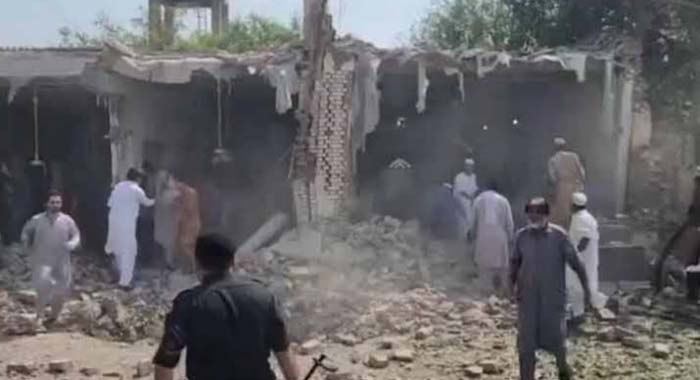
A joint investigation team of the Counter Terrorism Department (CTD) has traced the network involved in the attack on the Kohat Police Lines, marking a major breakthrough in the investigation into the incident.
According to investigative authorities, two terrorist organisations joined hands to plan and execute the attack, with the operation aimed not only at targeting the security installation but also at freeing their associates detained at the CTD compound.
Investigators have established that the Kohat Police Lines attack was planned through coordination between two terrorist organisations. According to the investigation, the attackers had a specific objective: to storm the CTD compound and secure the release of their associates being held there.
The findings indicate that the operation required advance planning, coordination and logistical preparation, suggesting that the attackers had developed a support network before launching the assault. Investigators are now working to establish the complete structure of this network and determine the respective roles of those involved in planning, facilitation and execution.
A significant development in the investigation is the finding that the terrorists remained in Kohat for several days before carrying out the attack. Investigators are examining where the attackers stayed, how they moved around the city, whom they contacted and what logistical assistance they received during their stay.
Their presence in Kohat for an extended period also provides investigators with an important opportunity to reconstruct their movements and identify individuals who may have facilitated the operation. Authorities are examining the available evidence to determine how the attackers established themselves in the city and how they coordinated preparations for the assault.
Investigators have also obtained data and detailed information relating to the vehicle used by the suicide bomber. The vehicle’s data is expected to provide important clues about the attacker’s movements before the assault and may help investigators trace the wider support network involved in the operation.
Authorities are examining the vehicle’s history, movements and associated information alongside other evidence collected during the investigation. The information could prove crucial in identifying additional facilitators and reconstructing the sequence of events leading up to the attack.
According to investigative authorities, one of the central objectives of the operation was to free terrorist associates detained inside the CTD compound. This finding adds a significant dimension to the investigation. Rather than being solely an attack against a security installation, the operation was planned around a specific objective involving the release of detainees. Investigators are therefore examining whether the attackers had information regarding the location of the detainees, the security arrangements at the compound and the internal layout of the facility.
The investigation is also focused on identifying those who provided intelligence, logistical assistance or other support required to execute the plan.



