
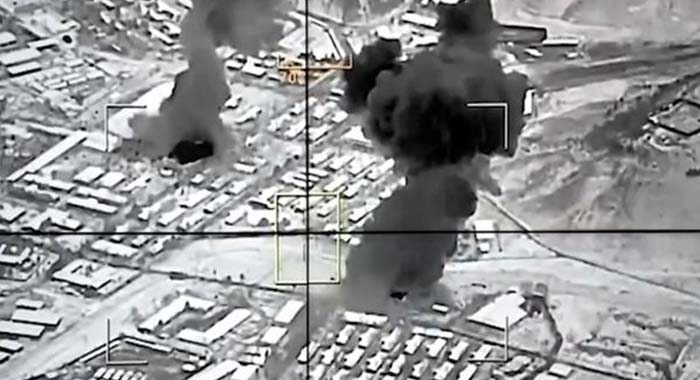
A compound in Kandahar targeted in the recent Pakistani air strikes has emerged as a location of particular significance, owing both to its historical association with the Taliban’s founding leadership and its reported present-day role within the security infrastructure surrounding Taliban Supreme Leader Haibatullah Akhundzada.
The facility was historically known as a residence associated with Mullah Omar, the founder of the Afghan Taliban. However, according to sources familiar with the compound, its significance in the present day extends considerably beyond its historical connection.
Sources indicate that the compound covers approximately 10 acres and has been transformed into a highly fortified security facility. According to these sources, the compound accommodates elite guards assigned to the protection of Haibatullah Akhundzada, alongside highly specialised security and special-forces units.
These personnel are reportedly stationed within the facility, where they are said to live, train and maintain operational readiness. The reported presence of such specialised units makes the compound particularly significant within the Taliban’s wider security architecture. Sources describe the personnel associated with the compound as among the most loyal and trusted security elements surrounding the Taliban leadership.
Because of their reported proximity to and loyalty toward Haibatullah Akhundzada, these fighters are also referred to by some sources as a “death squad.” The designation is a source-based characterization and has not been independently verified. Nevertheless, the reported composition and function of the facility indicate that it is considerably more than an ordinary residential compound.
Its reported role as a location where elite personnel live and conduct specialised training places it within a sensitive layer of the Taliban’s security infrastructure.
Adding further significance to the strike, sources familiar with developments surrounding the facility indicate that a high-value target (HVT) was reportedly present inside the compound at the time of the Pakistani air strikes.
The identity of the alleged HVT has not been publicly established, and the claim has not been independently verified. If subsequently confirmed, the presence of such an individual could provide important context regarding the selection of the compound as a target and the timing of the operation.
The historical and present-day dimensions of the compound make the reported strike particularly notable. The facility’s earlier association with Mullah Omar gave it considerable symbolic importance within the history of the Afghan Taliban. Its reported subsequent role as a heavily fortified installation housing elite guards and specialised units gives it a distinct contemporary security significance.
The transformation of a historically prominent residence into a reported security complex reflects the broader evolution of Taliban leadership structures and protection arrangements in Kandahar. The reported targeting of the Kandahar compound is therefore significant not merely because of its association with Mullah Omar, but because of its alleged present-day function.
A facility reportedly housing elite guards, specialised security personnel and highly trained units and potentially a high-value individual at the time of the strike would represent a particularly sensitive location within the Taliban’s security infrastructure.
As further information emerges, the compound, the personnel reportedly based there and the circumstances surrounding the strike are likely to remain under close scrutiny.



