
(Ahmad Ali Shah)
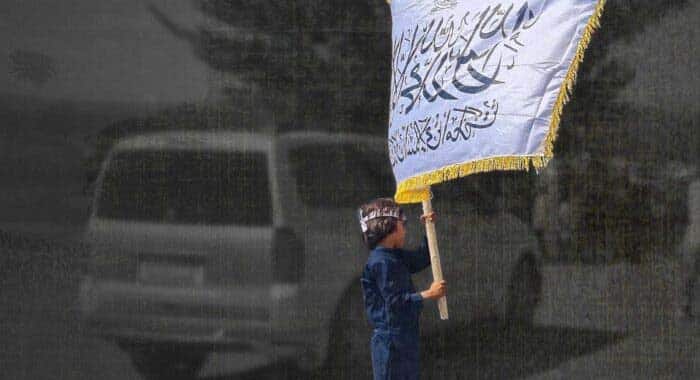
Afghanistan’s education system is undergoing a profound transformation under Taliban rule, with the expansion of Madrasas taking place alongside severe restrictions on modern education, particularly for girls.
The development has raised serious concerns over the future of Afghan children, the quality and diversity of education available to them, and the long-term consequences of exposing a generation to increasingly ideological and restrictive educational environments.
Religious education itself is not the issue. The concern lies in the systematic expansion of Madrasa education while modern educational opportunities are restricted, creating an environment in which many Afghan families have increasingly limited choices for their children’s future.
For children living in economically disadvantaged or remote communities, the question is increasingly not simply what they want to study, but whether they will have the freedom to determine their own educational path.
The experience of an 18-year-old Afghan from the Ghorband Valley of Parwan Province provides a deeply personal insight into the consequences of this changing environment. The young man, whose identity has been withheld for his protection, completed his elementary religious education at a local Madrasa. According to his testimony, his enrollment was not based on personal choice.
He said his father forced him to attend the Madrasa and warned him that he would have to leave home if he refused. Today, he is known within his community and has reportedly been asked by local elders to lead prayers. His appearance, including traditional clothing resembling the attire commonly associated with Taliban members, has also contributed to his public image.
Yet behind that image is a young man who says he once dreamed of becoming a doctor and learning English. That dream was interrupted by years of religious education in an environment he describes as harsh, restrictive, and humiliating.
Recalling his time at the Madrasa, the young Afghan described strict disciplinary practices and physical punishment. He said students were beaten when they failed lessons or did not wear the required uniform. He also recalled being forced to go from door to door and ask people for food.
Such testimony raises serious questions about the conditions experienced by children in some religious boarding institutions and whether adequate mechanisms exist to protect them from physical abuse, humiliation, exploitation, and coercion. For a child, the consequences of such an environment can extend well beyond the classroom. Education during childhood shapes confidence, aspirations, social development, and perceptions of the wider world. When education is accompanied by fear and punishment, its effects can become deeply personal and long-lasting.
According to the testimony, students completing basic religious education were encouraged to continue their studies at larger Madrasas. The young Afghan said students were told that abandoning their studies after memorizing the Holy Quran would be sinful. Such messaging can make it difficult for young people to leave the Madrasa system even when they wish to pursue different educational or professional opportunities.
For the young man, years of insults, humiliation, and physical punishment eventually led him to return home. But returning home did not mean surrendering his ambitions. He is now awaiting the result of his Kankor university entrance examination, hoping to pursue a medical degree and reclaim the educational future he once imagined.
His outlook reportedly changed gradually after traveling to Kabul and encountering relatives and families living a different kind of life. He said that seeing his cousins and other families during visits to Kabul changed his perception of the consequences of Madrasa education. Exposure to different lifestyles, educational opportunities, and social environments encouraged him to reconsider the path that had been imposed upon him. His experience illustrates the importance of allowing young people access to diverse educational and social experiences. For children who remain isolated within narrowly defined educational environments, however, such opportunities may remain out of reach.
The personal testimony comes against the backdrop of a broader Taliban strategy to expand religious education throughout Afghanistan. Former Taliban Acting Minister of Education Mawlawi Noorullah Munir reportedly announced plans to establish thousands of Madrasas nationwide, including a large institution in the center of every province and between three and ten Madrasas in each district. The expansion has reportedly accelerated, with new religious institutions being established in different parts of Afghanistan.
Among the developments cited are the establishment of the Zainabyah Madrasa for girls in Bamyan Province, a predominantly Hazara-populated province, and a large jihadist Madrasa in Panjshir. The scale and geographical spread of the initiative raise fundamental questions about the future direction of Afghanistan’s national education system.
The transformation reportedly extends beyond the construction of new religious institutions. Dozens of former modern public schools and cultural centers have reportedly been converted into Madrasas. Taliban Acting Minister of Education Sayed Habibullah Agha has stated that the “curriculum of the Islamic Emirate,” rooted in the Taliban’s first period of rule beginning in 1996, is being taught.
The incorporation of an ideological framework into education has prompted concerns over the space available for scientific education, critical thinking, independent inquiry, and exposure to diverse perspectives. An education system does more than transfer knowledge. It influences how future generations understand society, history, science, citizenship, authority, and their own place in the world. The nature of that education can therefore have consequences lasting for decades.
The expansion of Madrasas is taking place at a time when Afghan girls face severe restrictions on access to modern education. The simultaneous expansion of religious institutions and contraction of educational opportunities for girls creates a particularly troubling imbalance. Girls who might otherwise become doctors, teachers, engineers, scientists, entrepreneurs, journalists, or civil servants are being denied opportunities to acquire the education required to pursue those careers.
The consequences will not be limited to individual women. Afghanistan’s economy and public institutions will ultimately bear the cost of losing an entire generation of educated female professionals. A country cannot build sustainable prosperity while systematically restricting the educational potential of a substantial part of its population.
Recent official reports and material circulated on social media have raised further concerns regarding conditions faced by children in some Afghan Madrasas. Reported allegations include extremist indoctrination, sexual abuse, exploitation, and the use of children in armed conflict. The 2023 report of the United Nations Secretary-General on Children and Armed Conflict in Afghanistan documented the continued recruitment and use of children by the Taliban, recording 257 children in this context. These findings underline the vulnerability of Afghan children to exploitation by armed actors and demonstrate why the relationship between education, ideological indoctrination, and armed recruitment requires serious scrutiny.
Children must be protected from political, ideological, and military exploitation, regardless of their background or the institution they attend.
The central concern surrounding the Taliban’s Madrasa strategy is not the teaching of religion. Faith-based education exists across the world and can coexist with modern academic disciplines, professional education, critical thinking, and respect for human rights. The concern emerges when religious education becomes dominant within a system where alternative educational opportunities are systematically restricted. If children are deprived of modern schooling while religious institutions continue to expand, education can become a mechanism through which a particular ideological worldview is reproduced from one generation to the next.
The consequences could extend far beyond the classroom. Critics of the Taliban’s education strategy warn that sustained exposure to extremist interpretations and rigid ideological narratives could contribute to the normalization of intolerance and violence.
The concern becomes particularly serious when educational institutions overlap with social structures that have historically supported armed mobilization. There are fears that some Madrasas could become environments conducive to future recruitment into militant networks, including groups operating in Afghanistan and potentially beyond its borders. Studies cited in the source material have raised concerns about the relationship between extremist education and the exploitation of children by armed groups, including the Taliban and ISKP.
If such trends continue unchecked, the consequences could affect Afghanistan for decades.
The transformation of Afghanistan’s education system should therefore not be viewed solely as a domestic educational matter. A generation educated in an environment that limits critical inquiry and promotes extremist narratives could create long-term implications for regional stability and international security. Afghanistan’s neighbors and the wider international community have a direct interest in ensuring that the country’s education system does not become a platform for the reproduction or export of violent extremist ideology. The danger becomes particularly significant if religious institutions develop into social environments for recruitment, mobilization, or ideological indoctrination.
Former officials of Afghanistan’s previous republic have warned that Taliban leaders and members who themselves emerged from Madrasa environments could influence future generations through the same ideological framework. Concerns have been raised that behavioral patterns associated with current Taliban leaders including figures such as Mullah Haibatullah Akhundzada and Sirajuddin Haqqani could increasingly be reproduced among younger generations.
Such a development could create a cycle in which ideological education reinforces the social attitudes that sustain the system responsible for providing that education. Breaking such a cycle could become increasingly difficult as it becomes embedded in schools, families, communities, and institutions.
The most serious consequence may ultimately be the loss of opportunity. A child who could have become a doctor may instead become confined to a narrow educational path. A girl who could have become a scientist may never enter a laboratory. A young person who could have learned English, technology, medicine, engineering, or business may instead receive an education that offers few pathways into the modern economy.
These are not merely individual losses. They represent the loss of Afghanistan’s future human capital. The country already faces enormous economic, humanitarian, and social challenges. Restricting educational opportunities further risks making recovery even more difficult.
The experience of the young Afghan from Parwan is ultimately a reminder of what is at stake. Despite years spent within a restrictive Madrasa environment, he has not abandoned his ambition to become a doctor. His determination to sit the Kankor examination and pursue higher education demonstrates that Afghan young people continue to dream of a future beyond the limitations imposed upon them. His experience also illustrates the importance of educational choice.
Children should not have their futures determined solely by ideological institutions, political authorities, family pressure, or circumstances that leave them with no meaningful alternative. They deserve access to education that provides knowledge, professional skills, critical thinking, and the freedom to determine what they want to become.
Afghanistan stands at a decisive moment in determining what kind of society it will become. The expansion of Madrasas, the conversion of modern schools, restrictions on girls’ education, and the promotion of an ideological curriculum could fundamentally reshape the country’s social fabric. The consequences may not become fully visible for years.
Today’s students are tomorrow’s teachers, doctors, engineers, civil servants, community leaders, parents, and decision-makers. What they learn and what they are prevented from learning will shape Afghanistan’s future. The international community must therefore continue to closely monitor the transformation of Afghanistan’s education system, the protection of children, the treatment of girls, the content of curricula, and allegations concerning extremist indoctrination, exploitation, and recruitment.
Afghanistan’s children should not become casualties of an ideological struggle over the country’s future. They deserve classrooms where learning is driven by knowledge rather than fear; where discipline does not become abuse; where religion can coexist with science; where girls and boys can pursue education; and where a child’s future is determined by ability and ambition rather than coercion.
The young Afghan’s dream of becoming a doctor remains alive. The question facing Afghanistan is whether thousands of other children will receive the same opportunity to pursue their own dreams or whether an expanding system of ideological education will determine their futures for them.
The consequences of that choice will extend far beyond today’s classrooms. Afghanistan’s future is being shaped in its classrooms today and the generation growing up under the Taliban will ultimately live with the consequences of that transformation.



