
The United Nations has called for an investigation into the explosion at an educational centre in Kabul’s Dasht-e-Barchi area, urging the authorities to ensure that schools and educational facilities remain safe for children.
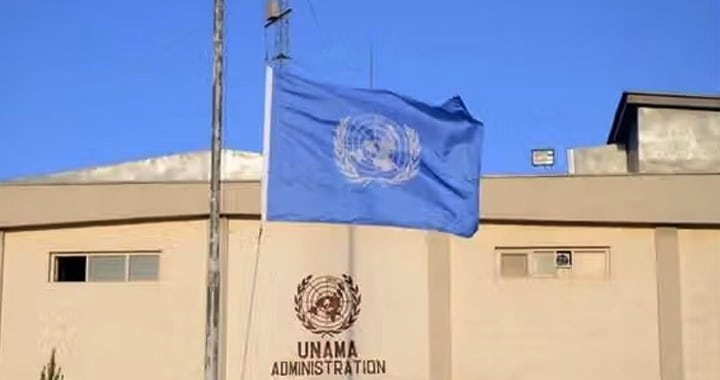
The call came from the United Nations Assistance Mission in Afghanistan (UNAMA) in a statement issued Tuesday, a day after the blast at the centre in western Kabul. UNAMA expressed sympathy with the injured children and their families and stressed the need to establish the circumstances surrounding the incident.
The intervention has renewed international attention on the security of Dasht-e-Barchi, a predominantly Hazara area that has repeatedly witnessed terrorist attacks against civilians, particularly students and worshippers.
According to UNAMA, Monday’s blast injured 42 children between the ages of nine and 14.
The casualty figure, however, forms part of the background to the UN’s latest intervention. The central issue raised by the United Nations is the need for an investigation and stronger protection for educational facilities.
The UN’s call is particularly significant given the area’s history. Dasht-e-Barchi has repeatedly been targeted despite its predominantly civilian character, with schools, educational centres, mosques, sports facilities and public transport among the locations previously struck.
The Kaaj educational centre attack in September 2022 remains one of the starkest examples. More than 50 people were killed and scores wounded in the bombing, with young female students making up a large proportion of the victims.
The recurrence of such attacks raises serious questions about the effectiveness of security arrangements around civilian institutions in an area where the threat is neither new nor unforeseen.
Following Monday’s explosion, the Taliban administration suggested that ISIS or its affiliates could be responsible and said an investigation was under way to identify those behind the incident.
The United Nations, meanwhile, has stressed the need for an investigation into the circumstances of the blast and for civilian protection.
The UN Special Rapporteur on Human Rights in Afghanistan, the European Union and other international organizations have likewise called for the protection of civilians and an investigation.
The concern comes against a broader backdrop of continuing violence against Afghanistan’s Hazara and Shia communities. UN and human rights reporting indicates that more than 50 major attacks targeting these communities and civilian sites have occurred since the Taliban returned to power in August 2021.
Those attacks have included suicide bombings, explosive attacks, targeted shootings and assaults on public spaces, leaving hundreds dead and injured.
Educational institutions have repeatedly figured among the targets, making the latest UN demand particularly pointed.
Five years into Taliban rule, the repeated exposure of children and other civilians to terrorist violence presents a direct challenge to the regime’s claims of having restored security across Afghanistan.
For the authorities in Kabul, the issue now extends beyond identifying whoever carried out Monday’s attack.
The more consequential question is whether educational institutions in repeatedly targeted areas are being adequately protected and whether lessons from previous attacks have actually been incorporated into security planning.
A terrorist attack can be investigated after it happens. But a security system is ultimately judged by how effectively it prevents the next one.
That is the significance of the UN’s latest intervention. It has shifted attention from yesterday’s explosion to the responsibility of those controlling Kabul to investigate it transparently, protect vulnerable civilians and ensure that Afghanistan’s classrooms do not continue to become targets of terrorism.



