
Pakistan has reaffirmed its commitment to diplomacy, dialogue and regional stability, emphasizing that it continues to support efforts aimed at reducing tensions between Iran and the United States and facilitating a peaceful resolution of outstanding differences.
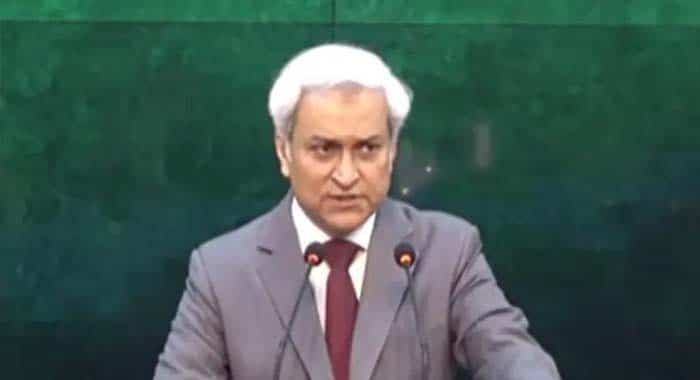
Speaking at the Foreign Office’s weekly media briefing, Foreign Office Spokesperson Tahir Andrabi said Pakistan remains engaged in diplomatic efforts to help address the Iran-U.S. dispute and reduce tensions in the region. He emphasized that it would be inaccurate to conclude that Pakistan’s diplomatic efforts had failed, noting that meaningful progress would remain possible if both sides moved away from confrontation and returned to negotiations.
The spokesperson highlighted recent high-level diplomatic contacts, including a meeting between Prime Minister Shehbaz Sharif and Iranian President Masoud Pezeshkian in Bishkek, as well as a meeting between Deputy Prime Minister and Foreign Minister Ishaq Dar and Iranian Foreign Minister Abbas Araghchi. According to the Foreign Office, these engagements form part of Pakistan’s broader diplomatic efforts to encourage dialogue and contribute to regional de-escalation.
Pakistan maintains that diplomacy remains the most sustainable path toward resolving disputes and preventing further escalation. Islamabad has expressed its willingness to continue engaging with relevant parties in support of dialogue, understanding and regional stability.
Responding to questions regarding Pakistan’s role in efforts to ease tensions between Iran and the United States, the Foreign Office spokesperson rejected the characterization that Islamabad’s diplomatic initiatives had failed. He said that when both sides recognize the limitations and consequences of an approach based on confrontation and aggression and return to the negotiating table, Pakistan would be able to continue supporting dialogue and facilitate efforts aimed at finding common ground.
Pakistan’s position reflects its broader emphasis on diplomatic engagement as a means of preventing further instability in a region already facing multiple security and geopolitical challenges. Islamabad has consistently maintained that escalation serves neither regional stability nor the long-term interests of the countries directly involved. Continued communication, according to the Foreign Office position, remains essential for creating conditions in which disagreements can be addressed through negotiation rather than confrontation.
The Foreign Office also provided an update regarding cooperation under the Makkah Agreement, stating that a meeting of the committee established under the agreement was held in Istanbul on August 31. Pakistan, Saudi Arabia and Türkiye agreed during the meeting to work together under the framework, with the secretariat to be established in Saudi Arabia. Pakistan will reportedly assume responsibility for the position of Secretary-General for a three-year period.
The spokesperson also clarified questions surrounding the name of the agreement. According to the Foreign Office, the name of the Makkah Agreement has not been changed. Rather, the issue relates to how the agreement is referred to across different languages, including Turkish, Arabic and English. The clarification is intended to address speculation surrounding terminology while emphasizing the continuity of the agreement and the cooperative framework established among the participating countries.
A significant portion of the briefing focused on the Indus Waters Treaty and a ruling by an international arbitration tribunal in The Hague. The Foreign Office spokesperson said Pakistan welcomes the decision, describing it as strongly supportive of Pakistan’s position concerning the treaty. He further stated that India cannot selectively accept or reject international decisions according to its own convenience.
According to Pakistan’s position, the ruling provides important legal and international support for its interpretation of the obligations arising under the Indus Waters Treaty. The spokesperson characterized India’s rejection of the decision as inconsistent with respect for international law and the sanctity of international agreements. He stressed that international rulings cannot simply be accepted when convenient and rejected when they are unfavorable.
Pakistan considers the treaty an important framework governing the use and management of the waters of the Indus river system and has repeatedly emphasized the importance of preserving international agreements and established legal mechanisms.
The Foreign Office maintained that the arbitration decision regarding the Indus Waters Treaty is clear and should be viewed within the broader principles of international law and treaty obligations. The spokesperson argued that a party to an international agreement cannot unilaterally determine which international decisions it will recognize based solely on whether those decisions align with its preferred position.
Pakistan’s response reflects its broader argument that the credibility of international legal and arbitration mechanisms depends upon respect for their outcomes by the parties concerned. At the same time, the Foreign Office said it did not have information regarding reports that an international team of experts might be visiting Pakistan to review matters related to the Indus Waters Treaty.
The Foreign Office also addressed developments relating to Afghanistan and recent diplomatic contacts involving Pakistan, Afghanistan and China. The spokesperson said China’s Special Representative for Afghanistan was in Islamabad and had met with Pakistan’s Special Representative for Afghanistan, Ambassador Mohammad Sadiq. The meeting reflects continued diplomatic engagement among regional stakeholders concerning Afghanistan and the broader regional environment. Pakistan has maintained that sustained dialogue among neighboring and regional countries remains important in addressing shared security, political and economic concerns relating to Afghanistan.
Responding to questions concerning an address by Afghanistan’s Chargé d’Affaires at Pakistan’s National Defence University, the Foreign Office spokesperson described the event as a routine engagement and cautioned against drawing broader conclusions from it. He explained that ambassadors and diplomats regularly visit universities and academic institutions and deliver lectures or addresses as part of normal diplomatic and educational interaction. The spokesperson characterized the National Defence University appearance as a “non-issue” and said that no additional significance should be attached to the event. He also stated that he was not aware of what the Afghan diplomat had posted on Twitter, declining to comment on social media content of which he did not have information.
Taken together, the issues addressed during the briefing underscore Pakistan’s continued emphasis on diplomacy, international law and regional engagement. Whether dealing with tensions between Iran and the United States, cooperation under the Makkah Agreement, disputes concerning the Indus Waters Treaty or developments involving Afghanistan, Islamabad continues to emphasize dialogue and established diplomatic and legal mechanisms. Pakistan’s approach reflects its stated interest in preventing further regional instability while protecting its national interests through diplomatic engagement and international frameworks. The Foreign Office’s position also highlights the importance Pakistan attaches to international agreements and arbitration mechanisms, particularly where treaty obligations and transboundary issues are concerned.
Pakistan has reiterated that diplomacy remains at the center of its efforts to address regional tensions and resolve outstanding disputes. On Iran-U.S. tensions, Islamabad says it continues to pursue dialogue and de-escalation and rejects the characterization that its diplomatic efforts have failed. Recent high-level contacts between Pakistani, Iranian and other regional officials demonstrate continued engagement aimed at keeping diplomatic channels open. On the Makkah Agreement, Pakistan, Saudi Arabia and Türkiye have agreed to strengthen cooperation, with the agreement’s secretariat to be based in Saudi Arabia and Pakistan set to assume the Secretary-General position for three years.
On the Indus Waters Treaty, Pakistan has welcomed the international arbitration ruling in The Hague and reiterated its position that international decisions and treaty obligations cannot be selectively accepted or rejected. Regarding Afghanistan, Pakistan continues to engage with regional partners, including China, while the Foreign Office has sought to characterize routine diplomatic and academic engagements as precisely that unless evidence indicates otherwise.
The overarching message from the briefing was clear: Pakistan intends to continue pursuing diplomacy, dialogue and international legal mechanisms while safeguarding its national interests and seeking greater stability across the region.



