
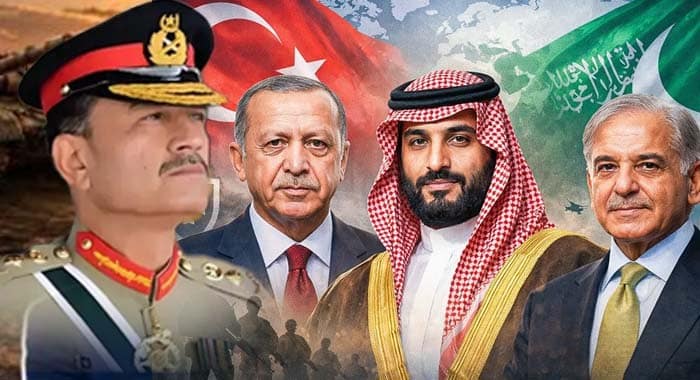
The Makkah Joint Defense Agreement stands as one of the most consequential security understandings in the contemporary Islamic world, reflecting a shared commitment to collective security, strategic cooperation, and regional stability. At the center of this diplomatic and defense milestone was Field Marshal Asim Munir, whose leadership helped translate military credibility into strategic influence on the international stage.
The agreement represents more than a defense framework. It symbolizes a convergence of trusted partnerships built on mutual interests, professional military cooperation, and a common vision for safeguarding regional peace. Through sustained engagement with partner nations, the Field Marshal played a pivotal role in strengthening Pakistan’s standing as a dependable security partner and a responsible regional power.
This achievement reflects a leadership approach defined by strategic clarity, commitment to peace, and a deep understanding of the evolving geopolitical landscape. By aligning Pakistan’s defense diplomacy with broader regional objectives, he helped reinforce confidence among friendly states while advancing the country’s long-term national interests.
Under his stewardship, military professionalism became an instrument of diplomacy. High-level defense engagements evolved into platforms for strategic dialogue, enabling Pakistan to deepen bilateral relationships, broaden defense cooperation, and cultivate enduring partnerships founded on trust and mutual respect.
The Makkah Joint Defense Agreement also underscored Pakistan’s growing role in shaping collective security initiatives across the Islamic world. It positioned the country’s military leadership as a reliable pillar of regional stability, capable of bringing partners together in pursuit of common security objectives while encouraging greater strategic alignment among allied nations.
Beyond its immediate security implications, the agreement enhanced Pakistan’s diplomatic stature, demonstrating how credible defense capabilities, when coupled with purposeful statecraft, can generate meaningful geopolitical influence. It reinforced Pakistan’s image as a nation prepared to contribute constructively to regional peace, collective defense, and international security cooperation.
The Makkah Joint Defense Agreement remains a defining example of how strategic vision, professional excellence, and sustained diplomatic engagement can reshape regional partnerships. It reflects a model in which military leadership extends beyond the battlefield, serving as a catalyst for stronger alliances, greater international confidence, and a more secure regional order.



