
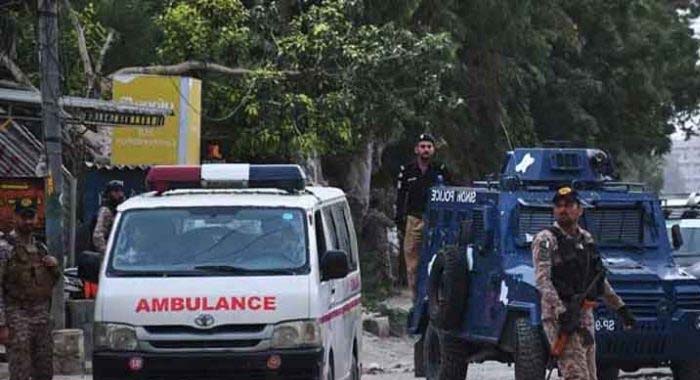
The reported attack on security installations near Ziarat Cross in Balochistan has triggered renewed concerns over the evolving militant threat in the province, after the outlawed Tehreek-e-Taliban Pakistan (TTP) claimed responsibility for the assault.
According to information provided by Pakistani authorities, five security personnel were killed and seven others were injured in the attack, with Captain Zia Ullah among those reported wounded. The incident reportedly involved armed assailants targeting a police checkpoint, a Customs warehouse and vehicles in the vicinity of Ziarat Cross.
The TTP has claimed that 15 Pakistani security personnel were killed or wounded in the incident. However, the figures cited in official Pakistani accounts are significantly lower, with authorities reporting five fatalities and seven injuries. The competing claims have not been independently reconciled, underscoring the importance of relying on verified information when assessing the scale and consequences of the attack.
According to the available account, the attackers targeted several locations and assets near Ziarat Cross, including a police post, a Customs facility and vehicles. The reported targeting of multiple security-related locations has raised questions about the planning and coordination involved in the assault. Pakistani authorities have characterized the incident as part of the continuing terrorist threat facing the country and have reiterated that attacks against security personnel and state installations will not deter ongoing counterterrorism operations. The incident also highlights the continuing security challenges confronting Balochistan, where militant violence and attacks against government and security installations remain a significant concern.
While the TTP has publicly claimed responsibility for the attack, questions have also been raised about whether the method and characteristics of the assault correspond with the group’s more commonly reported operational patterns. Some analysis has suggested a possible connection between the incident and the Baloch Liberation Army (BLA). However, there is currently no independent confirmation establishing that the BLA and TTP coordinated or jointly conducted the specific Ziarat Cross attack.
This distinction is important. The existence of speculation regarding possible links between militant organizations should not be treated as evidence of operational cooperation unless supported by credible and independently verifiable information. The competing narratives surrounding responsibility demonstrate the complexity of attributing attacks in an environment where militant organizations may have overlapping interests, messaging strategies or claims designed to influence public perception.
In its response, the Pakistani side has linked the attack to what it describes as cooperation between Fitna al-Khawarij and Fitna al-Hindustan, while accusing hostile elements of attempting to portray attacks in Balochistan as military or strategic successes. Pakistani authorities have argued that militant groups seeking to project an image of strength are attempting to exploit individual attacks for propaganda purposes, particularly following what Islamabad describes as setbacks suffered by militant elements during recent confrontations.
The Pakistani position is that such attacks will not alter the country’s determination to continue counterterrorism operations. Authorities have emphasized that the state intends to pursue terrorist organizations, facilitators and other individuals believed to be involved in supporting militant violence.
One of the most significant aspects of the competing narratives concerns the number of casualties. The TTP’s claim that 15 Pakistani security personnel were killed or wounded contrasts with the official figure of five personnel killed and seven injured. Such discrepancies are common in the immediate aftermath of militant attacks, when armed groups may have incentives to portray an operation as more successful than official accounts indicate.
For this reason, casualty figures attributed to militant organizations require independent verification before being treated as established facts. The discrepancy also demonstrates the importance of responsible reporting. Presenting unverified militant claims as confirmed information can inadvertently amplify propaganda and create a distorted understanding of the actual security situation.
The Pakistani position has also criticized portions of the Indian media for prominently reporting the TTP’s claim without independent confirmation of the militant group’s version of events. According to the Pakistani narrative, giving extensive coverage to unverified claims by a terrorist organization can contribute to the group’s propaganda objectives by amplifying its portrayal of operational success.
The broader issue extends beyond any single media outlet or country. Reporting on terrorist attacks requires particular care because militant organizations frequently use public claims of responsibility as instruments of psychological warfare and strategic communication. A terrorist group’s claim of responsibility is an allegation, not independent evidence. Establishing responsibility requires corroboration through credible intelligence, forensic findings, official investigations or other reliable evidence.
The dispute surrounding the Ziarat Cross attack illustrates how modern terrorism increasingly involves an information component alongside physical violence. An attack may have a direct operational objective, but the subsequent battle over its interpretation can be equally significant. Terrorist organizations may seek to magnify casualties, portray security forces as vulnerable and present relatively limited operations as major victories.
Governments, meanwhile, have an interest in correcting misinformation, providing verified casualty figures and preventing terrorist propaganda from shaping public perceptions. This makes accurate and responsible information particularly important following attacks. The public deserves to know what happened, but claims from any side should be distinguished clearly from independently verified facts.
Despite the competing claims surrounding the attack, the Pakistani position remains that terrorist violence will not alter the country’s counterterrorism strategy. The government and security authorities have reiterated their determination to continue pursuing individuals and organizations involved in terrorism, as well as those accused of facilitating or supporting militant activities.
The Pakistani statement further emphasizes that all parties involved in what it describes as the nexus between terrorism and organized crime will ultimately be pursued under the law. Authorities have stressed that the objective is not limited to responding to individual attacks but also to dismantling the broader networks that enable terrorist organizations to recruit personnel, obtain resources, maintain logistics and sustain their operational capabilities.
The Pakistani response has also placed the Ziarat Cross incident within a broader regional security narrative, including references to recent military developments and confrontations involving India. The statement specifically referred to Indian Rafale fighter aircraft and argued that military capabilities previously portrayed as highly formidable should also be assessed against the outcomes of recent hostilities.
Such references form part of Pakistan’s broader strategic messaging and should be understood within the context of heightened regional tensions. The immediate security issue, however, remains the attack itself and the continuing threat posed by militant violence inside Pakistan.
Balochistan occupies a strategically important position and has long faced a complex security environment involving separatist militancy, terrorism, organized crime and other forms of instability. The reported Ziarat Cross attack therefore carries significance beyond the immediate casualties. Any successful assault against security infrastructure can raise questions about vulnerabilities, intelligence gaps, force protection and the ability of militant groups to operate in sensitive areas.
At the same time, the circumstances of the attack require careful investigation before broader conclusions can be drawn about the capabilities or organizational relationships of the groups allegedly involved. Determining who planned the operation, who carried it out, how the attackers obtained the necessary resources and whether any external assistance was involved will be essential to establishing a complete picture.
The question of responsibility remains particularly important. Although the TTP has claimed responsibility, the available information does not independently establish that the organization conducted the attack. Similarly, suggestions of a possible TTP-BLA connection remain unverified in relation to this specific incident. A credible investigation should therefore examine all available evidence before reaching a definitive conclusion. This approach is essential not only for accountability but also for preventing militant organizations from manipulating attribution for propaganda, recruitment or strategic purposes.
The attack near Ziarat Cross represents another serious security incident in Balochistan, with Pakistani authorities reporting five security personnel killed and seven injured. The TTP has claimed responsibility and offered a higher casualty figure, but that claim remains inconsistent with the official account and has not been independently verified. The incident has also generated questions about the nature of the attack and whether other militant organizations could have been involved. While possible links between the TTP and BLA have been suggested, no independent evidence currently confirms joint planning or participation in this particular assault.
Pakistan has responded by reaffirming its determination to continue counterterrorism operations and to pursue terrorist organizations, facilitators and other elements it believes are contributing to violence in the country. The episode also highlights an increasingly important dimension of modern terrorism: the battle for control of the narrative after an attack. Claims of responsibility, casualty figures and descriptions of operational success can become part of a deliberate propaganda campaign, making independent verification essential.
For Pakistan, the immediate priority remains protecting its security personnel and civilian population while identifying those responsible for the Ziarat Cross attack. The broader challenge is to prevent militant organizations from exploiting insecurity, propaganda and criminal networks to sustain their operations.
As investigations continue, the distinction between what militant groups claim, what authorities report and what can ultimately be independently verified will remain critical to understanding what actually happened at Ziarat Cross.



