Aqeel Yousafzai
Pakistan’s fight against terrorism has reached a point where the greatest danger may no longer lie only in the armed groups operating across its borders and in its troubled districts. An equally serious danger is the confusion surrounding the state’s own counter-terrorism strategy: who is responsible for security, whom the state trusts, which local actors it empowers, and whether different institutions are working toward the same objective.
Recent developments discussed in a televised analysis concerning Bannu, Lakki Marwat, North Waziristan, Hangu, Kurram and Afghanistan raise precisely these questions. Reports have circulated about tensions involving so-called police peace committees in Bannu and Lakki Marwat, security operations against alleged Tehreek-e-Taliban Pakistan (TTP) positions, and claims that the Afghan Taliban has distanced itself from TTP chief Noor Wali Mehsud and relocated some TTP commanders. Each of these developments deserves careful examination. More importantly, taken together, they expose a deeper problem: Pakistan cannot defeat terrorism through a collection of temporary arrangements, contradictory signals and locally improvised security mechanisms.
The central question is therefore not simply whether a particular peace committee has “rebelled” against the state. The more important question is why a non-state or semi-state security structure should ever become powerful enough to challenge the authority of the very institutions responsible for maintaining law and order.
The experience of Pakistan’s tribal belt demonstrates that the use of local armed groups as instruments of security is fraught with danger. The argument presented in the discussion is that, despite years of experience and repeated failures, Pakistan has never developed a sufficiently coherent and consistently implemented counter-terrorism policy.
That criticism deserves serious consideration. A state cannot successfully fight terrorism when its institutions send conflicting messages. One arm of the state may conduct an operation against militants, while another local arrangement may provide influence, resources, weapons or social legitimacy to individuals whose loyalties are unclear. One institution may identify a group as a security threat, while another may treat its members as useful intermediaries. Such contradictions do not merely create bureaucratic confusion; they can undermine the entire counter-terrorism campaign.
The discussion referred to the historical experience of using committees and armed groups after 2004, arguing that Pakistan repeatedly relied on local arrangements that eventually turned against the state. The example of the Hafiz Gul Bahadur network was cited as a warning about the long-term consequences of empowering armed actors for short-term strategic purposes. The broader lesson is straightforward: an armed group does not automatically become reliable simply because it temporarily serves a state objective.
History has repeatedly demonstrated that once weapons, money, vehicles and authority are handed to a non-state actor, retrieving that power can be extremely difficult. This is why the situation in Bannu and Lakki Marwat should be viewed through the wider lens of state authority. If police officers require armed civilians to protect them, the state must ask why its own security institutions are unable to perform that function. If local groups are given weapons, vehicles, offices or financial resources, there must be strict accountability over who receives them, who supervises them and what happens when their members misuse their authority.
Otherwise, the state risks creating the very parallel power structures that later become impossible to control.
One of the most disturbing allegations discussed was an incident in Lakki Marwat involving security personnel who reportedly risked their lives to rescue a kidnapped woman. The account then described an altercation involving members associated with a peace committee, including allegations of abusive behaviour and the display or use of weapons against members of the Pakistan Army. These allegations, if established by an impartial inquiry, would represent more than a simple dispute between individuals. They would illustrate the dangerous consequences of blurred authority.
Soldiers and police officers operate within a chain of command. They are subject to laws, regulations and disciplinary procedures. Civilian armed groups cannot be allowed to develop a parallel understanding of authority in which they can insult, threaten or obstruct official security personnel without consequences. The patience reportedly shown by the security personnel in the incident was, in that context, significant. Had the confrontation escalated into gunfire, the consequences could have been catastrophic. A minor confrontation could have become a tragedy involving deaths on both sides, followed by competing accusations, political statements and another cycle of mistrust.
That is precisely why accountability matters. The state must investigate allegations involving armed groups regardless of political connections, tribal affiliations or local influence. The rule must be simple: no civilian group is above the law, and no security institution should be forced to tolerate armed intimidation from actors operating outside the formal chain of command.
Another fundamental issue raised in the discussion concerns the division of responsibility between provincial governments, police, the Frontier Corps and the military. Bannu is part of Khyber Pakhtunkhwa and Pakistan’s constitutional framework. If law enforcement requires additional resources, the appropriate response is to strengthen legitimate institutions—not permanently substitute them with armed community structures.
If the police are insufficiently equipped, equip them. If the police lack manpower, increase their manpower. If intelligence coordination is weak, improve intelligence coordination. If the Frontier Corps is deployed in an area, establish clearly defined responsibilities and command structures. If the military is conducting counter-terrorism operations, ensure that its sacrifices are not undermined by administrative decisions elsewhere. The alternative is a system in which everyone is involved but nobody is ultimately accountable. That is perhaps the greatest institutional weakness highlighted by the discussion.
Military operations can destroy militant hideouts, eliminate commanders and disrupt networks. But terrorism is not merely a collection of buildings that can be bombed or individuals who can be arrested. Terrorist organizations survive through networks. They require recruitment, transportation, money, intelligence, safe houses, communications and local facilitation. If those networks remain intact, another group of militants can emerge after the previous group has been eliminated. This explains why reports of security forces destroying alleged TTP locations in North Waziristan, Hangu and Kurram are important but cannot be viewed as the complete solution.
An operation may destroy a facility. But what happens afterward? Who provided the facility? Who transported the militants? Who supplied money? Who helped them disappear? Who warned them about security movements? Who recruited young men? Who enabled them to return? Those questions lead directly to the concept of facilitation.
The discussion argued that Pakistan’s counter-terrorism effort cannot succeed until facilitators on the ground are addressed. That is a compelling point. A state can win individual battles while losing the larger war if the ecosystem supporting militancy remains untouched. This is also why allegations of corruption within local security arrangements are particularly serious. If armed groups are receiving expensive weapons, vehicles or other state resources while simultaneously intimidating civilians or security personnel, the state must investigate the entire chain of authorization. The issue is not merely whether one individual is corrupt. It is whether the system has created incentives that make corruption and militant infiltration possible.
Behind every security operation are ordinary families. The people of Bannu, Lakki Marwat, Kurram, North Waziristan, Hangu, Swat and other affected districts are not statistics in a security briefing. They are citizens who want schools, hospitals, businesses, roads and peaceful nights. The discussion made an important point when it argued that terrorism should be treated as a national issue rather than merely a problem of Khyber Pakhtunkhwa. That is absolutely essential.
If militants establish networks in southern Punjab, Khyber Pakhtunkhwa, Balochistan or elsewhere, the threat does not remain geographically contained. Terrorism does not respect provincial boundaries. Neither should the national counter-terrorism strategy. A family in Lahore, Faisalabad, Peshawar or Quetta ultimately has the same interest as a family in Bannu or Swat: a state capable of protecting its citizens without outsourcing sovereignty to armed groups.
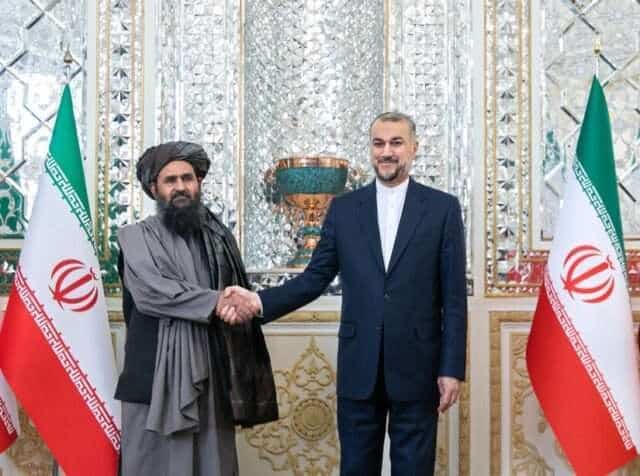
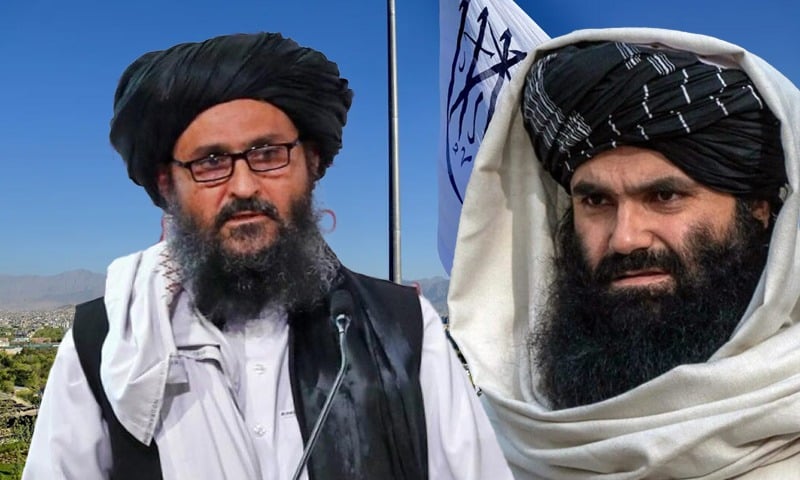
The second major issue is Afghanistan. Reports discussed in the program suggested that the Afghan Taliban had distanced itself from Noor Wali Mehsud and the TTP and that certain TTP leaders had been moved from one Afghan province to another. This is precisely where responsible journalism and strategic analysis must be distinguished from wishful thinking. If genuine differences are emerging between the Afghan Taliban and the TTP, that could be significant. But reports of relocation, arrests or a formal break should not automatically be treated as confirmed reality without reliable evidence. The discussion itself correctly emphasized the importance of asking: What is the source? Is there an official statement? Has a credible TTP leader acknowledged a dispute? Has the Afghan authorities formally confirmed a policy change? Are there independent sources corroborating the claim?
These are not minor journalistic questions. They can determine whether a country builds its security policy around facts or rumours. For two years, similar claims of tensions between the Afghan Taliban and the TTP have periodically surfaced. Yet the relationship between the two movements is historically complicated, with ideological, organizational, personal and tribal links. Therefore, the existence of tactical disagreements does not automatically mean the relationship has fundamentally collapsed. In fact, a supposed dispute could produce several different outcomes. The Afghan Taliban might genuinely pressure the TTP. It might relocate certain commanders for political reasons. It might attempt to manage tensions with Pakistan without completely abandoning the TTP. Or reports of a major rupture may simply be exaggerated. Pakistan must prepare for all possibilities rather than betting on the most convenient one.
Afghanistan is not dealing with Pakistan alone. The discussion pointed to pressure from China, Turkey, Iran, the United States, Tajikistan and Uzbekistan, as well as tensions along Afghanistan’s northern borders. Reports of Afghan casualties near the borders with Uzbekistan and Tajikistan further underline the fact that Afghanistan’s security problems have regional consequences.
This creates both an opportunity and a challenge for Pakistan. The opportunity is that Pakistan does not have to confront cross-border militancy in isolation. Several neighboring and major international actors have an interest in preventing Afghan territory from becoming a platform for militant organizations. The challenge is diplomatic. Pakistan must build a regional consensus based on verifiable evidence rather than accusations that can be dismissed as political propaganda. The best strategy would be intelligence cooperation, border management, diplomatic pressure, economic engagement and consistent demands for action against militant networks.
Another claim in the discussion concerned the scale of TTP recruitment and its ability to regenerate fighters. Whether one accepts every figure cited or not, the underlying strategic concern is real: militant organizations are resilient because they can replace losses. If dozens of militants are killed in one operation but dozens more are recruited elsewhere, the numerical success of the operation may conceal a strategic failure. This is why Pakistan needs to distinguish between counter-terrorism operations and counter-terrorism strategy. Operations are tactical. Strategy is long-term.
An operation kills or captures militants. A strategy prevents the next generation from joining them. A strategy therefore requires functioning police forces, credible courts, effective intelligence, border controls, economic opportunities, education, community engagement and political consistency. It requires dismantling financing networks and prosecuting facilitators. Most importantly, it requires the state to maintain a monopoly over legitimate force.
The discussion raised another important issue: the repeated circulation of unverified claims about Afghanistan and the TTP. In the digital age, speed has become a substitute for verification. A dramatic headline can travel across television, YouTube, social media and messaging applications within minutes. By the time the claim is disproved, millions of people may already have accepted it as fact. Security journalism is too important to operate this way. If a journalist claims that a terrorist organization has split from its allies, there should be evidence. If a journalist claims that a militant leadership has been arrested, there should be evidence.
If a journalist claims that a senior figure has moved from one province to another, there should be evidence. The credibility of journalism depends not on how quickly a report is published but on whether the reporter can answer one simple question: How do you know? This standard is particularly important when reporting on terrorism because inaccurate reporting can affect public confidence, military planning and diplomatic relations.
Ultimately, the problem discussed here is bigger than one peace committee, one militant group or one disputed report from Afghanistan. Pakistan needs a unified national counter-terrorism policy. There should be no ambiguity over who possesses legitimate authority. There should be no parallel armed structures operating without transparent oversight.
There should be no tolerance for facilitators simply because they are politically useful or locally influential. There should be no contradiction between military operations and civilian administration. There should be no distinction between terrorism in Bannu and terrorism in Lahore, between an attack in Kurram and an attack in Balochistan. And there should be no reliance on rumours as a substitute for intelligence.
The state must decide what it wants. If it wants to fight terrorism, it must fight it consistently. If it wants peace, that peace must be based on law rather than the empowerment of armed groups whose loyalties can change. Pakistan has already paid an enormous price in blood. Soldiers, police officers, journalists, tribal elders and ordinary civilians have sacrificed their lives. The country cannot afford another cycle in which one militant network is defeated only for another to emerge from the structures created to manage the previous one.
The lesson from Bannu and Lakki Marwat, therefore, should not simply be that a particular peace committee has become problematic. The deeper lesson is that the state must never surrender the responsibility of security to actors it cannot fully control.
The reported operations against TTP positions in North Waziristan, Hangu and Kurram may demonstrate operational capability. But operational success will remain temporary if militant facilitators, recruitment networks and institutional weaknesses are left untouched.
Likewise, reports of a possible Afghan Taliban-TTP rift may offer an opening but only if Pakistan approaches them with evidence, realism and strategic patience.
The country needs neither panic nor complacency. It needs clarity.
Clarity about the enemy.
Clarity about allies.
Clarity about institutions.
Clarity about accountability.
And above all, clarity about the simple principle at the heart of every functioning state: security is the responsibility of the state, and the state cannot outsource that responsibility without eventually paying a price.
Pakistan’s next phase in the war against terrorism must therefore be about more than defeating militants on the battlefield. It must be about defeating the conditions that allow militancy to regenerate—weak institutions, contradictory policies, unaccountable armed groups, porous networks, misinformation and political expediency.
Until that happens, every military victory risks becoming temporary.
And every temporary victory carries the danger of becoming tomorrow’s security crisis.