
For years, the fight against terrorism in Khyber Pakhtunkhwa has remained a difficult test not only for security institutions but also for political leadership and society at large. The province, which has suffered the longest and most intense wave of terrorism, has witnessed countless sacrifices by police personnel, security forces, tribal communities, and ordinary citizens.
The latest statements from the Khyber Pakhtunkhwa government, expressing complete support for intelligence-based operations and declaring that there will be no space for terrorists on the province’s soil, represent an important shift in the official provincial stance.
Better late than never.
After years of criticism over political hesitation, unclear ownership, and reluctance to fully align with the national counterterrorism framework, the provincial government’s message that it stands with state institutions against terrorism is a welcome development. A war of this magnitude cannot be won when responsibility is divided, political considerations overshadow security priorities, or frontline forces are left without clear support.
However, the timing of this declaration also highlights a reality that cannot be ignored. This ownership should have come much earlier.
Khyber Pakhtunkhwa has been fighting terrorism for more than two decades. The province has remained the frontline of Pakistan’s battle against terrorism, absorbing the consequences of instability across the western border and paying a heavy price through attacks on schools, markets, police stations, mosques, and security installations.
The people of KP, meanwhile, never waited for political declarations.
Their resistance against terrorism has a long and painful history. From Swat to the tribal districts, from Bannu to Peshawar, ordinary citizens repeatedly rejected the idea of surrendering before fear. Communities continued their daily lives despite threats, refused to abandon their homes, and stood with the state against violent extremist groups.
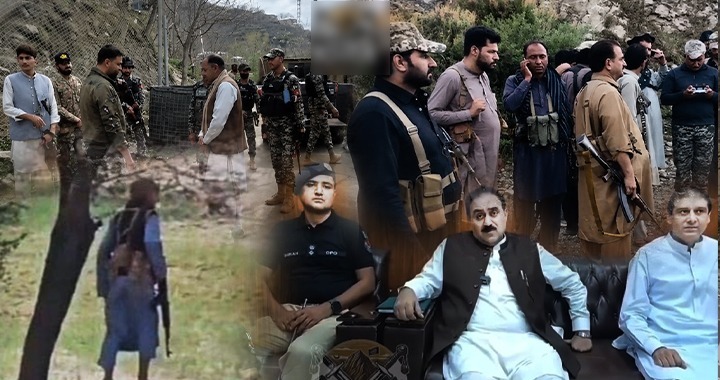
The recent incident in Central Kurram is another example of this public resolve.
Local residents in the Syed Ali Maila Khor area captured a terrorist affiliated with a banned organization and handed him over to the relevant authorities. At a time when terrorists attempt to create fear among communities and project themselves as an unstoppable force, such incidents send a powerful message: local populations are not willing to provide shelter, acceptance, or protection to those who challenge the writ of the state.
This cooperation between citizens and law enforcement is one of the most important elements in counterterrorism. Intelligence, operations, and security measures become far more effective when communities refuse to become silent spectators and instead actively support efforts against violent networks.
The same principle applies to the provincial government.
The fight against terrorism cannot remain the responsibility of only the armed forces or security agencies. Police, administration, political leadership, and society all have defined roles. Security institutions can clear areas from terrorist presence, but long-term peace requires governance, development, justice, and a consistent political commitment to protect the gains achieved through sacrifices.
For years, one of the biggest challenges in KP’s counterterrorism environment has been the question of ownership. Security operations continued, sacrifices continued, and personnel continued to stand on the frontline, but political messaging often remained inconsistent.
At times, counterterrorism efforts became entangled in political disagreements, creating confusion at a time when unity was most needed.
Terrorists benefit from such divisions.
They do not differentiate between political parties, governments, or institutions. Their objective remains the same: weakening state authority, spreading fear, and creating instability. Therefore, any delay in developing a unified response only strengthens those who seek to challenge Pakistan’s security.
The latest commitment from the KP government must therefore translate into practical measures. Supporting intelligence-based operations, strengthening police capabilities, improving coordination with security institutions, and ensuring that administrative structures function effectively in sensitive districts will determine whether this new approach produces lasting results.
The province’s southern districts and merged tribal areas remain particularly important in this regard. These regions have faced years of insecurity due to their geographical challenges, proximity to the Afghan border, and presence of terrorist networks attempting to exploit local vulnerabilities.
The police personnel operating in these areas require not only political support but also modern equipment, training, intelligence capabilities, and operational resources. The men and women standing against terrorism on the ground cannot be expected to confront sophisticated threats with outdated tools.
At the same time, governance cannot be separated from security. Historically, areas that remained disconnected from state institutions became easier targets for extremist recruitment and influence. Strengthening education, healthcare, employment opportunities, and local administration is equally important in ensuring that terrorist narratives find no space among the younger generation.
The people of KP have already demonstrated their commitment. The challenge now is for political leadership to match that determination.
The province’s history proves that terrorism can be resisted when society, government, and security institutions move in the same direction. The defeat of terrorist networks is not only achieved through operations but through collective rejection of their ideology and methods.
The message emerging from KP today is therefore significant, but it must be followed by consistent action.
The people have already made their choice. They have repeatedly shown that fear will not decide their future. Communities that once suffered from terrorism are now increasingly refusing to tolerate those who bring violence to their streets.
Now, the provincial government’s responsibility is to ensure that this public resolve is supported by clear policy, effective governance, and unwavering cooperation with institutions fighting on the frontline.
Terrorists should understand one reality clearly: there will be no safe spaces, no public acceptance, and no refuge for those who seek to spread violence in Khyber Pakhtunkhwa.
The province’s people proved this long ago.
The government must now prove it through action.



