
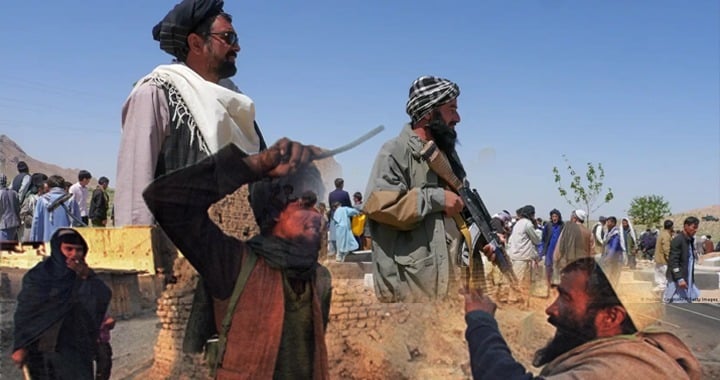
The Taliban’s return to power in August 2021 marked one of the most significant geopolitical developments in recent South Asian history. Nearly five years later, Afghanistan stands at a critical juncture where questions surrounding governance, security, economic recovery, international legitimacy, and regional cooperation remain largely unresolved.
While the Taliban have succeeded in consolidating political and territorial control across most of Afghanistan, the broader objective of creating a stable, prosperous, and internationally integrated state continues to face major challenges.
From the Taliban’s perspective, their return to power ended decades of large-scale armed conflict between rival Afghan factions. The establishment of a centralized authority brought an end to the prolonged insurgency that had defined Afghanistan for nearly two decades. Security checkpoints, government offices, and provincial administrations now operate under Taliban control, creating a level of administrative continuity that was absent during the final years of the previous republic.
The Taliban have repeatedly argued that they have restored security, reduced corruption, and established law and order throughout the country.
However, stability is not measured only by the absence of large-scale warfare. Governance, economic opportunity, institutional development, and public confidence remain equally important indicators of a country’s progress.
Afghanistan continues to face severe economic challenges, including widespread unemployment, limited industrial activity, declining investment, and dependence on international humanitarian assistance. Millions of Afghans continue to struggle with poverty, food insecurity, and limited employment opportunities, creating significant pressure on the country’s social and economic structure.
Although Afghanistan’s economy has shown limited signs of resilience in some areas, including improved domestic revenue collection and relative market stability, these developments have not translated into broad economic recovery. Restrictions on international financial engagement, lack of recognition, and continued uncertainty have constrained long-term development prospects.
International recognition remains one of the biggest unresolved challenges facing the Taliban administration.
Despite maintaining diplomatic contacts with several countries, the Taliban authorities have not received formal recognition from any member of the international community. Many governments continue practical engagement with Kabul on issues including humanitarian assistance, trade, border management, and regional security, while linking broader diplomatic normalization with progress on governance, human rights, and counterterrorism commitments.
Among the most significant concerns internationally are restrictions imposed on women and girls. Limitations on female education, employment, and participation in public life have remained a major point of disagreement between the Taliban and the international community.
Several countries and international organizations continue to argue that sustainable economic development and long-term stability require broader participation of Afghan society, including women’s involvement in education and economic activities.
Security remains another complex dimension of Afghanistan’s current situation.
While nationwide fighting has significantly declined compared with the previous government period, Afghanistan continues to face threats from extremist organizations, particularly Islamic State Khorasan Province (ISKP), which has carried out attacks against civilians, Taliban personnel, religious minorities, and foreign interests.
At the same time, regional concerns regarding the presence and activities of transnational terrorist organizations operating from Afghan territory remain a major factor influencing Afghanistan’s relations with neighboring countries.
Pakistan has consistently maintained that Tehreek-e-Taliban Pakistan (TTP) and other terrorist organizations continue to operate from Afghan territory and use available networks to facilitate attacks inside Pakistan. Islamabad has repeatedly urged Afghan authorities to take effective and verifiable action against such groups, emphasizing that counterterrorism cooperation remains essential for regional stability.
The issue of cross-border terrorism has continued to dominate Pakistan-Afghanistan relations, affecting diplomatic engagement, border management, and mutual confidence.
Recent developments inside Afghanistan have also highlighted that challenges to Taliban authority are not limited to external concerns.
The emergence of armed opposition activities in Badakhshan province has drawn attention to growing internal complexities. In a significant development, the newly formed Sepahiyan-e Mihan, or Patriotic Soldiers Front, reportedly carried out an operation in Yaftali Sufla district, temporarily taking control of the district headquarters, disarming Taliban personnel, and seizing military equipment before withdrawing following the arrival of Taliban reinforcements.
Although the Taliban later regained control of the area, the incident demonstrated that localized opposition networks and grievances continue to exist despite the Taliban’s nationwide control.
Badakhshan has increasingly become a focal point due to reported tensions involving local armed actors, disputes over authority and resources, and the emergence of groups challenging Taliban control. The developments indicate that while the Taliban remain the dominant force in Afghanistan, maintaining long-term stability may require addressing deeper political, social, and regional grievances.
The security environment has also been shaped by concerns regarding multiple armed groups operating in or around Afghanistan.
Regional countries, including Pakistan, China, Iran, Russia, and Central Asian states, continue to closely monitor developments due to concerns related to terrorism, narcotics trafficking, irregular migration, and potential spillover effects.
Afghanistan’s geographic location provides significant economic opportunities. Situated between South Asia, Central Asia, China, Iran, and the Middle East, the country has the potential to become a regional connectivity hub through trade corridors, energy projects, and transport networks.
However, realizing this potential requires more than geographic advantage. Sustainable development depends upon political stability, effective governance, economic reforms, reliable institutions, and international confidence.
Another major challenge facing Afghanistan is the loss of human capital. Since 2021, many experienced professionals, including administrators, academics, healthcare workers, engineers, and technical experts, have left the country. Rebuilding institutional capacity will require long-term investment in education, professional development, and economic opportunities.
Humanitarian assistance continues to play a critical role in preventing further deterioration of living conditions. International organizations remain engaged in providing food assistance, healthcare support, and emergency relief to millions of Afghans.
However, humanitarian aid alone cannot replace sustainable economic development. Long-term stability requires economic growth, employment creation, institutional strengthening, and opportunities that allow Afghan citizens to build independent livelihoods.
For Pakistan and other regional countries, Afghanistan’s future remains directly linked to their own security and economic interests.
A peaceful, stable, and economically connected Afghanistan could serve as a bridge between regional markets and contribute to broader cooperation. Conversely, unresolved security concerns, economic stagnation, and prolonged isolation could continue creating challenges beyond Afghanistan’s borders.
Nearly five years after the Taliban returned to Kabul, Afghanistan has experienced a fundamental transformation. The political order has changed, large-scale conflict has declined, and the Taliban have established nationwide control.
Yet the country’s most difficult challenges remain ahead.
The future of Afghanistan will depend on whether the Taliban can convert political control into effective governance, economic recovery, regional confidence, and lasting stability. The choices made in the coming years will determine whether Afghanistan moves toward a more secure and connected future or remains trapped between relative stability, economic hardship, diplomatic isolation, and unresolved security challenges.



