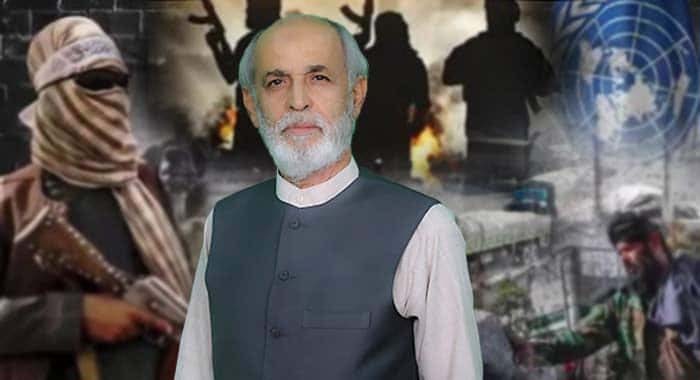
(Shamim Shahid)
Pakistan’s western frontier is once again at the center of a rapidly evolving security crisis. From the ongoing military operations in Bannu and South Waziristan to reports of the possible relocation of Tehreek-e-Taliban Pakistan (TTP) militants within Afghanistan, and from growing fissures inside the Afghan Taliban to worsening unrest in Balochistan, the region is entering one of its most consequential phases in recent years.
Each of these developments deserves attention individually. Together, however, they reveal a far more significant reality: Pakistan is confronting a security environment that is becoming increasingly interconnected, increasingly regional, and increasingly difficult to address through military means alone.
The latest operations in Khyber Pakhtunkhwa demonstrate both the resolve and the burden of Pakistan’s security forces. The campaign in Bannu reportedly began after militants attacked the Mandan police station. Since then, security forces have expanded operations across multiple districts. Reports indicate that at least 38 militants were killed, 13 were arrested, and the bodies of three militants were recovered during the ongoing campaign.
These are not insignificant achievements. They illustrate the operational capabilities of Pakistan’s security institutions and their determination to dismantle militant infrastructure before it can regroup.
Yet the larger picture remains troubling.
Militant activity is no longer confined to one district. Security concerns continue to stretch from Bannu toward North Waziristan through Bakka Khel and Jani Khel, while operations are simultaneously underway in Wana, Ladha and Makeen in South Waziristan. Dera Ismail Khan has also witnessed counterterrorism operations, including the reported killing of a senior militant commander linked to the Gandapur group.
Despite these successes, militants continue to demonstrate their ability to carry out targeted killings, kidnappings and attacks against police officers, Frontier Constabulary personnel and other government officials. This indicates that while military pressure has disrupted militant networks, it has not yet eliminated their operational capability.
This reality brings Pakistan to a familiar but uncomfortable conclusion: tactical victories do not automatically produce strategic stability. Adding another layer of complexity are reports emerging from Afghanistan regarding the future positioning of the Tehreek-e-Taliban Pakistan.
According to various reports, Afghan authorities have allegedly instructed TTP members currently based in Kunar to relocate within a week, possibly to Ghazni or, according to other accounts, to Badakhshan. These reports have not been officially confirmed by the Afghan Taliban, and therefore should be treated with appropriate caution. Nevertheless, if accurate, they raise serious strategic questions.
A relocation to Ghazni would hardly diminish Pakistan’s security concerns.
Ghazni occupies a geographically central position, connecting important Afghan provinces including Paktia, Paktika, Khost, Zabul and routes leading toward Kandahar. Such a location could potentially provide militant groups with improved mobility and easier logistical access toward Pakistan’s western border.
Rather than removing the threat, relocation could simply reposition it. If, alternatively, militants are shifted toward Badakhshan, another set of challenges emerges.
Badakhshan has increasingly become a focal point of resistance against Taliban rule. Recent reports suggest that anti-Taliban fighters briefly overran a district, disarmed local Taliban officials and temporarily established control before withdrawing. Taliban authorities initially claimed to have eliminated the insurgents but later stated that four prominent resistance members had been arrested instead, following international criticism of earlier reports.
Whether these shifting narratives reflect battlefield confusion or political messaging, they highlight an undeniable reality: Afghanistan’s internal security environment is becoming increasingly fragile. This is perhaps the most significant development that deserves greater attention in Pakistan.
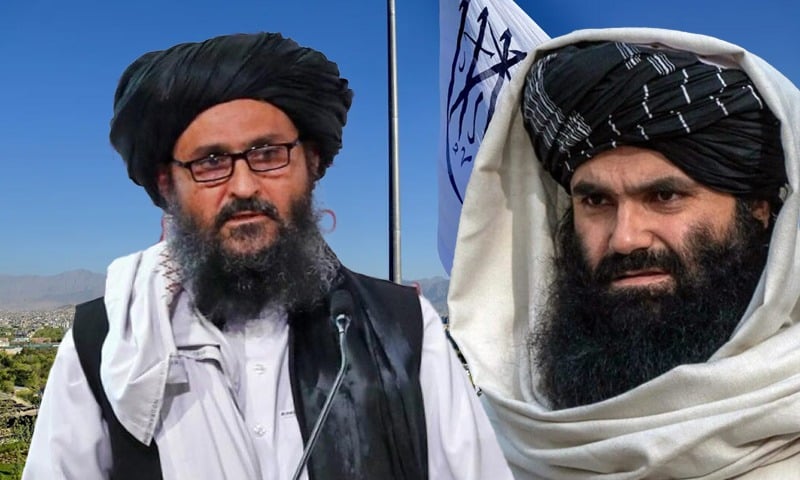
For much of the past three years, discussions surrounding Afghanistan have largely focused on cross-border militancy. Far less attention has been paid to the Taliban’s own internal political challenges. Growing differences between the central Taliban leadership and local commanders appear to be widening. At the same time, anti-Taliban resistance has not disappeared despite repeated military campaigns against it.
The National Resistance Front led by Ahmad Massoud continues to represent one strand of political opposition, while resentment against Taliban governance persists in several regions. History repeatedly shows that governments facing internal divisions often find it more difficult to exercise consistent control across their territory. If Afghanistan enters another prolonged phase of internal instability, neighboring countries including Pakistan will inevitably feel its consequences.
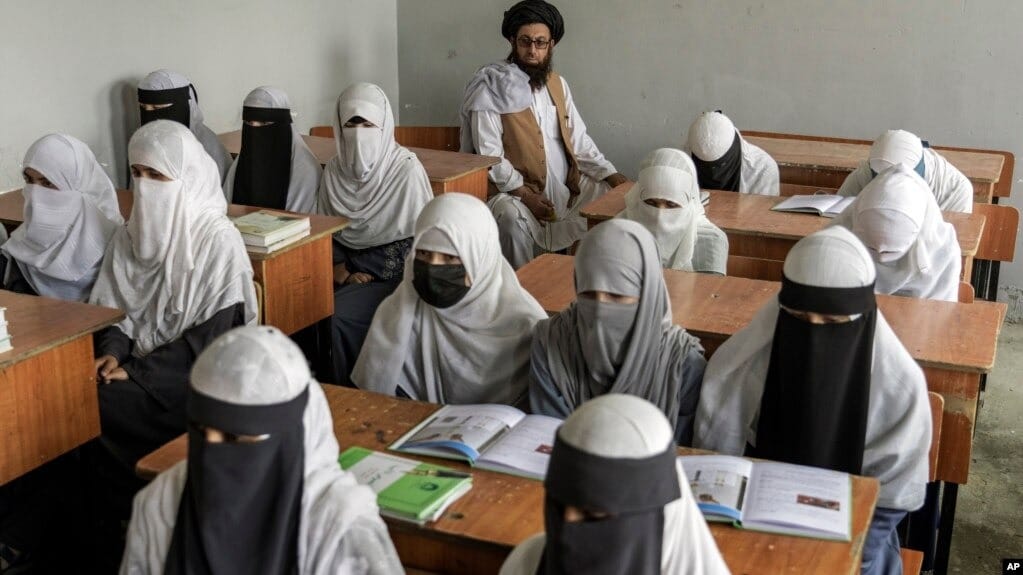
This makes the current deterioration in Pakistan-Afghanistan relations particularly concerning. Relations between Islamabad and Kabul have steadily worsened over border security, cross-border militancy, refugee policies and trade restrictions. Border closures have disrupted commerce. Forced repatriation of Afghan nationals has generated criticism. Recent administrative measures affecting Afghan students studying in Pakistani educational institutions risk further damaging public perceptions.
Ironically, many Afghan citizens continue to express appreciation for the hospitality extended by ordinary Pakistanis over several decades, even while criticizing official policies.
This distinction matters. Governments may disagree, but preserving goodwill between people remains essential for any future normalization. Unfortunately, the diplomatic space between Islamabad and Kabul appears to be shrinking at precisely the moment when dialogue is needed most. Pakistan also faces another uncomfortable strategic reality.
Its eastern border remains tense because of longstanding disputes with India. Simultaneously managing heightened tensions on the western frontier significantly complicates Pakistan’s national security calculus. No country benefits from sustained confrontation on multiple fronts. Equally important is the evolving international dimension of Afghanistan.
Some analysts argue that external financing continues to shape Afghanistan’s militant landscape. Attention has been drawn toward continued American engagement with Afghanistan, including periodic visits by former U.S. Special Representative Zalmay Khalilzad, while others point toward broader geopolitical competition involving multiple regional actors.
Regardless of differing interpretations, Afghanistan remains an arena where international interests intersect. Pakistan therefore cannot afford simplistic assumptions regarding the sources of regional instability. The challenge is both domestic and international.
Meanwhile, Balochistan remains another major source of concern. Security operations continue across various districts, yet political voices are increasingly demanding that the province’s problems be addressed through dialogue rather than force alone. Several political conferences have argued that sustainable peace cannot emerge solely through military operations but requires meaningful political engagement with local stakeholders.
Many observers believe that the ground realities in Balochistan are more serious than reflected in mainstream national discourse. Ignoring those realities carries long-term risks. What, then, should Pakistan’s response be? Military operations remain indispensable against armed groups that threaten the state’s authority. No government can compromise on protecting its citizens or allowing terrorist organizations to operate freely.
However, experience over the past two decades demonstrates that military operations alone cannot permanently resolve deeply rooted insurgencies. Pakistan needs a comprehensive national security framework that combines counterterrorism with diplomacy, border management, intelligence cooperation, economic development and political engagement.
The same principle applies to Afghanistan. The Taliban cannot expect lasting internal stability without addressing growing political dissent, local grievances and questions regarding governance. Nor can Afghanistan hope to improve regional relations while concerns persist over militant groups operating from its territory.
Perhaps the greatest lesson emerging from the present crisis is that neither Pakistan nor Afghanistan can secure lasting peace independently. Their security has become deeply interconnected. Every deterioration in Afghanistan affects Pakistan. Every escalation between Islamabad and Kabul strengthens the space available to extremist organizations seeking to exploit mistrust.
Several mediation efforts have failed in recent years because those tasked with negotiations reportedly lacked sufficient authority to reach binding agreements. That lesson should not be ignored. If future dialogue is pursued, negotiators must possess genuine political mandates rather than symbolic responsibilities.
Perfect agreements are rare in international relations. Even partial understandings that reduce violence, improve intelligence cooperation and restore diplomatic communication would represent meaningful progress. Pakistan today stands at an important strategic crossroads. Its security forces continue to display professionalism and resilience against militant threats. Yet the challenges emerging across Bannu, South Waziristan, Afghanistan and Balochistan demonstrate that military success must now be complemented by equally determined diplomacy.
The country’s long-term security will not be secured by force alone. It will depend upon whether Pakistan can simultaneously defeat terrorism, stabilize its western frontier, improve relations with Afghanistan where possible, and build a regional framework that denies violent extremists the political and geographical space they continue to exploit.
The coming months will reveal whether policymakers seize that opportunity or whether South Asia enters yet another cycle of instability whose costs will be borne not only by governments, but by millions of ordinary citizens on both sides of the border.