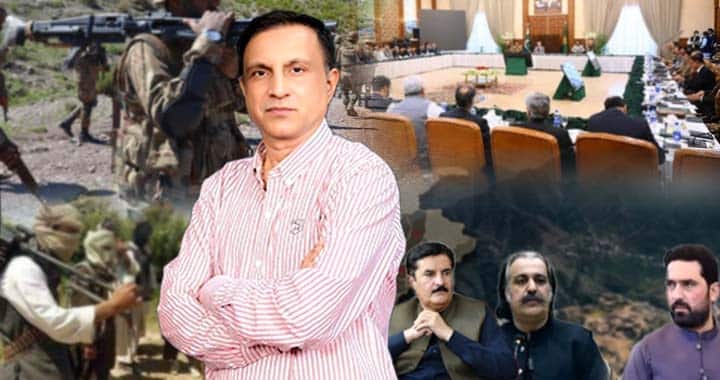
The recent Apex Committee meeting in Peshawar was an important development for Khyber Pakhtunkhwa. For a long time, we had been saying that the federal Apex Committee should meet in Peshawar and that the security situation in the province required coordinated action by the federal and provincial governments and all relevant institutions. This meeting has finally brought these stakeholders together at the highest level.
There are two Apex Committees: one at the federal level and another at the provincial level. If we look at the provincial Apex Committee in Khyber Pakhtunkhwa, we had repeatedly pointed out that since Sohail Afridi took office on August 15, 2025, only one meeting had been held, on February 2, 2026. In other words, there had been just one meeting during his tenure up to that point.
The purpose of these committees is not merely to hold meetings. They are meant to ensure coordination between institutions, improve communication and enable decisions to be taken according to the security requirements on the ground. When terrorism is increasing and institutions need to work together, such coordination becomes essential.
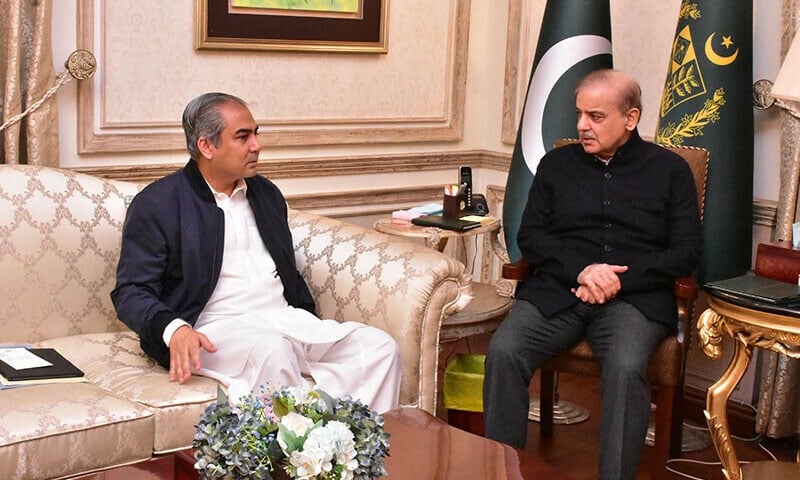
This time, the federal government came to Peshawar. Prime Minister Shehbaz Sharif chaired the meeting, while Field Marshal Syed Asim Munir, senior military leadership, federal ministers, secretaries and provincial representatives participated. The governor and members of the advisory council were also part of the wider administrative arrangement.
The significance of this meeting goes beyond the gathering of senior officials. It demonstrated that the federal government, the armed forces and the provincial administration were sitting together to examine the province’s security challenges and determine a coordinated response.
I consider this an important message to the terrorist groups operating against Pakistan, including Fitna al-Khwarij and Fitna al-Hindustan. The message is that the state’s institutions stand together against terrorism. Khyber Pakhtunkhwa is part of Pakistan’s collective response, and the federal government and the armed forces are prepared to work alongside the province.
It also sends a message to Afghanistan that Pakistan’s federal government and the province are working together on security. The response to terrorism cannot be undermined by divisions between Islamabad and Peshawar. Those who believed that differences between the federal and provincial governments would create opportunities for them should understand that coordinated action is now the stated direction.
We had repeatedly raised concerns about the lack of coordination and the limited frequency of Apex Committee meetings. The Peshawar meeting was therefore significant because it brought the relevant institutions together to discuss the threat, the locations where terrorists were operating, the people facilitating them and the measures required to respond.
Targeted Operations, Better Equipped Police and a Stronger CTD
One of the important decisions was to accelerate ongoing intelligence-based operations. There was no decision, as discussed in the meeting, to launch a large-scale operation requiring people to leave their homes and relocate to other areas. The emphasis was on targeted intelligence-based operations.
The objective is to act against terrorist hideouts and those facilitating terrorist activity. The relevant information was presented to the meeting, and decisions were taken about how to proceed. I cannot disclose operational details, but the direction is clear: intelligence-based action will be accelerated.
The government also decided to strengthen the Khyber Pakhtunkhwa Police. The police need equipment, weapons, technology and adequate financial resources to perform their duties. The commitment made at the meeting was that their requirements would be examined and the necessary support provided.
The Counter-Terrorism Department also needs to be strengthened. Its organizational structure and capacity at the district level must be improved so that it can respond more effectively to the requirements of individual areas. The necessary equipment and resources must be made available.
Another important decision concerns recruitment. The immediate recruitment of 5,000 police personnel was announced, with recruitment planned across 12 districts. This is the first phase of a broader plan that, as discussed, aims to recruit approximately 20,000 personnel.
These recruits will not only strengthen the police force. They will also provide employment to thousands of people and support their families. At a time when unemployment is a major problem, this is an important consideration. If the broader recruitment target is achieved, it will mean employment opportunities for thousands more households.
However, recruitment alone is not enough. New personnel must receive proper training, equipment and the institutional support required to confront terrorism. The police and the CTD need to be able to act on intelligence, investigate terrorist networks and pursue those who facilitate attacks. The announced commitments must therefore be translated into practical improvements.
Rs160 Billion and the Development Challenge in Southern KP
Security was not the only issue discussed during the meeting. Development in Khyber Pakhtunkhwa was also an important part of the discussion.
The province sought Rs160 billion in development funding, and the prime minister indicated that the federal government was prepared to provide support. Some people have questioned whether this amount is sufficient given the scale of the province’s problems. I understand that concern. Khyber Pakhtunkhwa has substantial development needs, and the government must consider them in a broader, long-term plan.
The prime minister also indicated that major projects could be financed if the provincial government prepared and submitted viable proposals. This is an opportunity that the provincial administration should use seriously.
One of the most important projects is the Chashma Right Bank Canal, which could help address the water shortage in southern Khyber Pakhtunkhwa. Areas including Dera Ismail Khan, Tank, Lakki Marwat and Karak have large tracts of land where water scarcity restricts agricultural activity.
If the canal project moves forward, it could bring water to barren land, expand cultivation and create opportunities for growing wheat, vegetables and other crops. This would benefit farmers, generate employment and strengthen the local economy. In the long term, increased agricultural production could also reduce the province’s dependence on supplies from elsewhere.
The project should therefore be considered not merely as a water scheme but as an investment in the economic future of southern Khyber Pakhtunkhwa. The provincial government should prepare the necessary proposals and work with the federal government to move the project forward.
Road connectivity is another major priority. The proposed Peshawar to Dera Ismail Khan motorway, passing through areas including Kohat, Hangu and Bannu, could improve access between the provincial capital and the southern districts.
Better roads would make it easier for people to travel, help businesses transport goods and encourage investment. The construction phase itself could generate jobs, while improved connectivity could support commercial activity for years afterward.
These are the kinds of projects that both governments should prioritize. If the federal government is willing to finance major development schemes, the provincial government must come forward with practical proposals, clear planning and effective implementation.
The NFC Question and the Need for Financial Reconciliation
The question of federal funding for Khyber Pakhtunkhwa also requires serious attention.
Following the merger of the former Federally Administered Tribal Areas with the province, the financial requirements of the merged districts became an important issue. The province has repeatedly maintained that it needs additional resources to meet its responsibilities.
There has been discussion about a commitment to provide Rs100 billion annually, while the provincial side has maintained that the amount received has fallen short of what was expected. The figures and outstanding obligations need to be reconciled transparently rather than remaining a source of dispute between the two governments.
My suggestion is that the federal and provincial governments establish a reconciliation committee comprising representatives from both sides. This committee should examine the province’s population, development requirements, financial obligations and the resources already transferred.
If the provincial government maintains that billions of rupees remain outstanding, the matter should be examined through official records. The purpose should be to establish the actual position and agree on a clear mechanism for meeting legitimate obligations.
This is particularly important because security and development cannot be separated. The province needs resources to strengthen its police, improve public services and develop areas that have faced years of insecurity. At the same time, funding must be accompanied by transparent spending and accountability.
Good Governance Must Accompany Development Funding
During the Peshawar meeting, the prime minister also emphasized the need for better governance and action against corruption. I consider this a crucial point.
Development funds cannot produce the desired results if they are lost through corruption, mismanagement or poorly executed projects. The provincial administration must ensure that public money reaches the people for whom it is intended.
I have previously reported on matters involving alleged financial irregularities, including a case involving Rs40 billion, the issue of placer gold and the KP Cities Improvement Project. These matters deserve transparent scrutiny. Where wrongdoing is established through evidence and due process, those responsible should be held accountable.
The broader point is that governance must improve. People need functioning hospitals, reliable public services, better roads and employment opportunities. They should not have to wait indefinitely for basic facilities while public funds are consumed by administrative failures.
The governor and the 11-member advisory council now have an important responsibility to ensure that allocated resources are used effectively. Funding announcements alone will not improve people’s lives. Implementation, oversight and accountability are what matter.
Administrative arrangements are also being developed for the 12 districts, including the deployment of police and civil officers. The objective should be to ensure that people can resolve their problems locally rather than travelling repeatedly to Peshawar or Islamabad for routine administrative matters.
This approach can make government more accessible. People in Dera Ismail Khan and other southern districts should be able to obtain essential services close to home. Their problems should be addressed by the relevant district administration instead of requiring them to spend time and money travelling to the provincial or federal capital.
Peace Must Come Before Everything Else
Despite the importance of development, the first requirement remains peace.
On the day of the prime minister’s visit to Peshawar, police personnel, including a DSP and an SHO, were reported to have been martyred in an attack in Karak. Such incidents demonstrate the danger faced by police officers and other security personnel in the line of duty.
When officers respond to information about terrorists, they must have reliable intelligence, proper equipment and the support needed to carry out their responsibilities. Terrorists exploit weaknesses, and the state must ensure that its personnel are adequately prepared.
The prime minister also emphasized peace as a priority. Without security, development projects cannot proceed normally, investors remain reluctant and ordinary citizens continue to face uncertainty.
The need for better healthcare is closely connected to this wider challenge. People from Karak, Bajaur, Orakzai and other districts often have to travel long distances to Peshawar for treatment. For a family dealing with illness or an emergency, such a journey can be financially and physically exhausting.
In several of the southern and merged districts, the availability of advanced healthcare facilities remains limited. Dera Ismail Khan has major hospitals, including the district hospital and Mufti Mehmood Hospital, but residents of many surrounding districts still face serious gaps in access to specialized care.
Every district should have adequate hospitals, trained medical staff and essential equipment. Patients should not have to travel for hours simply to receive treatment that ought to be available closer to home.
Peace, healthcare, education and economic development are interconnected. If the government wants people to experience a meaningful improvement in their lives, it must address these needs together.
Governor’s Rule and the Constitutional Question
Governor’s Rule has also raised questions about the political future of Khyber Pakhtunkhwa.
The constitutional framework governing such arrangements includes specific procedures and time limits. Their duration and continuation depend on the applicable constitutional provisions and the required approvals. Any political arrangement that follows must therefore be assessed in light of the Constitution and the decisions of the relevant institutions.
If a new provincial government is formed, the question of who leads it will become important. The parliamentary party would have to consider its options and decide whom it wishes to put forward, subject to the constitutional process.
Sohail Afridi’s political future has become a subject of debate. My view is that his decisions and political conduct have weakened his position. However, the ultimate outcome will depend on political developments, the decisions of the party’s elected members and the applicable legal process.
The larger issue is whether political leaders recognize that security must take precedence over partisan confrontation. Criticism of state institutions is part of political debate, but it should be conducted responsibly. Statements and actions that deepen institutional conflict can make an already difficult security situation more complicated.
Pakistan’s security must come first. Political competition comes after it. This does not mean that political disagreements should disappear, but it does mean that every party must recognize the consequences of its decisions for public safety and institutional stability.
PTI’s Internal Divisions and the Question of Political Strategy
The PTI’s internal divisions have also become increasingly visible. Differences have emerged over the party’s political strategy, its approach to protests and its willingness to pursue negotiations.
The October long march illustrated the difficulties confronting the party’s strategy. Questions were raised about participation, the level of support among elected representatives and whether the march achieved its stated objectives. Party figures subsequently discussed the scale of participation and the absence of some parliamentarians from the campaign.
These developments suggest that the party needs to examine its strategy and the relationship between its provincial leadership and its parliamentary members.
There are different views within PTI. Some members favor continued protest, while others believe negotiations are necessary. These differences are not unusual in politics, but they become a serious problem when a party cannot agree on who should make decisions or how its objectives should be pursued.
The parliamentary party has a legitimate interest in having a say in decisions affecting its members and the province. Its elected representatives should be able to discuss their options and determine a strategy through consultation rather than allowing internal disagreements to undermine the party’s ability to function.
The nomination of former chief minister Ali Amin Gandapur to lead negotiations, should talks take place, is therefore worth noting. He has previous experience in political discussions and may be able to help establish a channel for dialogue.
PTI has the right to criticize Governor’s Rule and express its opposition to political decisions. At the same time, negotiations require seriousness, clear objectives and representatives who can speak with authority on behalf of the party.
The party’s differences have also become apparent in the language used by some of its leaders. Publicly describing colleagues as disloyal or comparing them to snakes does little to resolve disagreements. Such rhetoric can deepen mistrust and make it more difficult to reach a common position.
The party must decide whether it wants to pursue negotiations, continue protests or combine political pressure with dialogue. Whatever course it chooses, it needs internal consultation and a realistic assessment of its political strength.
If the parliamentary party remains divided, its ability to influence future developments will be weakened. If its members can agree on a common position, they will be in a better position to participate in negotiations and represent their constituents.
The Way Forward
The Apex Committee meeting in Peshawar created an opportunity to bring security institutions and the two levels of government together around a common agenda. Its importance will ultimately be judged by what follows.
Intelligence-based operations must be implemented effectively. The police and CTD need the equipment, training and personnel required to perform their duties. The recruitment of 5,000 police personnel should be followed by the broader recruitment plan, while development proposals must be prepared and implemented transparently.
The federal and provincial governments should also address outstanding financial questions through a formal reconciliation process. Major projects, including the Chashma Right Bank Canal and improved road connectivity, deserve serious consideration because of their potential to transform the economy of southern Khyber Pakhtunkhwa.
Healthcare and other public services must receive comparable attention. People should not have to travel long distances for basic administrative work or essential treatment.
Finally, political leaders must recognize that the province’s security challenges require institutional coordination and responsible political conduct. Disagreement is part of democracy, but it should not prevent the state from protecting its citizens.
The message from Peshawar should be clear: counterterrorism, development and good governance must advance together. The people of Khyber Pakhtunkhwa need peace, effective institutions and tangible improvements in their daily lives. The responsibility now rests with the federal government, the provincial administration and the political leadership to turn the commitments made into measurable results.