
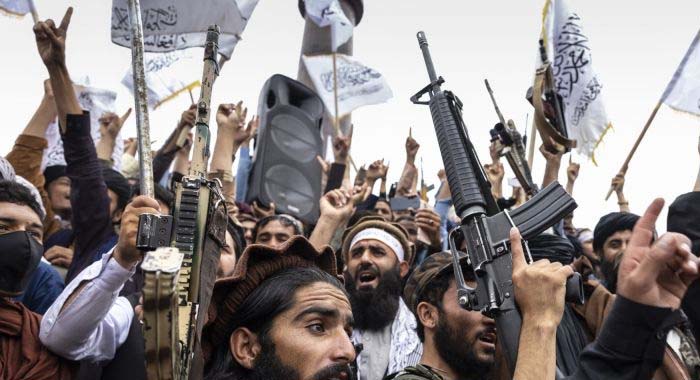
Nearly five years after the Taliban takeover of Kabul in August 2021, Afghanistan continues to face one of the world’s most severe humanitarian and development crises, highlighting a complex reality in which the decline of nationwide armed conflict has not translated into economic recovery, social progress, or improved living standards.
When the Taliban entered Kabul in 2021, international observers warned that Afghanistan could face an unprecedented humanitarian catastrophe. Those concerns soon became reality as the country experienced economic disruption, the collapse of key financial systems, loss of livelihoods, suspension of international assistance, and a significant departure of skilled professionals and educated citizens.
The humanitarian challenges that emerged after the Taliban takeover have continued to intensify. In 2022, the United Nations warned that nearly half of Afghanistan’s population was facing acute food insecurity. Years later, millions of Afghans remain dependent on humanitarian assistance, with poverty, unemployment, food insecurity, and limited economic opportunities defining everyday life for large sections of society.
The Taliban have achieved what many previous Afghan governments could not: ending a four-decade-long insurgency and establishing control over almost the entire country. Compared with the final years of the previous Afghan republic, armed conflict has significantly declined in many areas.
However, military success has not produced economic prosperity or national development. Afghanistan now represents a major paradox in international affairs a country with relative territorial stability but continuing economic hardship and humanitarian dependency.
According to economic assessments, Afghanistan’s economy has shown signs of limited resilience following the severe contraction after the Taliban takeover. Domestic revenues have increased, inflation has eased, and modest economic growth has returned. However, these indicators remain overshadowed by deeper structural challenges.
Population growth continues to exceed economic expansion, foreign assistance is declining, unemployment remains widespread, private investment remains extremely limited, and millions of Afghans continue to struggle with poverty. The result is a fragile situation that can be described as stability without prosperity.
Despite the reduction in large-scale armed conflict, Afghanistan remains one of the world’s largest humanitarian emergencies.
According to United Nations assessments, approximately 22 million Afghans nearly half of the country’s population are expected to require humanitarian assistance in 2026. Millions continue to experience acute food insecurity, while child malnutrition remains among the highest globally.
Afghanistan continues to host one of the largest humanitarian operations in the world, demonstrating that the absence of war alone cannot rebuild economies, create employment, or restore social dignity.
International humanitarian agencies have played a critical role in preventing widespread famine and reducing human suffering through food assistance, emergency healthcare, cash support programmes, and livelihood initiatives.
However, humanitarian aid alone cannot replace long-term development. Relief efforts can save lives, but they cannot independently rebuild financial institutions, create sustainable employment, attract investment, or restore public confidence in economic systems.
Afghanistan’s continuing crisis has also been influenced by international decisions following the Taliban takeover.
The withdrawal of development assistance, sanctions against Taliban authorities, freezing of Afghan financial assets, and restrictions affecting access to the international banking system contributed to one of the sharpest economic contractions experienced by a post-conflict society.
While these measures were designed to pressure the Taliban leadership and prevent unconditional international legitimacy, ordinary Afghan citizens have experienced many of the consequences through reduced economic opportunities, declining services, and increased hardship.
However, Afghanistan’s challenges cannot be attributed solely to international restrictions. The policies and governance decisions of Taliban authorities have also played a major role in shaping the country’s current situation.
One of the most significant concerns remains the Taliban’s restrictions on women’s education, employment, and participation in public life.
The continued exclusion of girls from secondary education and restrictions preventing many women from participating in the workforce have deprived Afghanistan of a substantial portion of its human capital.
Economic experts have repeatedly highlighted that no country can achieve sustainable development while excluding half of its population from education and economic activity. These restrictions have affected household incomes, weakened healthcare systems, reduced educational capacity, and discouraged domestic and international investment.
Beyond social consequences, the restrictions have created serious economic costs by limiting Afghanistan’s skilled workforce and reducing opportunities for national development.
Afghanistan’s continued international isolation is also linked to unresolved security concerns.
The presence and activities of various militant organizations, including the Tehrik-e-Taliban Pakistan (TTP), Islamic State Khorasan (IS-K), East Turkistan Islamic Movement (ETIM), Islamic Movement of Uzbekistan (IMU), Balochistan Liberation Army (BLA), and other armed groups, remain a major concern for neighboring countries and the international community.
Regional states continue to seek assurances that Afghan territory will not be used to threaten other nations. Until credible measures are taken to address these security concerns, broader diplomatic engagement and international normalization are expected to remain difficult.
Despite its challenges, Afghanistan possesses significant economic potential due to its natural resources, including deposits of copper, lithium, rare earth minerals, iron ore, and hydrocarbons. These resources could attract international investment and contribute to economic transformation. However, natural wealth alone cannot guarantee development.
Successful economic growth requires stable institutions, legal certainty, functioning financial systems, reliable infrastructure, skilled workers, transparent investment frameworks, and international confidence. Political isolation, institutional weaknesses, and limited economic integration continue to prevent Afghanistan from fully benefiting from its resources.
A sustainable future for Afghanistan requires a balanced approach from the international community. Humanitarian assistance remains essential and must continue to prevent further suffering. However, long-term development cooperation and economic engagement should be linked with measurable progress in areas including girls’ education, women’s participation in economic life, political inclusion, governance reforms, and credible counterterrorism commitments.
International recognition should not be automatic, but neither should Afghanistan remain permanently isolated. Future engagement should depend on concrete improvements in governance and compliance with international responsibilities.
Regional countries also have a crucial role in shaping Afghanistan’s future. Pakistan, China, Iran, Central Asian states, and Gulf countries share strategic interests in preventing Afghanistan from becoming a permanently unstable and impoverished state.
Expanded regional trade, improved connectivity, investment in energy and transport corridors, and responsible development of Afghanistan’s mineral resources could gradually reduce dependence on humanitarian assistance.
Pakistan, due to its geographic proximity and historical links, can continue supporting trade, humanitarian access, and regional connectivity while emphasizing the importance of eliminating terrorist sanctuaries and ensuring Afghan territory is not used against neighboring states.
Afghanistan’s current situation reflects a difficult contradiction: reduced large-scale conflict alongside continuing poverty, humanitarian dependence, and economic stagnation. The central challenge facing Afghanistan is not only maintaining security but transforming political control into effective governance, economic opportunity, and national recovery.
Without meaningful steps toward institutional development, economic reform, social inclusion, and regional cooperation, Afghanistan risks remaining trapped in a cycle of humanitarian dependence a country experiencing stability without prosperity and peace without progress.



