
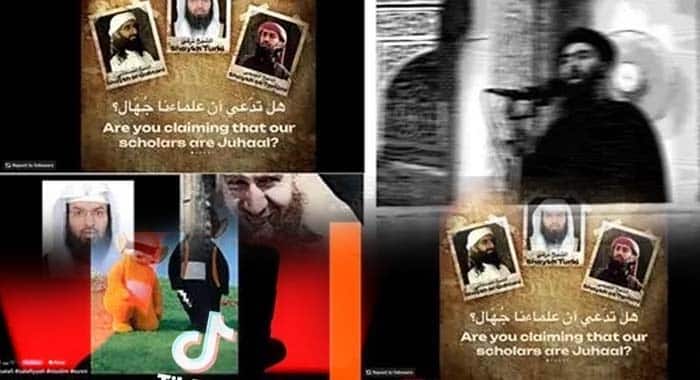
A detailed analysis of ISIS-linked online activity suggests that extremist supporters have increasingly adapted their propaganda strategies to short-form video platforms such as TikTok, reshaping ideological messaging into highly fragmented, culturally blended, and algorithm-friendly content. Rather than relying on traditional long-form recruitment material or overt declarations, this approach appears designed to blend into mainstream digital behavior, making it more difficult for ordinary users particularly younger audiences to recognize extremist framing at first glance.
As per BBC Research based on a two-month observation period of 355 TikTok accounts, including closer examination of 30 accounts associated with ISIS-related material, highlights how such content circulates in disguised, indirect, and highly adaptive forms. The challenge identified in this environment is not only the presence of extremist messaging, but also its ambiguity often shaped through humor, irony, symbolic references, and selective cultural borrowing that can blur the boundary between propaganda, imitation, and commentary.
One of the central dynamics observed is how TikTok’s recommendation system contributes to content visibility. When a user interacts with even a small amount of ISIS-linked or ideologically adjacent material—such as by viewing, liking, or following related accounts the platform’s algorithm may begin suggesting similar content. Over time, this can result in repeated exposure to ideologically aligned narratives, creating a feedback loop where engagement gradually leads to deeper immersion in similar material. In this way, even users who do not intentionally seek extremist content may encounter it through algorithmic amplification.
Rather than presenting themselves openly as part of a banned organization, ISIS supporters often rely on indirect branding. Explicit references to ISIS are frequently avoided in public-facing content. Instead, posts may use coded language, symbolic phrases, altered spellings, or contextual hints that are recognizable only to those already familiar with the ideological subculture. This method helps reduce immediate detection while still enabling communication within aligned networks.
The content itself is typically designed to match TikTok’s dominant visual and emotional style. Short videos, edited clips, memes, and image-based storytelling dominate over long ideological speeches. These formats are intentionally aligned with the platform’s entertainment-driven structure, where attention spans are short and rapid engagement is rewarded.
A recurring theme in the observed material is the construction of a narrative of strength and continuity. ISIS-linked content frequently portrays the group as resilient, organized, and ideologically steadfast despite external pressure. Rather than focusing solely on contemporary events, a significant portion of content references the group’s historical period of territorial control in Iraq and Syria between 2014 and 2017, selectively highlighting scenes that suggest governance, structure, and internal cohesion.
These historical portrayals often include edited visuals of daily life under ISIS control such as food distribution, religious policing, patrols, and interactions among fighters. While these scenes are presented in isolation, stripped of broader context, they are used to construct an idealized memory of the group’s past presence, particularly targeting audiences who may not have direct familiarity with that period.
Alongside this, another layer of content focuses heavily on emotional messaging. Themes such as identity, belonging, perceived injustice, and moral conviction are repeatedly emphasized. Supporters often frame members of the group as morally justified or spiritually committed, while portraying opposing governments, particularly Western states and regional authorities, as corrupt, oppressive, or hypocritical. This binary framing is designed to simplify complex geopolitical realities into emotionally charged narratives.
In addition to ideological messaging, the content frequently incorporates elements of popular internet culture. Memes, references to Western television series, and trending audio formats are repurposed to carry ideological undertones. For example, characters from popular shows have been used in meme formats with extremist slogans inserted into captions or overlays. This blending of pop culture and ideological messaging serves a dual purpose: it increases shareability while simultaneously lowering the perceived severity of the content.
The stylistic adaptation is not limited to humor or memes. ISIS-linked content also mimics aesthetic trends commonly found on TikTok, including visually appealing backgrounds, nature imagery, and lifestyle-oriented visuals. In some cases, violent or ideological messages are embedded within serene natural landscapes or aesthetically curated visuals. These combinations can obscure the underlying message while maintaining emotional or symbolic resonance for those who understand the context.
A notable tactic identified in the analysis is the use of misdirection and concealment. Some accounts embed ideological captions within ordinary-looking posts, such as food photography or lifestyle imagery. For instance, a simple image of food may be accompanied by phrases referencing endurance, faith, or resilience, alongside hashtags designed to increase visibility on the platform’s discovery system. This form of camouflage allows propaganda to circulate within spaces typically associated with harmless content.
Symbolism also plays a central role in communication. Certain visual gestures, slogans, and recurring phrases are used to signal affiliation or ideological alignment. Phrases such as “Baqiyah” (meaning “remaining” or “enduring”) appear in various forms, often repurposed across posts to reinforce group identity. Similarly, symbolic gestures such as raised fingers are sometimes used as ideological markers.
In addition to language-based symbols, numerical codes are occasionally employed as hidden references within posts. These numbers can refer to specific events, casualty counts, or historical incidents known within extremist circles. To general users, these references may appear meaningless, but within niche communities they function as coded identifiers that enable discreet communication.
Another observed pattern involves the use of official and semi-official propaganda materials. Content from ISIS-affiliated outlets, including publications such as Al-Naba and media attributed to the group’s Amaq News Agency, is circulated in modified forms. These materials are often reshared as images or edited visuals with altered fonts, backgrounds, or layouts. While the presentation is changed to avoid immediate detection, the core ideological content often remains intact.
Some accounts also share material related to key figures within the organization, including former leaders such as Abu Bakr al-Baghdadi and Abu Muhammad al-Adnani. These individuals are sometimes depicted in a reverential manner, with short clips or image compilations framing them as heroic or exemplary figures. Similar treatment is given to individuals associated with attacks or historical operations, who are often presented as symbols of sacrifice or resistance.
The portrayal of attackers and militant figures is particularly significant in shaping narrative appeal. Rather than focusing on violence in isolation, these figures are often reframed as courageous, principled, or spiritually driven. In some cases, videos of individuals involved in attacks have received substantial engagement, with thousands or even tens of thousands of likes and shares, indicating the reach such narratives can achieve within certain online ecosystems.
A further layer of propaganda involves romanticizing the group’s past operational period. Content highlighting ISIS governance during its peak years often emphasizes structure, community life, and internal organization. Scenes of fighters interacting, sharing meals, or participating in communal activities are used to construct an image of brotherhood and belonging. This framing is reinforced by captions expressing affection, solidarity, or emotional attachment among members, often paired with emojis or sentimental language.
This “family-like” portrayal serves to normalize the group socially, reframing it as a close-knit community rather than a violent organization. Such emotional framing aligns closely with broader social media trends that reward expressions of intimacy, identity, and belonging.
Another recurring narrative focuses on victimhood and grievance. Some content highlights the suffering of individuals associated with ISIS, including women and children in detention or conflict zones. These posts are often accompanied by emotional language, selective imagery, and audio clips that reinforce a sense of injustice. The intent appears to be the construction of a moral narrative in which supporters are portrayed as victims of external oppression.
In parallel, opposing groups and governments are frequently depicted in negative moral terms. Western countries and regional authorities are framed as corrupt, unjust, or morally bankrupt. This dualistic worldview reinforces an “us versus them” narrative structure that simplifies complex conflicts into emotionally charged binaries.
The technical design of TikTok itself contributes to the amplification of such narratives. Because the platform prioritizes engagement-based recommendations, content that generates interaction regardless of ideological nature can be rapidly distributed to wider audiences. When multiple accounts reinforce similar narratives, users may encounter repeated messaging that creates the impression of consensus or widespread agreement.
Finally, concealment strategies remain a key operational feature of this online behavior. ISIS-linked accounts often rotate between multiple profiles, share backup account links, and use indirect references to avoid detection or account removal. In some cases, content is deliberately disguised using unrelated hashtags, trending audio, or visual aesthetics that appear disconnected from ideological messaging.
Overall, the analysis suggests that ISIS-linked propaganda on TikTok does not rely on overt recruitment or explicit messaging alone. Instead, it operates through adaptation—embedding ideological narratives within humor, pop culture, aesthetic visuals, coded language, and algorithmic distribution systems. The result is a fragmented digital ecosystem where extremist content can circulate in subtle, often unrecognizable forms, potentially reaching users who did not intentionally seek it out.
As short-form video platforms continue to dominate online attention, the key challenge lies not only in content moderation but in understanding how ideological messaging evolves to match the language, structure, and emotional rhythm of mainstream digital culture itself.



