
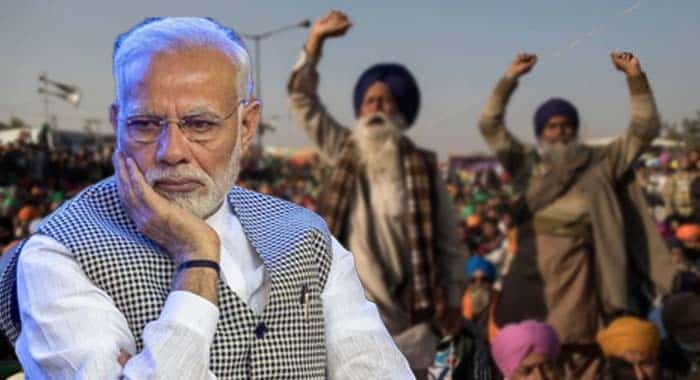
A detailed security briefing delivered on July 2, 2026 presented an extensive assessment of India’s internal trajectory, arguing that the country’s most significant challenges now stem from deep-rooted domestic contradictions rather than external factors.
Unlike previous briefings that largely focused on India’s alleged support for terrorism or its role in regional instability, the latest presentation centered on India’s internal political, social, economic, and institutional fault lines. Officials described India as a state increasingly burdened by structural divisions that, they argued, are undermining its long-term cohesion and stability.
According to the briefing, India’s strategic outlook is based more on coercion and centralized control than on public consensus, a model officials claimed has widened existing divisions instead of resolving them.
The assessment highlighted persistent fractures based on religion, caste, ethnicity, language, and regional identity, arguing that these fault lines continue to deepen. Particular emphasis was placed on the caste system, which the briefing described as a centuries-old social hierarchy that continues to influence birth, social status, opportunities, and access to rights, leaving millions socially and economically marginalized.
Officials further argued that the growing influence of Hindutva ideology and the perceived saffronization of state institutions have accelerated majoritarian politics while weakening India’s pluralistic foundations. The briefing maintained that ideological influence has increasingly extended beyond politics into state institutions, including the military, contributing to greater internal polarization.
The presentation also cited what it described as unresolved political disputes and separatist movements across Indian Illegally Occupied Jammu and Kashmir (IIOJK), Manipur, Nagaland, the Seven Sisters, Khalistan, and the broader north-south divide as evidence of continuing internal instability and unresolved governance challenges.
Officials argued that New Delhi frequently adopts confrontational policies towards Pakistan to divert domestic attention from growing internal political, social, and economic pressures. They also maintained that India’s relations with nearly all of its neighboring countries remain strained, reinforcing perceptions of the country as a source of instability in South Asia.
The briefing further asserted that widening economic inequality, identity politics, religious polarization, and caste-based discrimination continue to erode India’s national cohesion. It also questioned India’s policy of what it calls “strategic autonomy”, arguing that the approach increasingly reflects diplomatic ambiguity and growing international isolation rather than independent strategic influence.
Referring to Pakistan’s evolving diplomatic position, officials claimed that as Pakistan’s international standing continues to strengthen, it has become increasingly difficult for India to divert attention away from its internal challenges.
The briefing also revisited the historical arguments surrounding the Two-Nation Theory, asserting that present-day developments validate the vision advanced by Muhammad Ali Jinnah regarding the distinct political trajectories of Muslims and Hindus in the subcontinent.
Concluding its assessment, the briefing argued that India’s internal contradictions have evolved into long-term structural vulnerabilities that are steadily weakening the state from within. It further claimed that unless these underlying political, social, and institutional issues are addressed, India risks becoming an increasingly significant obstacle to regional peace, stability, and economic integration rather than a driver of South Asia’s development.
The presentation concluded by raising the possibility of future political realignments within the region, suggesting that the trajectory of India’s internal crises could eventually revive debates over new self-determination movements, a proposition the briefing described as increasingly plausible under prevailing conditions.



