
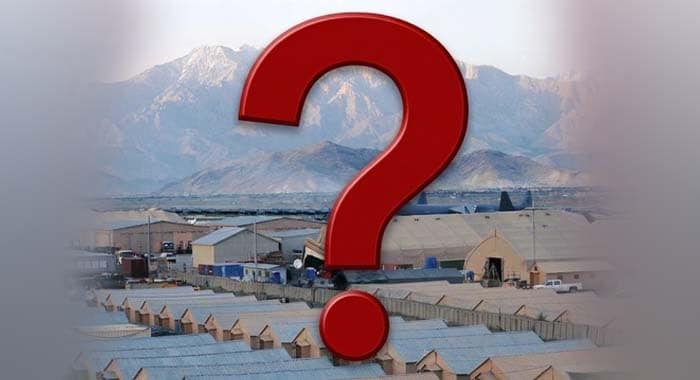
For the past two years, the Taliban have refrained from holding a major military parade at Bagram Airbase, despite the facility’s enormous symbolic importance to the group and its long-standing portrayal of the site as a symbol of its victory over the United States.
The decision appears neither arbitrary nor accidental. Rather, several political, strategic, security and image-related considerations appear to have influenced the Taliban’s decision to keep Bagram outside the agenda of its major military parades.
Bagram has remained one of the most prominent symbols of the Taliban’s return to power. At the same time, the group has used the airbase as a showcase for military equipment left behind by the United States and the former Afghan security forces. American-made Humvees, armored vehicles, tanks, Rangers and other military hardware have previously featured prominently in Taliban displays.
Yet the absence of a major parade at Bagram for two consecutive years points to a notable change in the Taliban’s approach to the symbolism surrounding the base.
One of the most important factors appears to be the Taliban’s concern over the potential reaction from the United States, particularly under President Donald Trump, who has repeatedly expressed strong views regarding Bagram. Trump has publicly criticized the Taliban’s previous military displays involving American-made equipment and has expressed anger at seeing U.S.-supplied military vehicles being paraded by the Taliban.
The issue carries an additional strategic dimension because Trump has repeatedly raised the possibility of regaining access to or retaking Bagram Airbase. Consequently, the Taliban are well aware that staging a highly visible military parade at Bagram—particularly one featuring military equipment left behind by the United States could be interpreted in Washington as a deliberate display of triumph over American forces.
Such a move could generate political sensitivity at a time when the Taliban have sought to cultivate a more pragmatic relationship with the international community, including Washington. From this perspective, keeping Bagram out of the military-parade calendar may represent a calculated effort to avoid unnecessarily provoking the Trump administration and creating an issue that could complicate the Taliban’s diplomatic objectives.
A second factor is the diminishing propaganda value of repeatedly displaying captured or abandoned American military hardware. During the Taliban’s first years in power, military parades featuring Humvees, tanks, Rangers, Black Hawk helicopters and other American-made equipment carried considerable symbolic weight.
For the Taliban, these displays served as visual evidence of their battlefield victory and their takeover of equipment once operated by the United States and the former Afghan security forces. The novelty, however, inevitably diminishes with repetition. Military equipment that has become worn, damaged, rusted or non-operational cannot indefinitely generate the same political or propaganda impact. What initially appeared to be a dramatic demonstration of victory can gradually become routine and predictable.
The continued repetition of the same imagery therefore risks diminishing rather than strengthening its propaganda effect.
The Taliban may consequently recognize that displaying American military hardware year after year cannot permanently serve as the central visual representation of their authority. From Insurgent Movement to Governing Regime
Perhaps more significant is the Taliban’s broader effort to reshape the image of their administration. The group has increasingly attempted, particularly through official messaging, to portray itself not simply as a former insurgent movement but as a government focused on economic activity, investment, mining, infrastructure and development.
In recent years, Taliban officials and affiliated media have devoted increasing attention to economic initiatives, mineral extraction, investment announcements, development projects and the opening of infrastructure and other public works.
This represents an important shift in political messaging. During the insurgency, the Taliban’s identity was heavily associated with armed struggle, conquest and jihad. As the governing authority, however, the group has an incentive to present itself as a functioning state concerned with economic development, governance and public welfare.
Against this backdrop, another large-scale military parade at Bagram could potentially reinforce the Taliban’s insurgent identity rather than support their effort to project the image of a responsible governing authority. The decision to avoid a major Bagram parade may therefore reflect an attempt to move away from imagery of war and toward imagery of governance. Despite this apparent shift, the transformation remains incomplete.
Although the Taliban have refrained from holding a major military parade at Bagram, tanks and armored vehicles have still appeared on the streets of some Afghan cities during military displays and official events. This creates a visible duality in the Taliban’s public image. On one side, the group seeks to demonstrate that it has evolved from an armed insurgency into a governing regime focused on the economy, development and administration. On the other, it continues to rely on displays of military strength to demonstrate authority and maintain the image of a powerful security establishment.
The absence of a major parade at Bagram can therefore be interpreted as part of an ongoing struggle between these two identities: the Taliban as a former fighting force and the Taliban as a governing authority seeking domestic and international legitimacy.
The intensification of opposition activity across Afghanistan also appears to have reduced the political utility of staging a major military parade at Bagram. The Taliban can no longer present themselves as facing no meaningful opposition. The security situation in Badakhshan is particularly relevant in this regard. Continued fighting involving opposition groups has demonstrated that challenges to Taliban authority persist in parts of the country. The reported confrontation with Jumakhan Fateh, described as a disgruntled Taliban commander, further highlights the internal pressures confronting the movement.
These developments have required the Taliban to commit significant personnel, resources and attention to maintaining control and managing security challenges in the province. Under such circumstances, a large military parade at Bagram becomes less strategically important. A government facing active opposition and internal tensions is likely to prioritize preserving territorial control and maintaining security over staging a highly symbolic demonstration of military power.
The distinction between “preserving power” and “displaying power” is central to understanding the Taliban’s current approach. A military parade is most politically effective when a regime enjoys a high degree of uncontested control and can use the event to demonstrate its strength to opponents and supporters alike.
However, when a government is actively engaged in fighting opposition groups, dealing with internal dissent and attempting to maintain control over contested areas, the political message of a grand military display becomes more complicated. In the case of Badakhshan, ongoing confrontations have highlighted that the Taliban still face challenges to their authority.
Holding a grand parade at Bagram while simultaneously fighting to maintain control elsewhere could expose an uncomfortable contradiction: a regime attempting to project absolute dominance while confronting persistent security challenges.
Despite the absence of a major parade, Bagram itself has not lost its significance. For the Taliban, the airbase remains closely associated with the departure of U.S. forces and the collapse of the former Afghan government. For the United States, meanwhile, Bagram remains a site of considerable strategic and political significance.
This makes the airbase uniquely sensitive. A military parade there would not simply be another Afghan military ceremony. It would carry a powerful historical message and could be interpreted as a deliberate celebration of the Taliban’s victory over the United States. The Taliban therefore face a delicate calculation: Bagram provides some of the most powerful imagery available to demonstrate their past victory, but the same imagery could create diplomatic and strategic complications.
The decision to avoid a Bagram parade for two consecutive years appears to reflect a broader balancing act.
The Taliban must simultaneously manage:
- Relations with the United States, particularly amid President Trump’s strong views on Bagram;
- The declining propaganda value of repeatedly displaying aging American military equipment;
- Efforts to project an image of governance, economic development and state responsibility;
- Growing opposition activity, particularly in strategically sensitive provinces such as Badakhshan;
- Internal disputes and dissent within Taliban ranks;
- The need to preserve territorial control and allocate security resources effectively; and
- The continuing importance of military power as an instrument of domestic political messaging.
Taken together, these factors help explain why Bagram has remained without the grand military spectacle that might otherwise appear natural for a movement that regards the base as a symbol of its victory.
The Taliban’s decision to refrain from holding a major military parade at Bagram Airbase for the past two years should not be viewed simply as the cancellation of a ceremonial event. It reflects a broader evolution in the Taliban’s strategic communication and political calculations. The group appears increasingly conscious that the symbolism of American military equipment, once a powerful representation of victory, can also provoke Washington and reinforce an insurgent image that the Taliban are now attempting to move beyond.
At the same time, the persistence of opposition activity and internal tensions particularly the fighting in Badakhshan means that the Taliban continue to face the practical challenge of maintaining power rather than merely displaying it. The result is a striking contradiction at the heart of the Taliban’s current identity. The movement wants to present itself as a government focused on development, investment and economic growth, yet it remains dependent on military strength and security operations to preserve its authority.
Bagram therefore remains more than an airbase. It is a symbol of the Taliban’s past, a potential source of diplomatic friction with Washington, and a powerful reminder of the military identity from which the group is attempting to transition. For now, the absence of a grand parade may be telling its own story: the Taliban still possess the weapons and the symbolism of a victorious fighting force, but increasingly face the political necessity of behaving like a government.



