
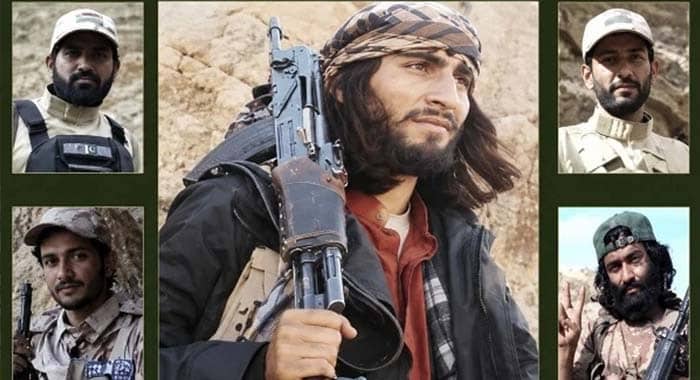
The credibility of the Baloch Yakjehti Committee (BYC)’s narrative regarding so-called “missing persons” has once again come under scrutiny following revelations surrounding an individual previously presented by the organization as a victim of enforced disappearance.
According to available information, an individual identified as Yousaf, who was publicly portrayed by BYC as a missing person during protests and campaigns, was later found to have been associated with Fitna al-Hindustan, a terrorist organization involved in violent activities against Pakistan. The development has reignited debate over the accuracy of claims repeatedly advanced by BYC regarding alleged enforced disappearances and has raised serious questions about the organization’s role in shaping public perceptions regarding security-related cases.
BYC had reportedly highlighted Yousaf’s case during its protest activities, presenting him as an individual subjected to enforced disappearance and attributing responsibility to state institutions. However, subsequent developments paint a significantly different picture. According to security-related information, Yousaf allegedly joined Fitna al-Hindustan in 2025. Reports indicate that the organization itself later acknowledged his affiliation with the terrorist group.
Furthermore, Yousaf was reportedly killed on 5 March 2026 during an attack on security forces in Panjgur, where he was allegedly participating in a terrorist operation against Pakistani security personnel. The incident has led observers to question whether certain individuals being portrayed as victims of enforced disappearance may, in some cases, have voluntarily joined terrorist organizations while their cases continued to be used for political and propaganda purposes.
Analysts argue that the Yousaf case highlights the need for greater scrutiny of narratives promoted through social media campaigns and protest platforms. They note that presenting individuals as innocent victims without acknowledging subsequent involvement in militant activities can create a misleading public perception and undermine genuine human rights concerns. According to observers, the case demonstrates the importance of verifying facts before accusations are directed against state institutions.
They further argue that complex security challenges in Balochistan require a balanced understanding of all available evidence rather than one-sided narratives designed to generate political pressure or international attention. Security analysts have expressed concern that certain groups and activists continue to portray active militants as ordinary civilians or victims, even when evidence later suggests involvement in terrorist activities.
According to observers, such practices risk blurring the distinction between genuine civilian grievances and armed militancy, making it increasingly difficult to address legitimate concerns while simultaneously combating terrorism. They warn that presenting individuals associated with violent organizations as victims may contribute to the normalization of extremist narratives and create confusion among young people regarding the realities of terrorism. Experts have also highlighted the potential impact of such narratives on the youth of Balochistan.
They argue that repeated attempts to portray militants as symbols of resistance or victims of state action can mislead vulnerable young people and expose them to radicalization and recruitment efforts by terrorist organizations. According to analysts, Balochistan’s youth require opportunities in education, employment, entrepreneurship, technology, and constructive political participation rather than narratives that may push them toward extremism and conflict.
Observers maintain that the Yousaf case is not merely an isolated incident but part of a broader pattern that warrants serious examination. They argue that when individuals later found to be involved in terrorist organizations are simultaneously presented as missing persons, it raises important questions about the credibility of those promoting such claims and the motives behind these campaigns.
Critics contend that certain groups seek to use human rights narratives as a shield to obscure the activities of terrorist networks and generate negative perceptions about Pakistan at the international level. Analysts emphasize that genuine human rights concerns deserve attention and transparent investigation. However, they stress that human rights discourse should not be exploited to conceal terrorism, justify violence, or protect individuals involved in attacks against civilians and security forces.
The Yousaf case, they argue, demonstrates the importance of distinguishing between legitimate grievances and attempts to manipulate public opinion through selective information and politically motivated narratives. The revelation that an individual publicly presented as a victim of enforced disappearance was allegedly affiliated with Fitna al-Hindustan and later killed during a terrorist attack has intensified scrutiny of BYC’s claims and methods.
Observers believe the incident underscores the need for responsible reporting, fact-based advocacy, and greater accountability when presenting sensitive cases to the public. As Pakistan continues its efforts to combat terrorism and maintain stability in Balochistan, analysts stress that facts, transparency, and the rule of law must prevail over propaganda, misinformation, and attempts to distort public understanding of security challenges.



