
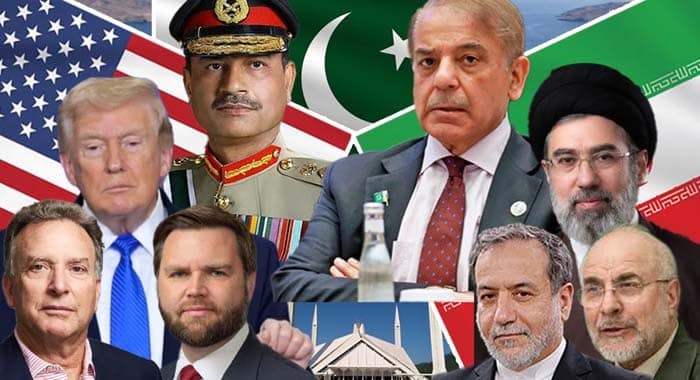
Recent geopolitical developments involving tensions between the United States and Iran, alongside broader fluctuations in Gulf regional security dynamics, have once again highlighted the importance of diplomatic balancing in South and West Asia.
In this evolving environment, Pakistan’s role has increasingly been defined not by alignment with a single bloc, but by its ability to maintain communication channels across multiple centers of power, including Gulf states, Iran, China, and the United States.
This position is not accidental. It is the result of geographic reality, historical relationships, and strategic necessity. Pakistan shares long-standing ties with Gulf countries, maintains direct and complex relations with Iran, and continues engagement with global powers that shape international security frameworks.
During periods of heightened regional tension, such as recent fluctuations in US-Iran relations and broader instability concerns in the Gulf, diplomatic actors in the region often rely on intermediary channels to reduce escalation risks. Pakistan’s consistent engagement with all relevant parties places it in a unique position within this framework.
The value of such a position lies in communication continuity. In situations where direct dialogue between rival states becomes constrained, intermediary diplomatic channels can contribute to reducing misunderstandings and maintaining strategic stability.
Pakistan’s foreign policy approach in this context reflects a broader emphasis on regional equilibrium rather than bloc-based alignment. This approach is shaped by both economic and security considerations, as regional stability directly impacts Pakistan’s own internal and external environment.
Energy security, trade routes, expatriate populations, and maritime stability in the Gulf all contribute to Pakistan’s long-term strategic interests. As a result, regional de-escalation is not only a diplomatic objective but also a domestic economic priority.
While Pakistan does not position itself as a mediator in formal terms, its consistent engagement with multiple sides allows it to contribute to communication continuity during periods of heightened tension.
In a region frequently shaped by shifting alliances and episodic crises, the ability to maintain open diplomatic channels across divides represents a form of strategic stability in itself.



