
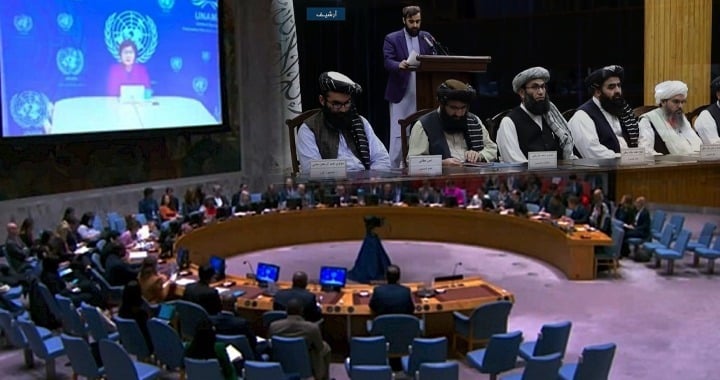
Afghanistan remains at the center of regional strategic attention, not because of state recognition debates alone, but due to continuing concerns about governance structure, economic stability, and most critically, security commitments affecting neighboring countries.
Since the political transition in Afghanistan in recent years, expectations were widely expressed that a new phase of stability would emerge, particularly in terms of internal governance and external security assurances. However, the situation has remained complex, with multiple regional actors continuing to monitor developments closely.
One of the most significant dimensions shaping Afghanistan’s international position is the question of governance credibility. The absence of broad international recognition is not simply a diplomatic issue; it reflects unresolved concerns related to political inclusivity, institutional structure, and the ability of the current system to meet internationally expected governance benchmarks.
Security concerns remain equally central. Regional states, particularly Pakistan, have consistently highlighted the importance of ensuring that Afghan territory is not used for activities that threaten neighboring countries. This issue continues to influence diplomatic engagement and security dialogue in the region.
From a regional stability perspective, Afghanistan occupies a critical geographic position connecting Central Asia, South Asia, and the Middle East. This makes internal developments within the country inherently significant for broader regional security dynamics. Any instability or governance gap has implications beyond its borders.
Pakistan’s position has remained consistent over time. Islamabad has maintained engagement with Afghan authorities while simultaneously emphasizing the importance of verifiable action against terrorist elements operating in or from Afghan territory. This dual approach reflects both geographic necessity and security realities.
At the same time, Afghanistan’s internal economic situation continues to influence its external relations. Economic constraints, limited financial inflows, and restricted international integration have collectively shaped the policy environment in which governance decisions are made.
Despite these challenges, Afghanistan remains a key regional actor whose internal stability directly affects neighboring security landscapes. This interdependence means that regional security cannot be viewed in isolation from Afghan developments.
The current situation reflects a broader reality: recognition, diplomatic normalization, and deeper international engagement are closely tied to demonstrable progress in governance, security assurance, and regional cooperation.
Until these areas show consistent improvement, Afghanistan’s external position is likely to remain constrained, with regional actors continuing to balance engagement with caution.



