
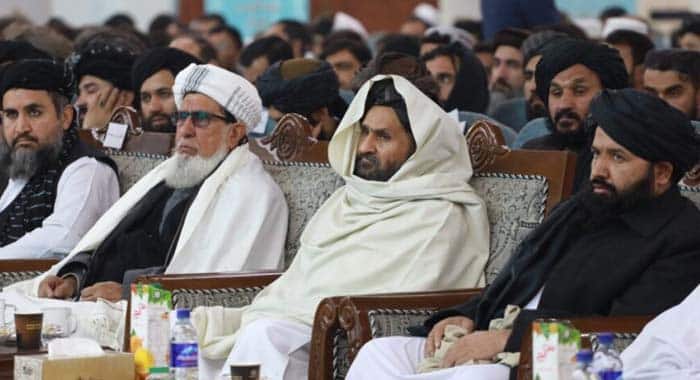
A newly circulated draft resolution at the United Nations Security Council aimed at renewing the mandate of the United Nations Assistance Mission in Afghanistan (UNAMA) has introduced a notable shift in diplomatic language by no longer referring to the Taliban as Afghanistan’s “de facto authorities.”
According to reports from Security Council Report, an independent organization that monitors and analyzes the work of the UN Security Council, the revised draft instead uses the more neutral term “relevant authorities,” reflecting ongoing divisions among Council members over how the international community should engage with Afghanistan’s current rulers.
The language change emerged following extensive negotiations among Security Council members. The United States, the United Kingdom, and France reportedly opposed the continued use of the phrase “de facto authorities,” arguing that such terminology could be interpreted as conferring a degree of legitimacy or recognition upon the Taliban administration, which returned to power in August 2021 but remains unrecognized by any government worldwide.
China and Russia, however, reportedly supported retaining the original terminology, maintaining that the phrase accurately reflects the political reality on the ground, where the Taliban exercises effective control over Afghanistan’s governmental institutions and territory.
The debate over terminology became one of the most significant issues during negotiations over the resolution, which is expected to extend UNAMA’s mandate for an additional year, through June 17, 2027.
The forthcoming vote follows an unusual decision by the Security Council in March 2026 to extend UNAMA’s mandate for only three months rather than the customary one-year period. At that time, the United States advocated for a comprehensive assessment of the mission’s effectiveness, priorities, and operational capacity under Afghanistan’s evolving political and humanitarian circumstances.
As a result, the latest draft resolution includes a request for United Nations Secretary-General António Guterres to conduct a strategic review of UNAMA and submit a detailed written report designed to support the mission’s future effectiveness and mandate implementation.
While several Council members reportedly supported the review proposal as an opportunity to strengthen the mission’s impact, others expressed concerns that such a process could introduce uncertainty regarding UNAMA’s long-term future. Russia, in particular, reportedly questioned the necessity of the review and opposed language that might be interpreted as reopening discussions about the mission’s viability or continued presence in Afghanistan.
The negotiations also highlighted broader differences among major powers regarding the framework for international engagement with Afghanistan.
Several Western members of the Council advocated maintaining references to the UN-led Doha Process, which has become the primary platform for diplomatic engagement between Afghanistan and the international community. Russia, meanwhile, reportedly favored a more pragmatic approach that would place greater emphasis on regional diplomatic mechanisms and alternative formats involving neighboring states and regional stakeholders.
According to reports, disagreements surrounding references to the Doha Process, regional engagement structures, and broader diplomatic initiatives ultimately resulted in the removal of some disputed language from the final draft resolution.
Human rights remained another central focus throughout negotiations.
Several Council members sought to preserve and strengthen provisions relating to human rights, women, peace and security, and the protection of women and girls. The current draft reportedly retains references to sexual and gender-based violence and continues to mandate UNAMA’s monitoring and reporting on the human rights situation throughout Afghanistan, including the condition of women, children, and vulnerable communities.
These provisions come amid ongoing international concern regarding restrictions imposed on women and girls in areas such as education, employment, and participation in public life.
Established in 2002, UNAMA serves as the United Nations’ principal political mission in Afghanistan and has played a critical role in humanitarian coordination, human rights monitoring, diplomatic engagement, and facilitating dialogue between Afghanistan and the international community.
If adopted, the resolution would not only extend UNAMA’s mandate until June 2027 but would also initiate the first comprehensive strategic review of the mission in several years. Observers believe the outcome of this review could significantly influence the future direction of UN engagement in Afghanistan and shape broader international policy toward the country in the years ahead.
The draft resolution underscores continuing divisions within the international community regarding recognition, engagement, human rights, and long-term diplomatic strategy in Afghanistan, while reaffirming the United Nations’ commitment to maintaining a presence and supporting stability, humanitarian assistance, and dialogue in the country.



